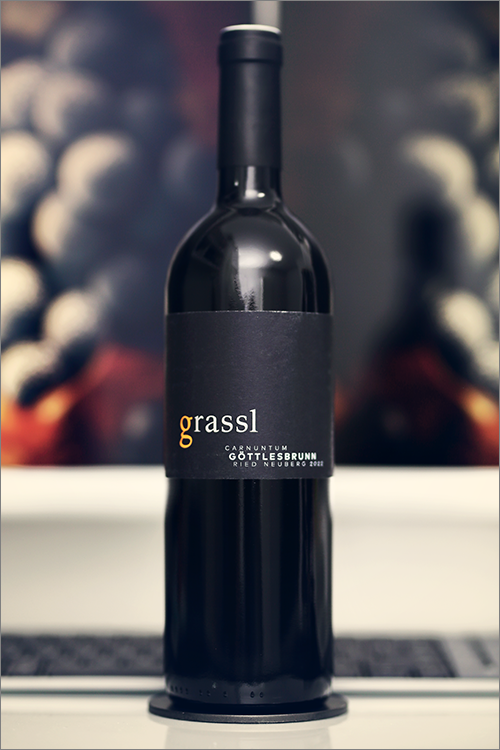
GRASSL | Carnuntum | Göttlesbrunn | Ried Neuberg | 2022
zweigelt | blaufränkisch | merlot
 © We will be evaluating wines in no particular order on no particular schedule. Just stay tuned and you will never miss our reviews. If the wine is tasted more than once, the rating table will be updated so as to reflect all the new impressions and observations. We hope you will enjoy it!

While the Grassl family has been rooted in the Göttlesbrunn winegrowing tradition since the 18th century, the first wine was not bottled under the family name until the 1950s. The ‘Weingut Philipp Grassl’ came to life in 2006, when Philipp Grassl took control of his family’s winery that was producing artisanal wines since 18th century, thus infusing winemaking tradition with a new vision focused on precision, quality, and a profound respect for the land. Philipp’s approach was to craft wines that are true expressions of Carnuntum’s terroir, allowing the unique character of each vineyard site to shine through the grape varieties themselves. Tonight we are going to review a quite captivating wine from Carnuntum, a sub region of Niederösterreich – one of Austria‘s most famous wine regions – Carnuntum Göttlesbrunn Ried Neuberg 2022 by Weingut Philipp Grassl. This wine is a harmonious blend of three grape varieties: 50% zweigelt (Austria’s most famous red grape variety), 40% blaufränkisch (an old Austrian variety, known as kékfrankos in Hungary or burgund mare in Romania) and 10% merlot, where zweigelt forms the wine’s main body and structure, blaufränkisch provides up-front richness and a sturdy backbone of firm tannins, black fruit flavors and depth, while merlot rounds out the blend and offers a leaner and a more dynamic finish. The final wine has been aged for a period of 12 to 14 months in small oak barriques (225L) and big oak tonneaux (500L), made of French and Austrian oak (half new and half used), with additional bottle ageing time before it was deemed ready for the market.
The grapes for this wine were sourced from the wind-protected, south-east exposed slopes of Neuberg vineyards, planted on clayey and loamy soils. This is an invaluable advantage in hot summers, as it can retain water well for the vines to ripen slowly for longer. Merlot grows on the gentle upper slopes, while Zweigelt and Blaufränkisch grow on the heavy, rich clay soil at the foot of the slopes. Combined with the relatively young vines (around 25 years old), this wine is meant to be enjoyed a little earlier than the more complex and sophisticated wines from Bärnreiser or Schüttenberg.

Being Austria’s largest and most diverse wine region, Niederösterreich stretches from the Bohemian Massif in the northwest to the Pannonian Plains near the Hungarian border, encompassing an incredible range of microclimates and soils. The region’s three broad climatic zones (the cooler Weinviertel to the north, the Danube-cooled valleys west of Vienna, and the warmer Pannonian-influenced southeast part) shape its distinctive terroirs. Loess, gravel, limestone, and gneiss dominate the soils, each contributing to the varied expressions of the local grape varieties. The continental climate is moderated by the Danube River and the proximity to the Alps, allowing for a wide diurnal range between warm days and cool nights which helps preserve acidity and aromatic complexity in the grape berries. Niederösterreich is best known for its laser-sharp Grüner Veltliner and bone-dry Riesling, which showcase purity, minerality, and vivid freshness, but it also excels with rich Zweigelt and bold Blaufränkisch wines in the southeast. From the breattaking slopes of Wachau to the loess terraces of Wagram and the red-wine heartlands of Carnuntum, Niederösterreich embodies Austria’s full viticultural spectrum – refined, diverse, and profoundly connected to its geology. Stretching east of Vienna toward Slovakian border, Carnuntum DAC unites ancient Roman heritage with a new generation of innovative winemakers. The region’s vineyards lie between the Leitha Range, Arbesthal Hills, and Hainburg Mountains, on soils of loess, loam, limestone, and gravelly terrace deposits left by the ancient Danube River and the vanished Paratethys Sea. This geological diversity, paired with hot, dry summers and cold, freezing winters, creates ideal ripening conditions for red grapes, especially Zweigelt and Blaufränkisch, which are the trademark of this elegant yet rich region. Proximity to Lake Neusiedl and the Danube River moderates temperature extremes, fostering balance and freshness. White varieties such as Chardonnay, Weissburgunder, and Grüner Veltliner also thrive here, producing wines with structure, minerality, and vibrant character. Today’s Carnuntum wines showcase a ripe yet elegant nuance, with a fruit-driven profile that makes them a real treasure for many wine connoisseurs and enthusiasts alike.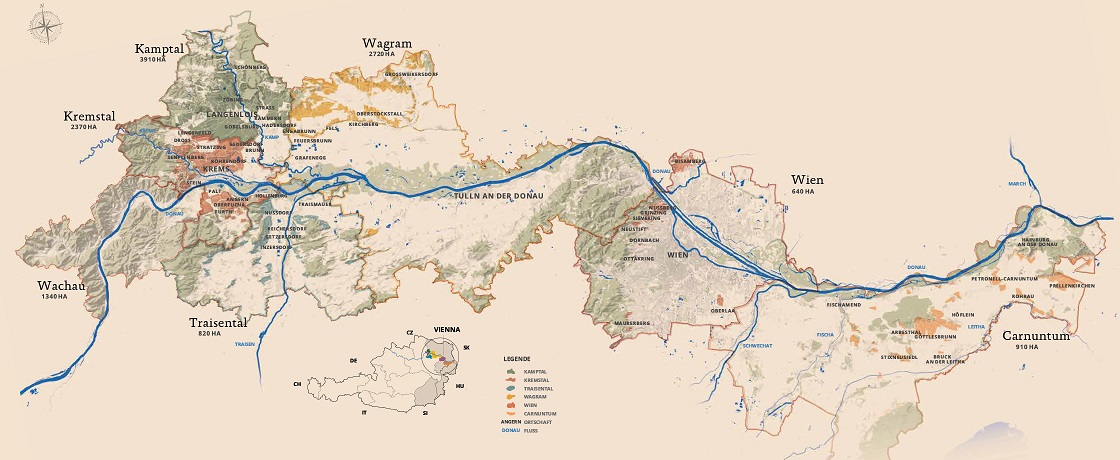

color: deep & opaque ruby color
clarity: hazy indigo-ruby hues at the rim
In the glass, the wine presents a very deep and concentrated ruby color, with an opaque core that fades to hazy ruby-indigo shades towards the rim, signaling both youth and intensity.

intensity: pronounced & expressive
fruit character: ripe & overripe
The nose is nuanced and expressive, bursting with a ripe to overripe fruit character. The foreground is dominated by a powerful chorus of black fruits: dark cherry, blackberry, cassis, and prune, interwoven with overripe aronia hints This fruit-forward profile is nicely framed by notes of toasted oakwood and tobacco, with nuanced, jammy undertones of black cherry and blackberry confit. In the background, notes of peppercorn, nutmeg, and cloves unfold, complemented by subtle earthy hints of pencil lead and charcoal, hints of figs and liquorice, and a delicate, dusty-smoky finish.

sweetness: dry | acidity: high | alcohol: high | tannin: high | balance: good
finish: lasting | aftertaste: crisp & seedy
On the palate, the wine feels fruity-expressive, vinified in a genuine new-world style that delivers an explosion of extracted black fruit flavours. The mouthfeel is rich and firm, revealing a complex and well-structured flavour profile. The wine feels bold and energetic, yet maintains a sense of place with its distinct varietal typicity and hints of its local terroir. It tastes dry, propelled by bright acidity that keeps the powerful fruit in check. A pleasant touch of alcoholic warmth adds to its full-bodied nature, while ripe, fine-grained tannins provide a firm but polished backbone. The experience culminates in a crisp and pleasantly-seedy aftertaste that lingers for quite a while.

maturity: developing | drink now or age for another 3 to 5 years
verdict: great | a benchmark wine | a wine that has all the traits to become legendary
Overall, this is a remarkably rich and crisp wine, boasting an incredible multi-layered and complex profile that confidently balances fruit, oak, and those delicate hints of local terroir. It stands as a textbook example of a modern, new-world styled wine blend, managing to deliver the flamboyant richness of its fruit expression alongside the unmistakable footprint of its origin. While the use of oak is notable, it is beautifully integrated, adding layers of spice and structure rather than dominating the wine. This is a wine that can be enjoyed today, especially after a brief decant, but will undoubtedly gain further complexity and aromatic sophistication with another 3 to 5 years of cellaring. This is a wine of excellence that masterfully showcases the expressive potential of Austria’s premier red grape varieties in a modern way.

The wine’s rich structure, firm tannins, and intense dark fruit notes call for a dish of equal stature. We would recommend pairing it with slow-braised venison shank served with a blackberry reduction sauce and a creamy celery root purée. The richness of the venison will be beautifully matched by the wine’s richness, while the blackberry sauce would create a complementary bridge to the wine’s own cassis and blackberry notes. The wine’s bright acidity will cut through the richness of the dish, cleansing the palate and creating a truly harmonious and memorable wine tasting experience. Viel Spaß! GRASSL | Carnuntum | Göttlesbrunn | Ried Neuberg | 2022
variety: zweigelt | blaufränkisch | merlot
country: Austria
region: Niederösterreich | Carnuntum
rating: 95.0
While the Grassl family has been rooted in the Göttlesbrunn winegrowing tradition since the 18th century, the first wine was not bottled under the family name until the 1950s. The ‘Ried Neuberg’ wine is considered the ‘big little brother’ to the winery’s top, single-vineyard cru wine Bärnreiser. It is intentionally crafted to be more accessible in its youth, making it a perfect introduction to the power of Grassl’s terroir-driven wines.

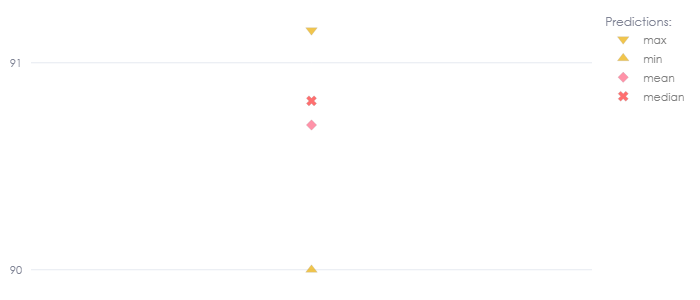
 © The WineStatistics ratings are based solely on our own knowledge of the world of wine and on our personal wine tastes, which may, or may not, differ from yours – the reader. Just remember that there are no absolutes of right and wrong in wine appreciation. Cheers!
Make a one-time donation
Make a monthly donation
Make a yearly donation
Choose an amount
Or enter a custom amount
WineStatistics is a non-profit community. We produce independent and highly detailed wine reviews.
By training ourselves to stop, take a breath, and pay attention to the subtle elements that distinguish one wine from any other, we learn an important lesson about life – that it’s worth taking the time to slow down and appreciate things that pleases us, from a glass of wine to a great work of art. It’s a simple way to learn to appreciate the little things in life that may in some small way enhance our enjoyment of every day.
In order to continue our work we need support from people like you. People who appreciate our contribution in spreading wine knowledge and raising wine awareness across the borders.
You may now support us by contributing with a one-time donation so that we can review even more wines.
WineStatistics is a non-profit community. We produce independent and highly detailed wine reviews.
By training ourselves to stop, take a breath, and pay attention to the subtle elements that distinguish one wine from any other, we learn an important lesson about life – that it’s worth taking the time to slow down and appreciate things that pleases us, from a glass of wine to a great work of art. It’s a simple way to learn to appreciate the little things in life that may in some small way enhance our enjoyment of every day.
In order to continue our work we need support from people like you. People who appreciate our contribution in spreading wine knowledge and raising wine awareness across the borders.
You may now support us by contributing with a monthly donation so that we can review even more wines.
WineStatistics is a non-profit community. We produce independent and highly detailed wine reviews.
By training ourselves to stop, take a breath, and pay attention to the subtle elements that distinguish one wine from any other, we learn an important lesson about life – that it’s worth taking the time to slow down and appreciate things that pleases us, from a glass of wine to a great work of art. It’s a simple way to learn to appreciate the little things in life that may in some small way enhance our enjoyment of every day.
In order to continue our work we need support from people like you. People who appreciate our contribution in spreading wine knowledge and raising wine awareness across the borders.
You may now support us by contributing with a yearly donation so that we can review even more wines.
 WineStatistics