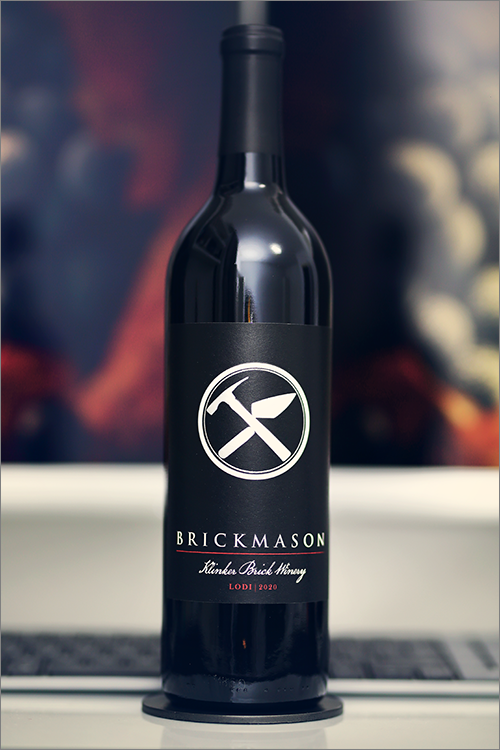
KLINKER BRICK | Brickmason | Lodi | 2020
primitivo | syrah | petite sirah | cabernet sauvignon
 © We will be evaluating wines in no particular order on no particular schedule. Just stay tuned and you will never miss our reviews. If the wine is tasted more than once, the rating table will be updated so as to reflect all the new impressions and observations. We hope you will enjoy it!

The story of Klinker Brick Winery is deeply rooted in the heart of Lodi, California. Steve and Lori Felten, fifth-generation grape growers, carry on a family legacy that began over a century ago. Their ancestors initially cultivated watermelons before recognizing the region’s ideal conditions for viticulture. For generations, they grew grapes, including the treasured old vine Zinfandel. In the late 1980’s, a shift towards modern vineyard practices allowed them to focus on quality over quantity, unlocking the true potential of this grape variety. Today we are are going to review a wine from California‘s famous Lodi sub-region that hardly requires an introduction – Brickmason Lodi 2020 by Klinker Brick Winery. Primitivo (also known as zinfandel in the USA) has been thought to be native to Puglia region (Italy), but it actually hails from Dalmatia (Croatia), where it is called tribidrag. In the last century it was noted that zinfandel and primitivo were very similar and the more researchers looked at them, the more similarities emerged. The DNA analysis removed any doubt – the two varieties are genetically identical, more than that, further DNA analysis revealed that both varieties are identical to a Croatian variety called crljenak kastelanski, which raised the question: which variety is the oldest and which name was the correct one. In 2011 an even older Croatian variety, called tribidrag, was found to be genetically identical, therefore the consensus was that this is the prime variety. As it turns out the names primitivo and tribidrag are both translated as ‘early‘ from Latin and Croatian respectively, which reflects the yearly-ripening characteristic of this grape variety.
This particular wine is a Zin-based wine (Zin is the local, American name given to the zinfandel grape variety) – a blend of 16 different zinfandel blocks, sourced from old vines (ranging from 50 to 120 years old). The Costa Zin was selected for its acidity, vibrant red fruit and spicy-elegant peppery finish, while the Burney Mettler was picked for its rich dark fruit, firm tannins and bold structure. The two Zin wines were then blended equally, to which some Farrah Syrah was added to bring additional depth, complemented by small amounts of Cabernet, which added extra dark fruits and tannins, and Petite Sirah, to enhance color and add structural integrity to the blend. All the grapes are sourced from the Mokelumne River vineyards (the Costa Vineyard’s Young Block and the Burney Mettler Vineyard) in the Lodi AVA (California, USA). The final wine has been aged for a period of 16 months in American oak barrels (100% Radoux), with additional bottle ageing time before it was deemed ready for the market release.

California is responsible for nearly 90% of U.S. wine production and home to some of the world’s most diverse and celebrated vineyards. Its vast size and geographical diversity mean that nearly every grape variety can find an ideal home here. The region’s Mediterranean climate, moderated by the Pacific Ocean, provides warm, dry summers and mild winters, with local influences such as fog, elevation, and coastal breezes creating very distinct microclimates across the region. Cabernet Sauvignon, Chardonnay, Zinfandel, Syrah and Pinot Noir dominate the landscape, but the sheer range of terroirs – from the cool Sonoma Coast to the sun-drenched Central Valley – encourages winemakers to experiment with lesser-known grape varieties. California wines are famous for their intensity, aromatic richness, and complexity, blending tradition winemaking with cutting-edge technology.
 Lodi, situated in California’s Central Valley area, just east of the San Francisco Bay, enjoys a warm Mediterranean climate moderated by cooling breezes funneled through the Carquinez Strait, thus creating a high diurnal temperature range that help preserve acidity in its grapes. Vineyards generally lie between 5 and 30 meters in elevation on predominantly alluvial soils – a mix of sandy loam, gravel, and silt, known for their excellent drainage and low fertility, which naturally controls vine vigor and enhances flavour concentration. While Lodi is most famous for its old-vine Zinfandel, some of which exceed a century in age, its diverse microclimates and soils support over 100 grape varieties. This combination of warm days, cool nights, and porous soils yields wines with vibrant fruit, bright acidity and smooth tannins.

color: medium-deep ruby color
clarity: vibrant ruby shades at the rim
In the glass, this wine presents a captivating medium-deep ruby color, with vibrant ruby shades shimmering at the rim, hinting at the wine’s youthful energy and nuance.

intensity: rich & savory-elegant
fruit character: ripe & dehydrated
The nose is rich and expressive, offering a savory-elegant profile that is both inviting and complex. The aromatic intensity is pronounced, led by a foreground that balances ripe and dehydrated fruit notes. A cascade of black and red fruits unfolds with notes of dark cherry, blackberry, and plum, interwoven with the tartness of sour cherry and redcurrant. This fruitiness is complemented by intriguing savory hints of worn leather, brown olive, and dusty undertones of pencil lead. In the background, a sophisticated layer of spice and oak emerges, revealing notes of red pepper, peppercorn, star anise, and nutmeg – all resting on a base of sun-dried oakwood, fine tobacco, and earthy suggestions of marl and loam.

sweetness: dry | acidity: high | alcohol: high | tannin: medium+ | balance: good
finish: long | aftertaste: bitter-sweet
The palate delivers a textbook California Zinfandel-based experience of a wine vinified in a clear-cut new-world style. It feels both ample and expressive, with a nuanced fruity character seamlessly integrated with rich, oaky undertones. The mouthfeel is pleasantly seedy and expansive, showcasing a complex and well-structured body. The wine is technically dry, yet the ripe fruit imparts a slight perception of sweet richness. It has vibrant acidity that lends freshness and cuts through the wine’s density. There is a palpable touch of alcoholic warmth, characteristic of the varietal and region, but it is well-integrated within the wine’s framework. The tannins are ripe, providing structure without being astringent, leading to a long and persistent, bitter-sweet aftertaste.

maturity: developing | drink now or in the next 2 to 3 years
verdict: great | a benchmark wine | a wine that has all the traits to become legendary
Overall, this is an ample, rich, and expressive Zinfandel-based wine blend – the epitome of a modern-bred Lodi red. It boasts an incredibly rich and multi-layered aromatic profile, masterfully combining vibrant fruit with savory, earthy, and spicy complexity. The use of American oak is judicious and restrained, allowing the wine to showcase both power and nuance. While it is certainly ready to be enjoyed today, this wine is still developing and has the structure to age gracefully for another 2 to 3 years to allow it to gain further complexity and aromatic sophistication.

Given its rich fruit and savory nuance, this wine would pair beautifully with slow-smoked beef short ribs glazed with a spicy cherry barbecue sauce. The smokiness of the ribs will resonate beautifully with the wine’s oak and tobacco notes, while the sweet and spicy glaze will complement the wine’s fruit-forward character and peppery nuance. The wine’s vibrant acidity will act as a perfect foil, cutting through the richness of the meat and cleansing the palate, creating a harmonious and deeply satisfying wine tasting experience. Enjoy! KLINKER BRICK | Brickmason | Lodi | 2020
variety: primitivo | syrah | petite sirah | cabernet sauvignon
country: USA
region: California | Lodi
rating: 94.6
The Klinker Brick name is a nod to the history of Lodi’s architecture. ‘Klinker Bricks’ were a type of brick that were over-fired, resulting in a dense, dark, and irregularly shaped brick. These bricks were often used for decorative purposes and were known for the distinctive ‘klink’ sound they made when struck together.


 © The WineStatistics ratings are based solely on our own knowledge of the world of wine and on our personal wine tastes, which may, or may not, differ from yours – the reader. Just remember that there are no absolutes of right and wrong in wine appreciation. Cheers!
Make a one-time donation
Make a monthly donation
Make a yearly donation
Choose an amount
Or enter a custom amount
WineStatistics is a non-profit community. We produce independent and highly detailed wine reviews.
By training ourselves to stop, take a breath, and pay attention to the subtle elements that distinguish one wine from any other, we learn an important lesson about life – that it’s worth taking the time to slow down and appreciate things that pleases us, from a glass of wine to a great work of art. It’s a simple way to learn to appreciate the little things in life that may in some small way enhance our enjoyment of every day.
In order to continue our work we need support from people like you. People who appreciate our contribution in spreading wine knowledge and raising wine awareness across the borders.
You may now support us by contributing with a one-time donation so that we can review even more wines.
WineStatistics is a non-profit community. We produce independent and highly detailed wine reviews.
By training ourselves to stop, take a breath, and pay attention to the subtle elements that distinguish one wine from any other, we learn an important lesson about life – that it’s worth taking the time to slow down and appreciate things that pleases us, from a glass of wine to a great work of art. It’s a simple way to learn to appreciate the little things in life that may in some small way enhance our enjoyment of every day.
In order to continue our work we need support from people like you. People who appreciate our contribution in spreading wine knowledge and raising wine awareness across the borders.
You may now support us by contributing with a monthly donation so that we can review even more wines.
WineStatistics is a non-profit community. We produce independent and highly detailed wine reviews.
By training ourselves to stop, take a breath, and pay attention to the subtle elements that distinguish one wine from any other, we learn an important lesson about life – that it’s worth taking the time to slow down and appreciate things that pleases us, from a glass of wine to a great work of art. It’s a simple way to learn to appreciate the little things in life that may in some small way enhance our enjoyment of every day.
In order to continue our work we need support from people like you. People who appreciate our contribution in spreading wine knowledge and raising wine awareness across the borders.
You may now support us by contributing with a yearly donation so that we can review even more wines.
 WineStatistics