DOMAINE NICO | Grand Père: Pinot Noir | 2022
pinot noir

 © We will be evaluating wines in no particular order on no particular schedule. Just stay tuned and you will never miss our reviews. If the wine is tasted more than once, the rating table will be updated so as to reflect all the new impressions and observations. We hope you will enjoy it!

Domaine Nico is a pioneering winery founded by Laura Catena – a prominent figure in the argentine wine scene and the daughter of renowned winemaker Nicolás Catena. She has brought a unique vision to the winery by creating the world’s first high altitude Pinot Noir in Argentina’s Uco Valley, where the estate’s vineyards sit at between 1120 to 1500 meters above sea level. Laura has been fascinated by the Pinot Noir grape ever since she first travelled to France as a teenager. Today we are going to review a quite exceptional, single-varietal pinot noir wine from the world’s famous Mendoza region of Argentina – Grand Père: Pinot Noir 2022 by Domaine Nico. This is single vineyard and single parcel pinot noir wine, made of grapes that were sourced from the Grand Père parcel in Tupungato, situated near Villa Bastías in the Valle de Uco sub-region of Mendoza. The Grand Père vineyard is old, planted in Villa Bastías with Dijon Clones in 1993. This parcel is more shaded, producing wines with delicate red fruits and high acidity. The Grand Mère parcel gets more sun, producing wines with silky tannins and more ripe fruits. Yields are extremely low in both sites due to the old age of the vineyards. The vines here grow at 1100-1500 meters altitude on loamy soil with surface gravel and alluvial round rocks covered with limestone. Thanks to the altitude and the proximity of the Andes Mountains, the pinot noir grapes achieves optimum ripeness while retaining plenty of freshness and elegance.
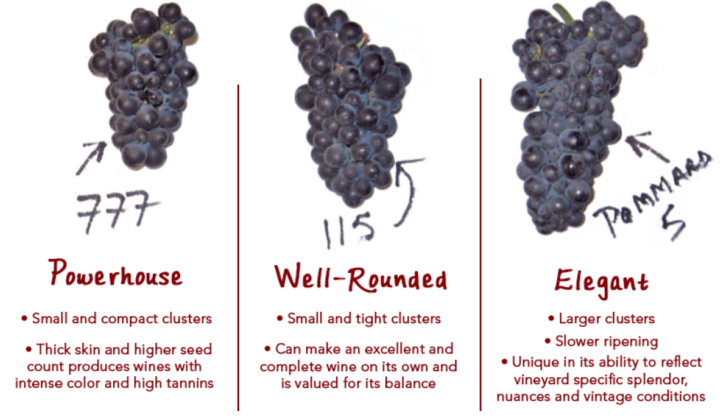
The winemaking is intentionally gentle to preserve the grape’s delicate nature, involving fermentation with 40% whole clusters. Once in the winery, Laura Catena carried out 15 microvinifications batches using only wild yeasts found naturally in the winery and on the grape skins. In order to preserve the varietal characteristics of the pinot noir grapes and those delicate, terroir-driven notes, 82% of the wine has been aged only for 10 months in French oak barriques (all of them at third-use, François Frères barrels), while the remaining 18% of the wine was aged in large, 20hl oak foudres, with additional bottle ageing time before it was deemed ready for the market release. Each batch was vinified and aged separately then blended before bottling. To create this magnificent wine, only the famous Dijon 115 pinot noir clones were used. You can read more about pinot noir clones’ selection here: The Clone Wars.
Pinot Noir is considered the world’s most noble red grape variety and has reached a legendary status mainly due to its ability to produce wines of unparalleled elegance. The grape itself is very difficult to cultivate – it has thin skins, as a result it is prone to rot and various vineyard disease, and is genetically unstable, meaning that it mutates easily (many of Burgundy’s other grapes, such as Pinot Gris and Pinot Blanc, originated from these mutations). But when handled with great care, Pinot Noir is capable to deliver the very best expressions of terrior like no other grape variety, making it the ultimate storyteller of a place. Burgundy remains the spiritual home of Pinot Noir, where some of the most expensive and sought-after wines in the world are produced. Outside of France, Pinot Noir has adapted well in cooler climates such as Oregon’s Willamette Valley, New Zealand’s Central Otago, Argentina’s high-altitude Tupungato, and some parts of California, like Sonoma and Santa Barbara.

The unique geographical conditions of the Uco Valley contribute significantly to the distinctiveness of most of the malbec wines produced here. The arid climate coupled with the high-altitudes is ideal for viticulture, promoting the production of high-quality grapes. The vineyards planted at high-altitudes benefit from abundant sunlight during the day and cool temperatures at night, thus creating a high diurnal range, which preserves natural acidity and develops aromatic complexity in the healthy grapes. The soil is predominantly alluvial, rich in sand and loam, with good drainage that supports deep root growth. Compared to the malbec wines from the lower regions, those from Uco Valley typically exhibit greater freshness, vibrancy, and complexity.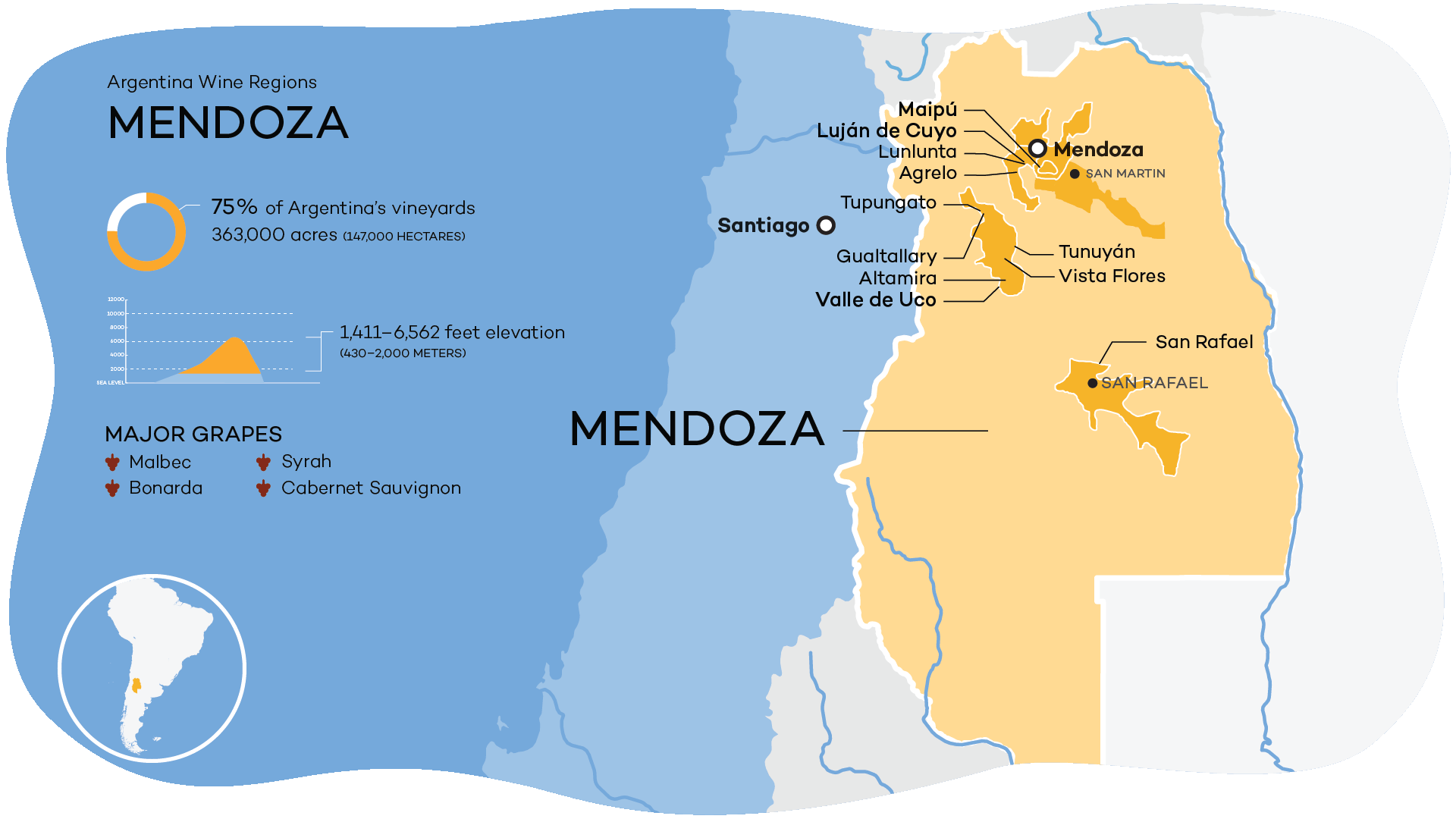
Situated at elevations ranging from 900 to 1700 meters above sea level, with vineyards reaching up to 1500 meters, Tupungato benefits from its unique high-altitude positioning. This elevation results in a pronounced diurnal temperature variation, with warm days and significantly cooler nights as compared to the rest of Mendoza, fostering balanced sugar and acidity levels in the grapes while promoting phenolic ripeness. The region experiences a dry continental climate, receiving less than 220 mm of annual rainfall, which requires controlled irrigation sourced from Andean meltwater. The soils composition in Tupungato are predominantly alluvial, formed by clay and rock base, with sandy and stony surface that often includes large boulders. A key component is the presence of limestone, which retains water effectively, facilitating beneficial interactions between grapevine roots and soil microflora. This contributes to the production of concentrated wines with notable minerality and that much-desired cool-climate elegance.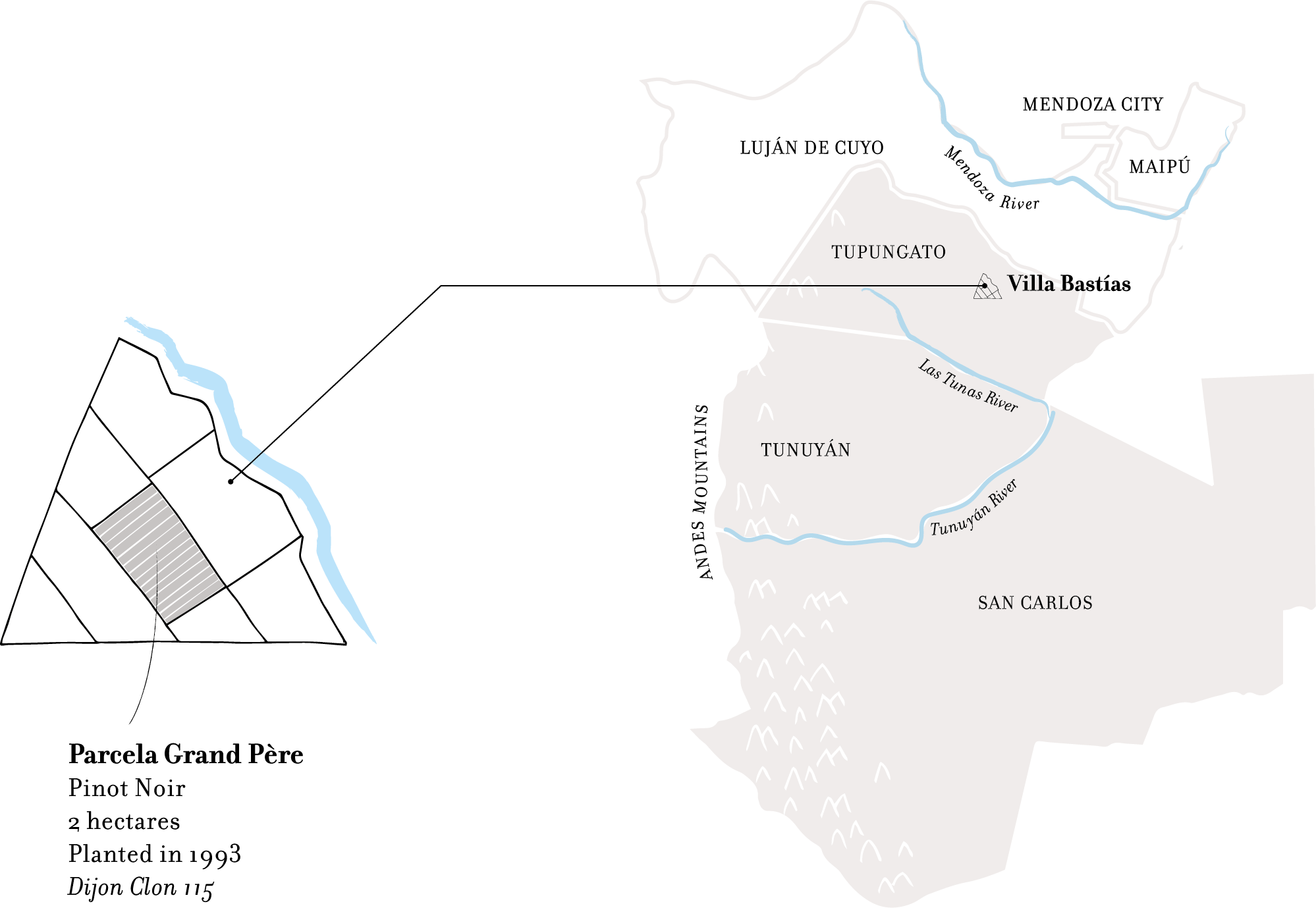

color: pale garnet color
clarity: noble copper shades at the rim
In the glass, the wine presents a classic Pinot Noir appearance, with a pale garnet color and hazy copper shades towards the rim of the glass.

intensity: pronounced & savory
fruit character: ripe
The aromatic profile is pronounced and savory, leading with ripe fruits in the foreground: cranberry, redcurrant, goji berry, and sour cherry – all beautifully interwoven with subtle, well-integrated oak notes of sweet vanilla, sun-dried oakwood, tobacco, and cloves, with an elegant whisper of star anise and cherry tree wood. As the wine breathes, a sophisticated background unfolds, revealing its profound complexity. Savory and herbal layers of tomato stem, brown olive, old leather, and even a hint of asparagus emerge, grounded by a deep, earthy core of clay, loam, marl, and forest floor, all enriched by delicate nuances of wild mushroom and game.

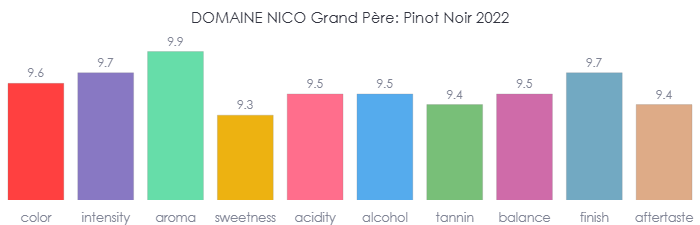
sweetness: dry | acidity: high | alcohol: high | tannin: medium | balance: fine
finish: long | aftertaste: velvety-seedy
On the palate, the wine feels remarkably crisp, savory-delicate, and multi-layered. It showcases a vibrant, pleasantly-seedy mouthfeel that is both ample and supple, creating a very appealing, velvety-rustic texture. The wine is dry, driven by a vibrant acidity that provides an energetic backbone and immense freshness. A well-integrated touch of alcoholic warmth adds to the wine’s structure without ever feeling heavy or heady. The tannins are ripe, fine-grained, and silky, they coat the palate with a gentle grip, guiding the complex flavors of fruit, earth, and spice into a long, persistent finish that concludes with a crisp and velvety-seedy aftertaste.

maturity: developing | drink now or within the next 2 to 3 years
verdict: great | a benchmark wine | a wine that has all the traits to become legendary
Overall, this is a rustic, voluptuous, and vibrant Pinot Noir wine with a velvety and ample mouthfeel – a textbook representation of a modern, old-world-styled Pinot Noir wine, that reassembles the spirit of Burgundy into its high-altitude terroir. The wine achieves a sublime harmony between elegance and structure, richness and delicacy, showcasing a vibrant fruit profile that is brilliantly counterpointed by savory, earthy undertones. With its restrained use of oak, the wine allows the pure expression of the grape variety to shine through. This is a wine in development and, while ready to be enjoyed today for its youthful energy, it has all the necessary components to evolve beautifully over the next 2 to 3 years.

The wine’s vibrant acidity and savory character make it a versatile food companion. Consider pairing it with a roasted duck breast with a cherry reduction sauce and a side of wild mushroom risotto. The richness of the duck will be balanced by the wine’s bright acidity, while the earthy notes of the mushrooms and the fruit in the sauce will resonate beautifully with the wine’s own aromatic layers, creating a mesmerizing wine tasting experience. Enjoy! DOMAINE NICO | Grand Père: Pinot Noir | 2022
variety: pinot noir
country: Argentina
region: Mendoza | Valle de Uco | Tupungato
rating: 95.5
Created by Laura Catena, this graceful Pinot Noir wine is named after Laura’s ‘Grand Père’ – a tribute to her grandfather. The wine is part of a larger project that includes ‘Grand Mère’ (grandmother), where each wine is sourced from a distinct parcel with its own microclimate. The Grand Père parcel is more shaded, yielding a wine with higher acidity and more delicate fruit, while the sunnier Grand Mère parcel produces a wine with silky tannins and a more generous palate – a fascinating side-by-side study in high-altitude micro-terroirs.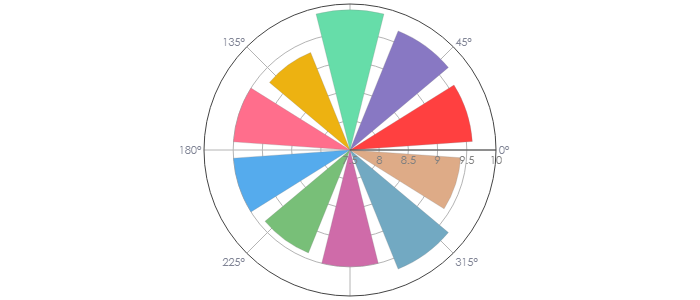

 © The WineStatistics ratings are based solely on our own knowledge of the world of wine and on our personal wine tastes, which may, or may not, differ from yours – the reader. Just remember that there are no absolutes of right and wrong in wine appreciation. Cheers!
Make a one-time donation
Make a monthly donation
Make a yearly donation
Choose an amount
Or enter a custom amount
WineStatistics is a non-profit community. We produce independent and highly detailed wine reviews.
By training ourselves to stop, take a breath, and pay attention to the subtle elements that distinguish one wine from any other, we learn an important lesson about life – that it’s worth taking the time to slow down and appreciate things that pleases us, from a glass of wine to a great work of art. It’s a simple way to learn to appreciate the little things in life that may in some small way enhance our enjoyment of every day.
In order to continue our work we need support from people like you. People who appreciate our contribution in spreading wine knowledge and raising wine awareness across the borders.
You may now support us by contributing with a one-time donation so that we can review even more wines.
WineStatistics is a non-profit community. We produce independent and highly detailed wine reviews.
By training ourselves to stop, take a breath, and pay attention to the subtle elements that distinguish one wine from any other, we learn an important lesson about life – that it’s worth taking the time to slow down and appreciate things that pleases us, from a glass of wine to a great work of art. It’s a simple way to learn to appreciate the little things in life that may in some small way enhance our enjoyment of every day.
In order to continue our work we need support from people like you. People who appreciate our contribution in spreading wine knowledge and raising wine awareness across the borders.
You may now support us by contributing with a monthly donation so that we can review even more wines.
WineStatistics is a non-profit community. We produce independent and highly detailed wine reviews.
By training ourselves to stop, take a breath, and pay attention to the subtle elements that distinguish one wine from any other, we learn an important lesson about life – that it’s worth taking the time to slow down and appreciate things that pleases us, from a glass of wine to a great work of art. It’s a simple way to learn to appreciate the little things in life that may in some small way enhance our enjoyment of every day.
In order to continue our work we need support from people like you. People who appreciate our contribution in spreading wine knowledge and raising wine awareness across the borders.
You may now support us by contributing with a yearly donation so that we can review even more wines.
 WineStatistics