BONNET COTTON | Côte de Brouilly | 2022
gamay

 © We will be evaluating wines in no particular order on no particular schedule. Just stay tuned and you will never miss our reviews. If the wine is tasted more than once, the rating table will be updated so as to reflect all the new impressions and observations. We hope you will enjoy it!

The Bonnet-Cotton domaine is a story of generational legacy meeting a fresh, modern vision. Housed in a historic cellar in Odénas, dating back to 1856, the estate sits on the southern slopes of the Brouilly hill. Managed by Pierre and Marie Bonnet, the winery has a profound respect for nature and a commitment to minimal-intervention winemaking. They practice organic farming across all the 12 hectares of vineyards, which span several of Beaujolais’s famed crus. At Domaine Bonnet-Cotton the philosophy is to let the terroir and grape variety manifest themselves through wines that are pure expressions of their place of origin. Today we are going to review a single-varietal gamay wine that comes from Beaujolais – one of France’s most cherished wine regions – Côte de Brouilly 2022 by Bonnet-Cotton. Gamay, (formally known as gamay noir à jus blanc) is a light-skinned grape variety that originated in Burgundy, and is now the hallmark of Beaujolais, where its most expressive wines flow from the region’s rolling, blue-granite hills north of Lyon. A natural offspring of pinot noir and gouais blanc, gamay has been cultivated since at least the 14th century, long enough to have caused political scandal when it encroached upon precious pinot noir vineyards. Far easier to grow and much more generous in yields than its noble parent, gamay ripens early, thrives in cool climates, and produces wines that are naturally high in acidity yet light in color and tannin – traits that once made it synonymous with the fleeting, bubblegum-scented Beaujolais Nouveau wines. But as trends shifted, so did the region: producers refocused on quality, and the ten Beaujolais crus – from the elegant Fleurie and silky Chiroubles, to the structured Morgon and complex Moulin-à-Vent -reemerged as new standard-bearers of what this grape variety can really achieve.
Stylistically, gamay delivers an unusually broad spectrum. In its simplest form, especially from carbonic-macerated wines, it can be vibrant, juicy, and charmingly aromatic, yet when grown on the best granitic slopes and vinified in a more traditional way, fermented in open vats and aged in oak, it can yield well structured wines capable of aging gracefully and developing almost pinot-like complexity. Today’s wine is made of grapes that were sourced from 65-year-old vines, rooted in the unique terroir of the Côte de Brouilly cru. Vinified in a traditional Beaujolais style, with whole-cluster carbonic maceration to enhance the fruit-forward aromatics, and fermented spontaneously using only indigenous yeasts, the wine is then aged for 8 months in large oak casks, known as ‘foudres‘, with additional bottle ageing time before it was deemed ready for the market release. The wine is then bottled unfined and unfiltered, in order to preserve the grape’s authentic texture and profile and it’s characteristic fruity-explosive character.

France is one of the world’s most influential wine-producing countries, with a long history of terroir-driven viticulture, defined by its wide climatic range – from the cool maritime zones of the Atlantic coast to the warm Mediterranean climate of the south. France is the birthplace to many of the world’s most famous grape varieties, such as Cabernet Sauvignon, Merlot, Pinot Noir, Chardonnay, Syrah, and Sauvignon Blanc. Its wines are known for balance, varietal typicity, and a strong link between geography and style (which is called terroir), forming global reference points for quality across all known wine styles.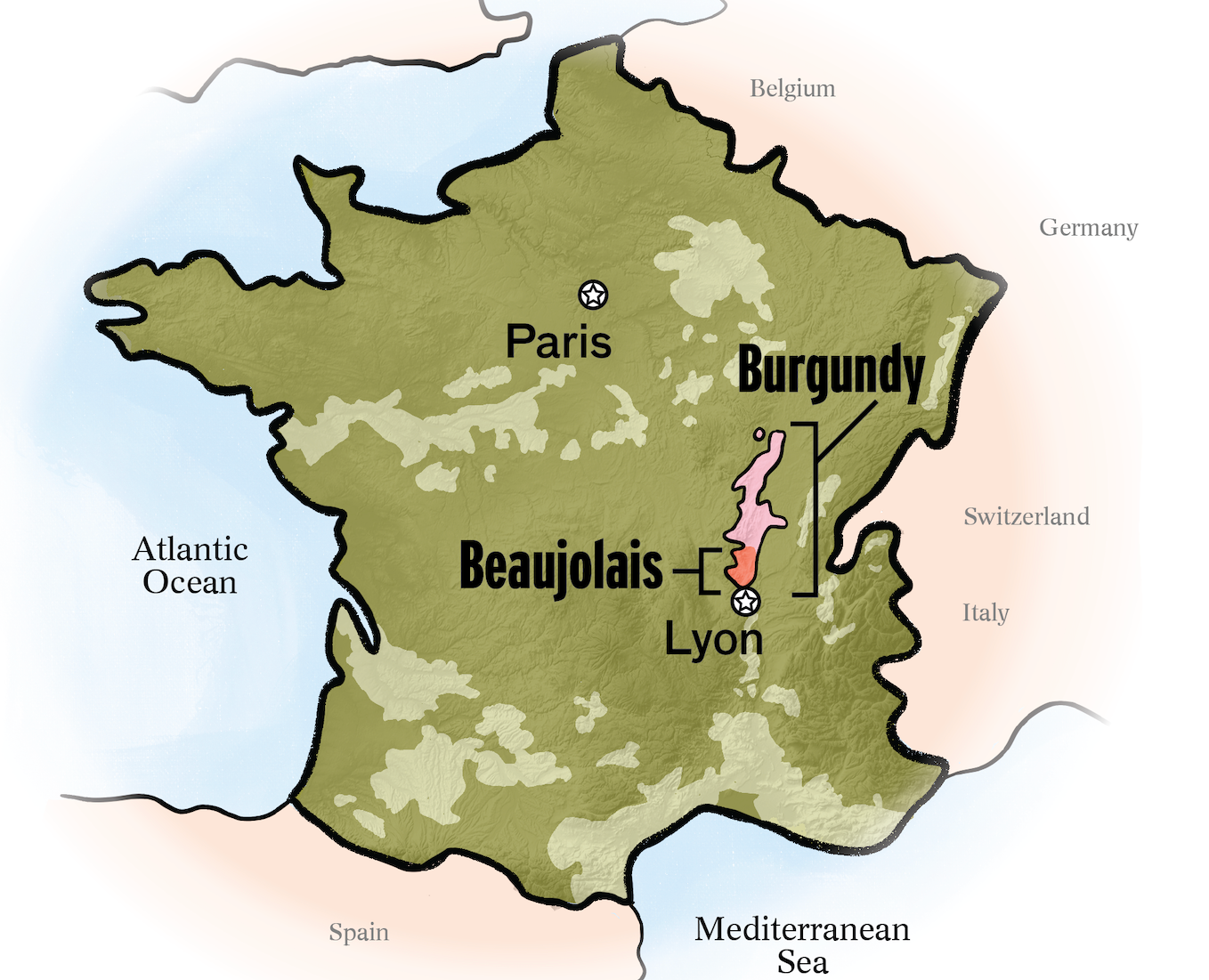 The Beaujolais wine region is located just south of the famed Burgundy, and is defined by a moderate continental climate and rolling hills with predominantly granite and schist soils that favor Gamay – the region’s hallmark grape variety. The region’s unique terroir creates light to medium-bodied reds with bright acidity, vivid red-fruit aromatics, and floral notes, while the cru village wines in the north, deliver deeper structure and complexity. Traditional techniques such as semi-carbonic maceration enhance the fresh and juicy character of the Gamay grape variety. The region produces wines ranging from simple and fruity Beaujolais Noveau, to vibrant and structured crus wines like Morgon, Moulin-à-Vent, or Fleurie.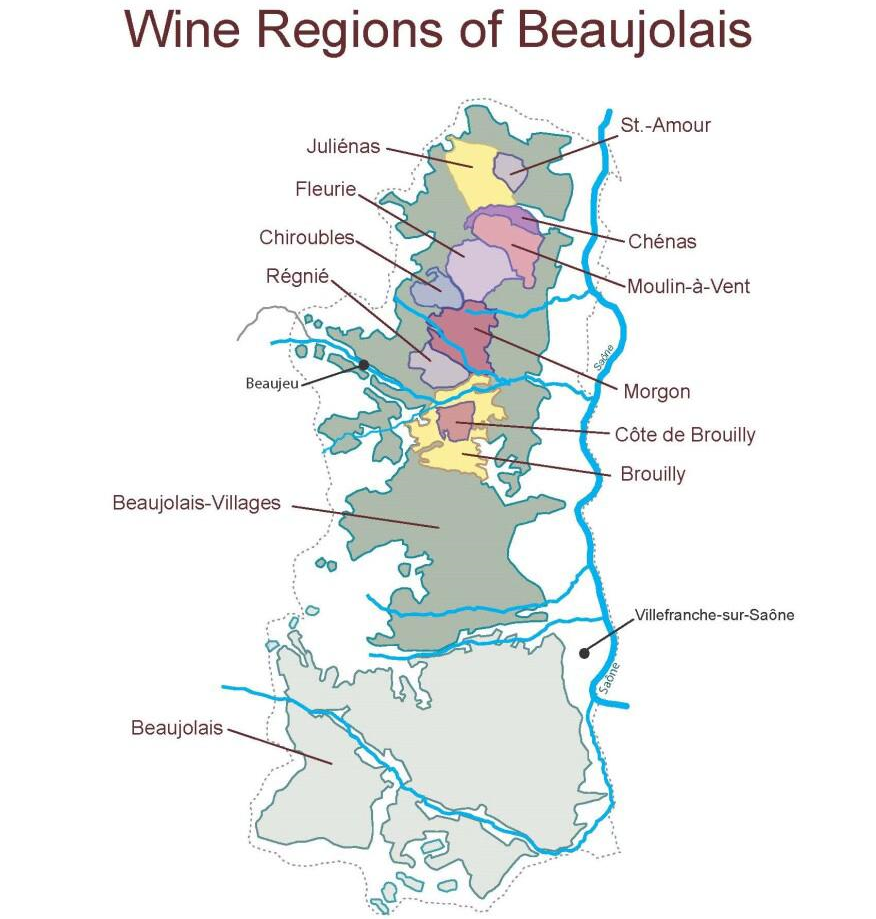

color: medium-pale ruby color
clarity: hazy garnet shades at the rim
In the glass, the wine presents a medium-pale ruby color, with very hazy, garnet shades towards the rim – a telltale sign of its unfiltered nature. This haziness suggests a wine crafted with minimal intervention.

intensity: rich & fruity-expressive
fruit character: overripe & candied
The aromatic profile is rich and fruity-expressive, leaning towards an overripe, almost confected fruit character. The foreground is an explosion of fruit confit and fruit liqueur notes: sour cherry, kirsch cherry, red plum, and raspberry jam mingle alongside cranberry and goji berry notes. This fruit core is layered with intriguing hints of mediterranean herbs, like wormwood and thyme, along with a subtle spiciness of red pepper and a whisper of tobacco leaf. In the background, a deeper complexity emerges with notes of sour cherry liqueur and strawberry liqueur, supported by a gentle oak influence that manifests as sun-dried oakwood and fresh cherry tree wood, accented by hints of cloves and a delicate nuance of nutmeg.

sweetness: dry | acidity: high | alcohol: high | tannin: medium- | balance: fair
finish: medium | aftertaste: sour & crisp
On the palate, the wine reveals an angular and crisp personality, driven by a rich profile that oscillates between fruit confit and fruit liqueur. The mouthfeel is rich and subtly-herbal, yet the overall impression is one of austerity. It is a distinctly dry wine, defined by exuberant acidity that dominates the palate. The alcoholic warmth is nicely integrated, providing body without overwhelming heat, while the tannins are fine-grained, adding a subtle tannic grip. The experience culminates in a crisp and slightly sour aftertaste, leaving a lingering impression that is somewhat rough and austere, with a touch of phenolic bitterness that suggests the wine is still finding its footing.

maturity: developing | drink now or within the next 2 years
verdict: nice | an enjoyable wine | a nice wine that lacks elegance and finesse
All in all, this is a slightly unpolished and off-balanced wine that feels caught in a moment of untamed youth. It displays good varietal typicity, showcasing the vibrant fruit that Gamay is famous for, but seems to lack the terroir-driven authenticity and mineral-laced elegance one might expect from a Côte de Brouilly cru wine. The wine tastes assertive, with a crispy-sour, and at times acrid character that feels rough around the edges. This is a delicate and slightly heady wine that, in its current state, lacks the harmony and finesse to be truly compelling. It is still developing, ready to be approached today, but also it might benefit from another 1 or 2 years of bottle ageing, in the hope that its sharp angles will soften and allow for some elegance and maybe even finesse to emerge.

Given the wine’s high acidity and assertive fruit profile, it calls for a dish with enough richness and fat to counterbalance its sharp character. We would recommend pairing it with a slow-roasted pork belly with a cherry and star anise glaze. This is a pairing of both contrast and congruence. The wine’s exuberant acidity would slice through the richness of the pork belly, cleansing the palate, while the sweet-tart cherry glaze will harmoniously echo the sour cherry and fruit confit notes in the wine, creating a dynamic and deeply satisfying wine tasting experience. Santé! BONNET COTTON | Côte de Brouilly | 2022
variety: gamay
country: France
region: Beaujolais | Côte de Brouilly
rating: 91.8
The name Côte de Brouilly originates from its location on the slopes of Mont Brouilly, an ancient volcano that is the geographical heart of the region. A chapel, Notre-Dame aux Raisins, sits at its summit, built in 1854 to protect the vineyards from oidium (powdery mildew). This makes Côte de Brouilly the only Beaujolais Cru to be situated entirely on the slopes of a mountain – a unique and elevated terroir.

 © The WineStatistics ratings are based solely on our own knowledge of the world of wine and on our personal wine tastes, which may, or may not, differ from yours – the reader. Just remember that there are no absolutes of right and wrong in wine appreciation. Cheers!
Make a one-time donation
Make a monthly donation
Make a yearly donation
Choose an amount
Or enter a custom amount
WineStatistics is a non-profit community. We produce independent and highly detailed wine reviews.
By training ourselves to stop, take a breath, and pay attention to the subtle elements that distinguish one wine from any other, we learn an important lesson about life – that it’s worth taking the time to slow down and appreciate things that pleases us, from a glass of wine to a great work of art. It’s a simple way to learn to appreciate the little things in life that may in some small way enhance our enjoyment of every day.
In order to continue our work we need support from people like you. People who appreciate our contribution in spreading wine knowledge and raising wine awareness across the borders.
You may now support us by contributing with a one-time donation so that we can review even more wines.
WineStatistics is a non-profit community. We produce independent and highly detailed wine reviews.
By training ourselves to stop, take a breath, and pay attention to the subtle elements that distinguish one wine from any other, we learn an important lesson about life – that it’s worth taking the time to slow down and appreciate things that pleases us, from a glass of wine to a great work of art. It’s a simple way to learn to appreciate the little things in life that may in some small way enhance our enjoyment of every day.
In order to continue our work we need support from people like you. People who appreciate our contribution in spreading wine knowledge and raising wine awareness across the borders.
You may now support us by contributing with a monthly donation so that we can review even more wines.
WineStatistics is a non-profit community. We produce independent and highly detailed wine reviews.
By training ourselves to stop, take a breath, and pay attention to the subtle elements that distinguish one wine from any other, we learn an important lesson about life – that it’s worth taking the time to slow down and appreciate things that pleases us, from a glass of wine to a great work of art. It’s a simple way to learn to appreciate the little things in life that may in some small way enhance our enjoyment of every day.
In order to continue our work we need support from people like you. People who appreciate our contribution in spreading wine knowledge and raising wine awareness across the borders.
You may now support us by contributing with a yearly donation so that we can review even more wines.
 WineStatistics