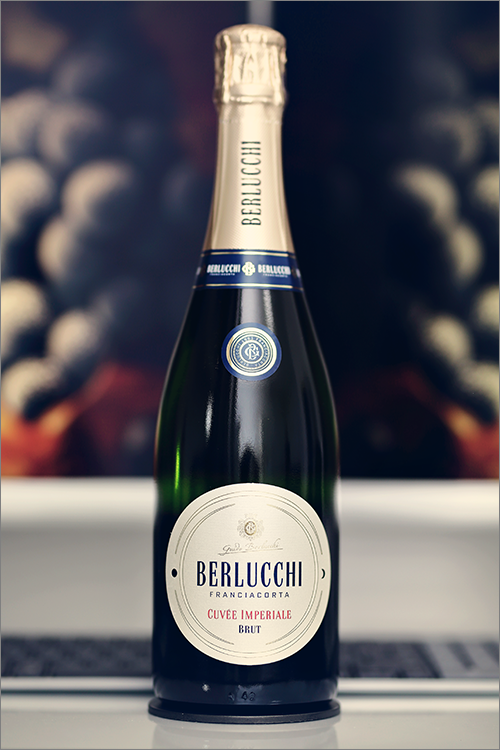
BERLUCCHI | Franciacorta | Cuvée Imperiale | Brut | #
chardonnay | pinot noir
 © We will be evaluating wines in no particular order on no particular schedule. Just stay tuned and you will never miss our reviews. If the wine is tasted more than once, the rating table will be updated so as to reflect all the new impressions and observations. We hope you will enjoy it!

The story of Berlucchi is deeply rooted in the story of Franciacorta itself. It all began in the mid-1950s when an ambitious oenologist, named Franco Ziliani, met Guido Berlucchi, who was seeking advice on his still wines. During their meeting, Ziliani asked if Berlucchi was open to the prospect of creating a sparkling wine in an authentic french style. This audacious suggestion sparked a partnership that would change Italian wine history. The ‘Cuvée Imperiale’ is the direct descendant of that pioneering spirit, embodying over half a century of dedication to quality, finesse and elegance. Today we are going to review a sparkling wine of historical significance from the Lombardy region in northern Italy – Franciacorta Cuvée Imperiale Brut by Berlucchi. This is not your regular sparkling wine – this one represents the genesis of the Franciacorta DOCG – a harmonious blend of chardonnay (90%) and pinot noir (10%), produced by the authentic méthode traditionelle technique (also known as metodo classico or the champenoise method), the same way the famous Champagne wines are made in France, with a long period of second fermentation in the bottle, where the wine spends at least 18 months on fine lees (sur lie ageing), followed by an additional 2 months of refinement after disgorgement, which allowed it to develop an extra layer of aromatic complexity and the much desired creaminess on the palate. The final cuvée is enriched with 10% reserve wines from previous vintages, a technique designed to add depth and consistency across season’s variations.
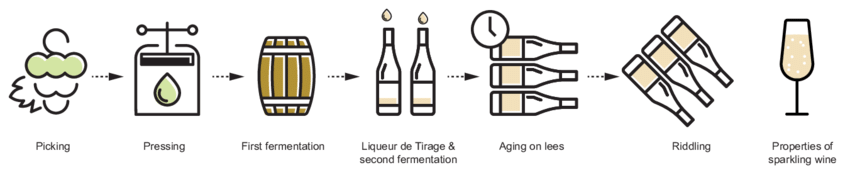
When it comes to sparkling wines, not all of them are created the same way. One of the key differences lies in how the bubbles are formed — specifically, whether the wine undergoes its second fermentation in the bottle (traditional method) or in large pressurized tanks (tank method, also known as charmat method). In the tank method the secondary fermentation happens in stainless steel tanks rather than individual bottles. This process is quicker, more cost-effective, and preserves the wine’s vibrant fruit character and freshness. The result is a more aromatic, easy-drinking sparkling wine with crisp acidity and minimal yeasty complexity (think of Prosecco). On the other hand, the traditional method is a more time-intensive process, as the second fermentation happens in the bottle, where the wine also ages on the fine lees (the dead yeast particles) for extended periods, from several months to several years. This slow aging builds extra layers of complexity on the nose and creates a creamy textures on the palate (think of classic sparkling wines like Champagne, Cava, or Franciacorta).
Franciacorta is Italy’s most prestigious traditional-method sparkling wine, regarded as the italian answer to Champagne. Produced exclusively in Lombardy, Franciacorta places a strong emphasis on quality, with long ageing on fine lees, with Chardonnay as the main driver for delivering elegance and finesse. While non-vintage Franciacorta offer freshness and precision, the appellation has a predefined ageing hierarchy, including Satèn, Rosé, and vintage Millesimato wines – all requiring extended time on lees. Similar to Champagne, longer lees ageing results in greater autolytic complexity, with pronounced brioche and buttery aromas. The best Franciacorta wines can rival Champagne in both, depth and finesse.

Nestled between the Alps and the Po River plain, Lombardy is one of Italy’s most diverse wine regions, producing everything from world-class sparkling wines to elegant still reds and whites. Its continental climate varies from cool alpine conditions in the north to warmer, more temperate areas in the south, moderated by the many lakes and rivers that dot the region, particularly Lake Garda and Lake Iseo, which temper extremes and prolong the growing season. Soils are equally varied, ranging from moraine and glacial deposits to limestone and clay, offering excellent drainage and complexity. Lombardy’s most famous appellations include Franciacorta (renowned for the méthode traditionelle sparkling wines) and Valtellina (famous for its ‘nebbiolo delle alpi‘ wines).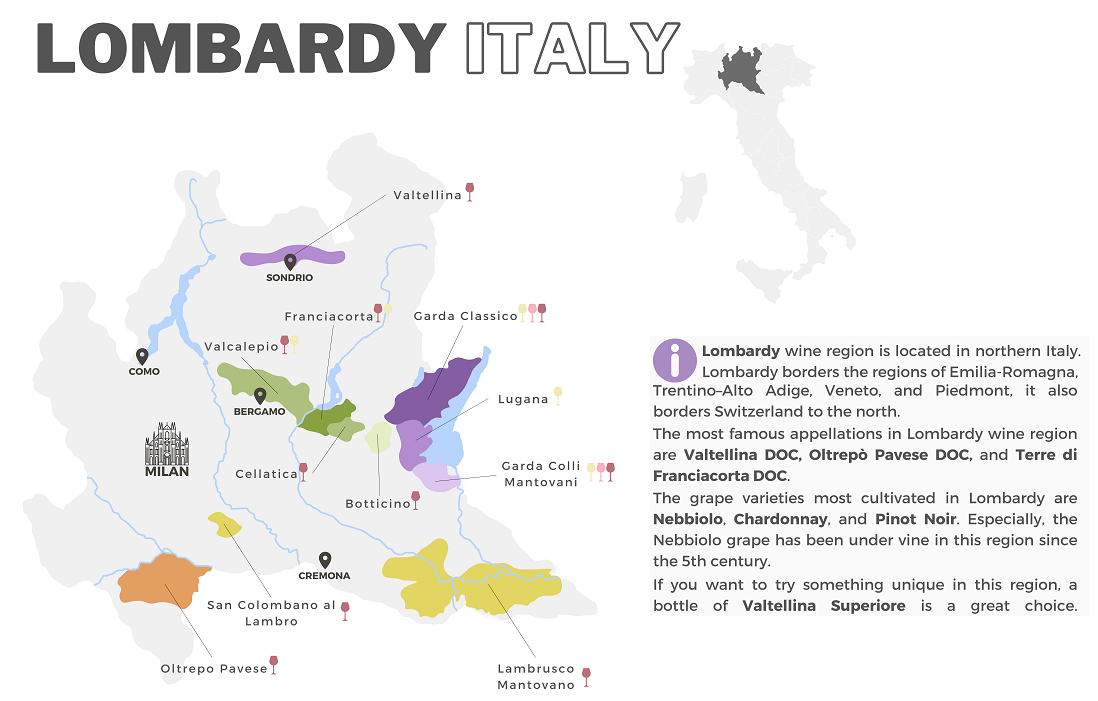 Franciacorta is a small, morainic amphitheater shaped by ancient glaciers, located within Lombardy, at the southern edge of Lake Iseo, where a temperate continental climate is softened by the lake’s moderating influence. Warm summers are balanced by cool nights and steady breezes, creating a high diurnal range that preserves acidity while allowing full phenolic ripeness. Vineyards are planted on gentle hills formed by ancient glacial activity, with low fertility soils rich in gravel, limestone, sand, silt and mineral deposits that provide excellent drainage, thus limiting yields and enhancing concentration. Chardonnay dominates the landscape, supported by pinot noir (known locally as pinot nero) and small amounts of pinot blanc (known locally as pinot bianco), producing base wines with depth and structure. Extended ageing on fine lees is a must here, resulting in sparkling wines defined by vibrant freshness, rich aromatic complexity and a distinctly refined, mineral character. Unlike the chalk-driven soils of Champagne, Franciacorta‘s morainic terroir yields wines with a riper fruit profile and a creamier texture, while maintaining natural freshness.

color: deep yellow color
clarity: pastel yellow hues
The wine presents a deep yellow color, with pastel-yellow hues shimmering at the rim of the glass. The effervescence is soft but generous, that gives rise to a fine and lingering stream of tiny, elegant bubbles.

intensity: pronounced & buttery
fruit character: ripe
The aromatic profile is rich and pronounced, led by a distinct buttery character. The foreground is a medley of ripe orchard fruits, featuring notes of quince, yellow apple, pear, and a touch of apricot – all brightened by a zesty citrus layer of lemon, pomelo, and white grapefruit. Subtle undertones of hay and beeswax add a touch of rustic charm. In the background the wine reveals its true character – a nuanced wave of autolytic aromas born from its extended time spent on the lees. Notes of freshly baked bread, homemade butter, toast, brioche, and dough create a sophisticated and creamy foundation, with delicate hints of crème brûlée and panna cotta adding a final touch of indulgent sweetness.

sweetness: dry | acidity: high | alcohol: high | tannin: low | balance: fine
finish: medium+ | aftertaste: appealingly-crisp
On the palate, the wine feels refreshingly crisp and harmonious. The mouthfeel is both rich and vibrant, showcasing a yeasty-creamy texture that is perfectly balanced by a bright acidity that keeps the wine lively. A well-integrated touch of alcoholic warmth adds body and structure without overpowering the delicate flavors. A fascinating and pleasantly seedy texture adds further complexity and grip, while a subtle hint of phenolic bitterness on the mid-palate provides length and depth. All this leads to a persistent finish, leaving an appealingly-crisp aftertaste that echoes its complex autolytic character.

maturity: developing | drink now or within the next 3 to 4 years
verdict: great | a benchmark wine | a wine that has all the traits to become legendary
All in all, this is a textbook traditional method sparkling wine – a true benchmark for the Franciacorta appellation that masterfully blends nuance with finesse. With a genuine expression of its terroir, the wine is displaying that unmistakable autolytic charm that many Champagne wines are famous for. This wine is still in the development, yet ready to be enjoyed today, or aged for another 3 to 4 years, in order to allow it gain even more depth and aromatic sophistication.

The wine’s eclectic personality makes it incredibly versatile for food pairing. While it would definitely shine as an aperitif, it would truly come alive at the dinner table. Consider serving it with a classic risotto alla milanese, where the wine’s bright acidity will cut through the richness of the saffron and parmesan, while its creamy, yeasty notes will harmonize beautifully with the texture of the risotto. Enjoy! BERLUCCHI | Franciacorta | Cuvée Imperiale | Brut | #
variety: chardonnay | pinot noir
country: Italy
region: Lombardy | Franciacorta
rating: 95.0
The name ‘Franciacorta’ has historical roots, deriving from the ‘franchae curtes’ or ‘free courts’ – medieval communities in the area that were granted tax exemptions, a testament to the region’s long and storied past.


 © The WineStatistics ratings are based solely on our own knowledge of the world of wine and on our personal wine tastes, which may, or may not, differ from yours – the reader. Just remember that there are no absolutes of right and wrong in wine appreciation. Cheers!
Make a one-time donation
Make a monthly donation
Make a yearly donation
Choose an amount
Or enter a custom amount
WineStatistics is a non-profit community. We produce independent and highly detailed wine reviews.
By training ourselves to stop, take a breath, and pay attention to the subtle elements that distinguish one wine from any other, we learn an important lesson about life – that it’s worth taking the time to slow down and appreciate things that pleases us, from a glass of wine to a great work of art. It’s a simple way to learn to appreciate the little things in life that may in some small way enhance our enjoyment of every day.
In order to continue our work we need support from people like you. People who appreciate our contribution in spreading wine knowledge and raising wine awareness across the borders.
You may now support us by contributing with a one-time donation so that we can review even more wines.
WineStatistics is a non-profit community. We produce independent and highly detailed wine reviews.
By training ourselves to stop, take a breath, and pay attention to the subtle elements that distinguish one wine from any other, we learn an important lesson about life – that it’s worth taking the time to slow down and appreciate things that pleases us, from a glass of wine to a great work of art. It’s a simple way to learn to appreciate the little things in life that may in some small way enhance our enjoyment of every day.
In order to continue our work we need support from people like you. People who appreciate our contribution in spreading wine knowledge and raising wine awareness across the borders.
You may now support us by contributing with a monthly donation so that we can review even more wines.
WineStatistics is a non-profit community. We produce independent and highly detailed wine reviews.
By training ourselves to stop, take a breath, and pay attention to the subtle elements that distinguish one wine from any other, we learn an important lesson about life – that it’s worth taking the time to slow down and appreciate things that pleases us, from a glass of wine to a great work of art. It’s a simple way to learn to appreciate the little things in life that may in some small way enhance our enjoyment of every day.
In order to continue our work we need support from people like you. People who appreciate our contribution in spreading wine knowledge and raising wine awareness across the borders.
You may now support us by contributing with a yearly donation so that we can review even more wines.
 WineStatistics