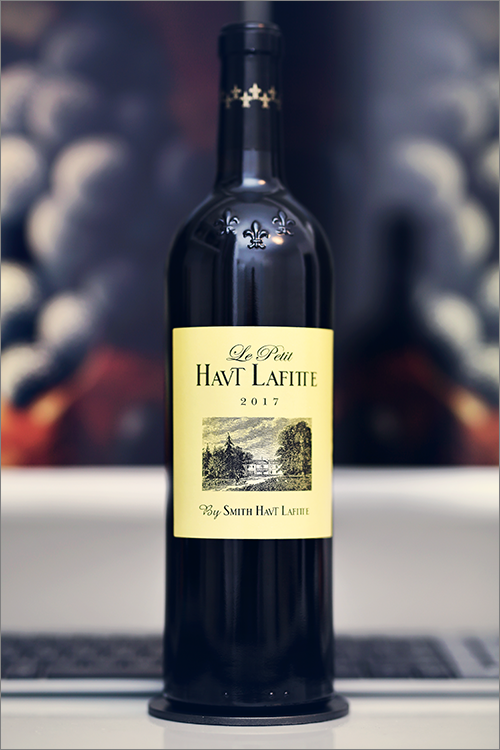
CHÂTEAV SMITH HAVT LAFITTE | Le Petit | Havt Lafitte | 2017
cabernet sauvignon | merlot
 © We will be evaluating wines in no particular order on no particular schedule. Just stay tuned and you will never miss our reviews. If the wine is tasted more than once, the rating table will be updated so as to reflect all the new impressions and observations. We hope you will enjoy it!

Acquired in 1990 by Daniel and Florence Cathiard, former Olympic ski champions, Château Smith Haut Lafitte has been transformed from a respected estate into a beacon of excellence and environmental stewardship. Their vision was to restore the estate to its former glory while pioneering a holistic and sustainable approach to winemaking. This philosophy, (they call it “bio-precision), combines cutting-edge technology with centuries-old tradition. This approach to winemaking, from cultivating their own vine rootstocks and crafting their own barrels, to using horse-drawn ploughs, resulted in wines that are capable to express the full potential of the Pessac-Léognan’s exceptional terroir.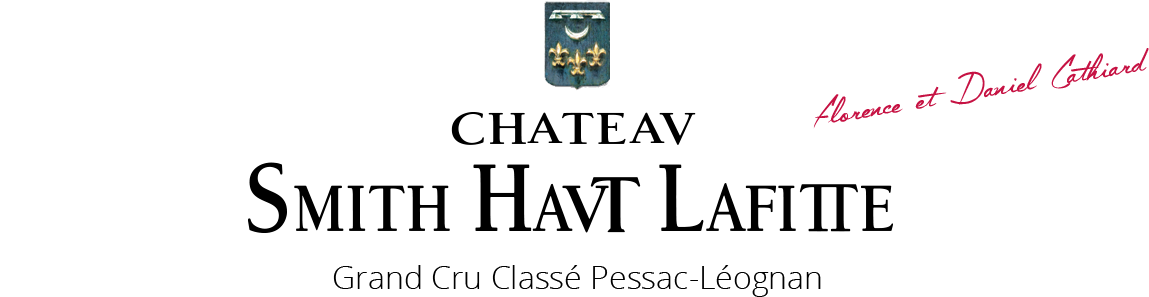 Today we are going to review a true classic – a wine from the ‘left bank‘ – a genuine Bordeaux blend from the Graves sub-region of the world’s famous Bordeaux appellation – Le Petit Haut Lafitte Rouge 2017 by Château Smith Haut Lafitte. This wine is a classic blend of 60% cabernet sauvignon and 40% merlot (also known locally as merlot noir), where cabernet sauvignon forms the wine’s main body and structure, while merlot adds up-front richness, builds a leaner palate and a creates a more dynamic finish. The final wine has been aged for 14 months in French oak barriques (from which 20% new oak) produced in the estate’s in-house cooperage, with additional bottle ageing time before it was ready for the market release.
The ‘left bank‘ of Bordeaux is defined by its gravel-rich soils, laid down over centuries by the Garonne River, which provides excellent drainage and retain the much-needed heat, making this region particularly well suited to Cabernet Sauvignon. This terroir is well suited for late-ripening grape varieties, therefore Cabernet Sauvignon dominates the blends, supported by Merlot, Cabernet Franc, and small amounts of Petit Verdot. The Bordeaux‘s ‘left bank‘ is home to some of the world’s most prestigious appellations, including Médoc, Margaux, Saint-Julien, Pauillac, and Saint-Estèphe, each of them expressing the power and finesse of the best Cabernet Sauvignon wines of the world.

Bordeaux is the world’s most influential wine region, defined by a temperate maritime climate with mild winters, moderate summers, and regular rainfall that supports long and even ripening. The region is shaped by the Gironde estuary and its tributaries, the Garonne and Dordogne rivers, which moderate temperatures and reduce frost risk. Bordeaux’s soils are highly varied, ranging from gravel, sand, and limestone, to clay-rich formations, allowing different grape varieties to thrive in distinct zones. Cabernet Sauvignon, Merlot, Cabernet Franc, Petit Verdot, and Malbec are all at home here, dominating red wine production, while Sauvignon Blanc, Sémillon, and Muscadelle form the backbone of the region’s whites.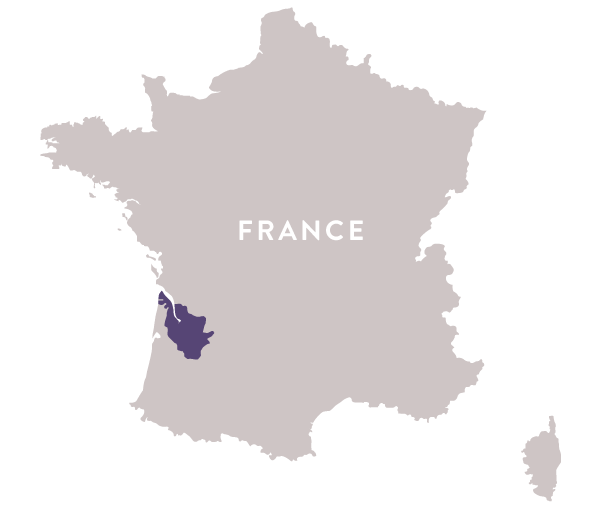 Bordeaux‘s ‘Left Bank‘ lies west of the Gironde and Garonne rivers and is best known for its gravel-dominated soils, which offer excellent drainage and heat retention, ideal for Cabernet Sauvignon. The maritime influence of the Atlantic Ocean tempers extreme heat and extends the growing season, allowing grapes to ripen slowly while retaining freshness. Wines from the Left Bank are typically well structured, with a nuanced tannic grip, with Cabernet Sauvignon playing the main role, supported by Merlot and smaller proportions of other grape varieties, creating age worthy wines of high precision and power.
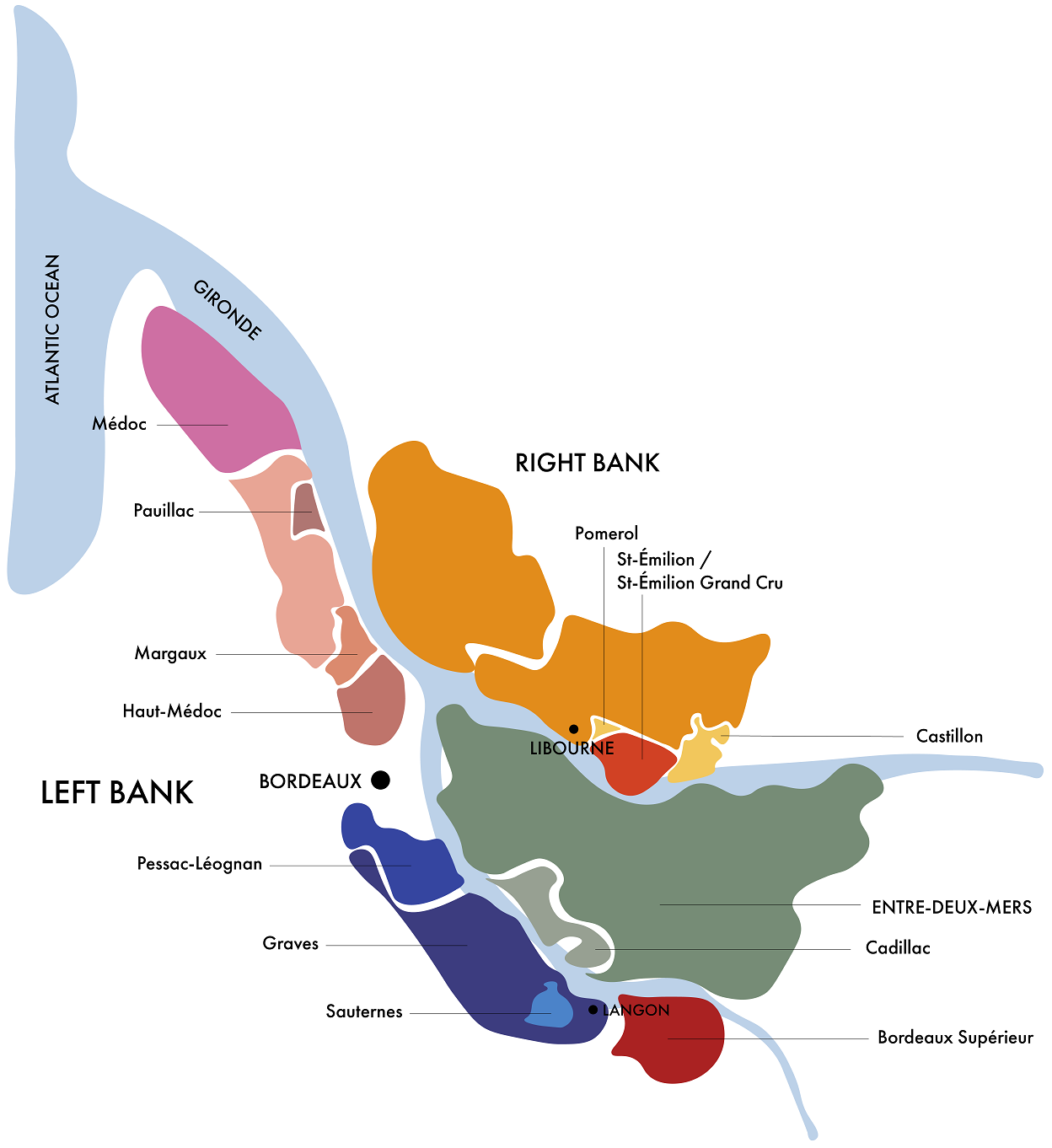 The Pessac-Léognan sub-region, located south of the city of Bordeaux within the esteemed Graves area, is distinguished by its deep gravel soils mixed with sand, clay, and iron-rich deposits, which contribute both, structure and aromatic complexity to the wines. This region benefits from a slightly warmer microclimate, moderated by nearby forests that protect vineyards from excessive humidity and winds. Pessac-Léognan produces both, world-class red and white wines, where the reds combine the elegance of Merlot with the structure of Cabernet Sauvignon, while the whites are a blend of Sauvignon Blanc and Sémillon. Both, the red wines and the white wines, are known for their lean texture, and remarkable ageing potential.

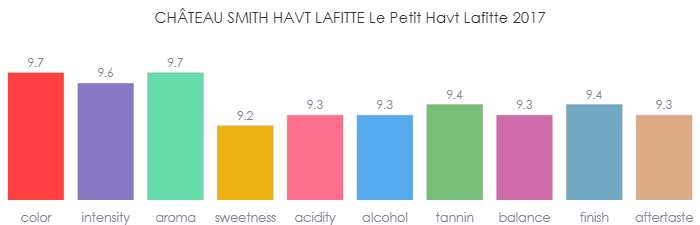
color: deep & opaque garnet color
clarity: hazy & noble garnet shades at the rim
In the glass, the wine presents a deep and opaque garnet color – a textbook appearance for a classic, developing Bordeaux blend, with hazy garnet shades at the rim.

intensity: rich & expressive
fruit character: ripe
On the nose, the wine is both rich and expressively-delicate, showcasing a classic old-world Bordeaux aromatic profile. A foreground of ripe black fruits (think blackberry, dark cherry, prune, and blackcurrant) is intricately woven with a sophisticated spice box of black pepper, cloves, and nutmeg. Subtle notes of toasted oakwood and petrichor add an extra layer of aromatic sophistication. As the wine breathes, an earthy and savory background unfolds, revealing nuances of old leather, iron, and a distinct minerality of pencil lead, crushed gravel, and charcoal – all elegantly rounded by a hint of vanilla and black soil dust.

sweetness: dry | acidity: high | alcohol: medium+ | tannin: high | balance: good
finish: medium+ | aftertaste: lean & crisp
The palate reveals a remarkably lean and ample Bordeaux wine, showcasing a rich and multi-layered profile. The wine feels voluptuous and well structured, with a crisp acidity that lends freshness and a nicely-integrated touch of alcoholic warmth that adds depth. The mouthfeel is defined by seedy and fine-grained tannins that provide a firm grip – a hallmark of a classic, age-worthy Bordeaux blend. This is a savory and extracted wine, where primary fruit is perfectly balanced by delicate, terroir-driven earthy hints. The experience culminates in a crisp and delicately-lean aftertaste that resonates with the wine’s savory complexity, embodying the perfect harmony between elegance, finesse, and structure.

maturity: developing | drink now or age for at least 3 to 4 years
verdict: great | a benchmark wine | a wine that has all the traits to become legendary
Overall, this is a genuine example of a modern-bred, yet old-world styled, Bordeaux blend that delivers the vibrancy of its fruit alongside the unmistakable footprint of the Pessac-Léognan terroir. This wine is the epitome of a pure-bred Bordeaux blend that manages to combine elegance with structure and finesse. While harmonious and beautifully crafted, the wine is still in its development phase. Its grippy tannins and youthful structure indicate that it has not yet reached its peak form. We highly recommend cellaring it for at least 3 to 4 years to allow it to round out and gain additional aromatic sophistication.

The wine’s firm structure, crisp acidity, and earthy profile make it an ideal partner for robust and flavorful dishes. For a complementary pairing that will truly elevate the dining experience, serve it alongside a slow-braised beef cheek with a creamy polenta and wild mushrooms. The tender and rich texture of the meat will be beautifully balanced by the wine’s grippy tannins, while the earthy notes of the mushrooms will resonate perfectly with the wine’s terroir-driven character, creating a harmonious match. Enjoy! CHÂTEAV SMITH HAVT LAFITTE | Le Petit | Havt Lafitte | 2017
variety: cabernet sauvignon | merlot
country: France
region: Bordeaux | Pessac-Léognan
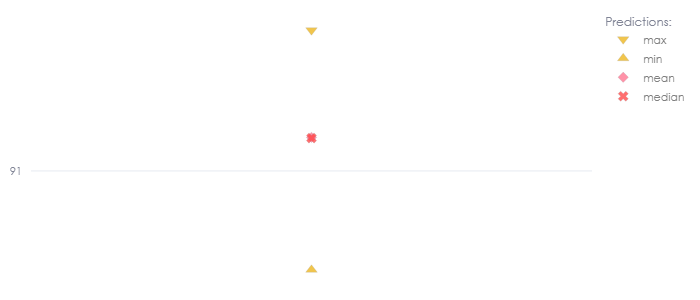
rating: 94.2
The iconic ‘fleur-de-lis’ emblem on the Château Smith Haut Lafitte pays homage to the Verrier du Boscq family – the 18th-century owners whose ancestors were granted the right to use the ‘fleur-de-lis’ symbol by King Charles VII. It is a tribute to the city of Florence – the ‘city of the lily’, while at the same time a link to one of the owners – Florence Cathiard, thus a word play of symbiology and a homage to the estate’s history.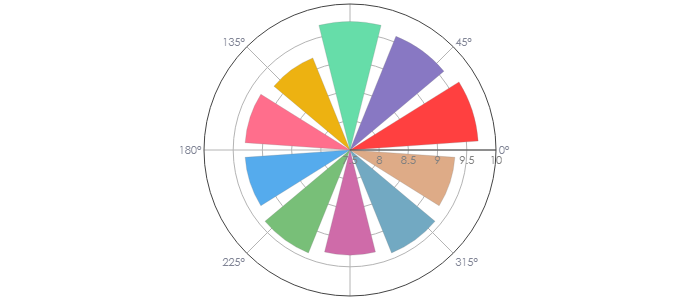
 © The WineStatistics ratings are based solely on our own knowledge of the world of wine and on our personal wine tastes, which may, or may not, differ from yours – the reader. Just remember that there are no absolutes of right and wrong in wine appreciation. Cheers!
Make a one-time donation
Make a monthly donation
Make a yearly donation
Choose an amount
Or enter a custom amount
WineStatistics is a non-profit community. We produce independent and highly detailed wine reviews.
By training ourselves to stop, take a breath, and pay attention to the subtle elements that distinguish one wine from any other, we learn an important lesson about life – that it’s worth taking the time to slow down and appreciate things that pleases us, from a glass of wine to a great work of art. It’s a simple way to learn to appreciate the little things in life that may in some small way enhance our enjoyment of every day.
In order to continue our work we need support from people like you. People who appreciate our contribution in spreading wine knowledge and raising wine awareness across the borders.
You may now support us by contributing with a one-time donation so that we can review even more wines.
WineStatistics is a non-profit community. We produce independent and highly detailed wine reviews.
By training ourselves to stop, take a breath, and pay attention to the subtle elements that distinguish one wine from any other, we learn an important lesson about life – that it’s worth taking the time to slow down and appreciate things that pleases us, from a glass of wine to a great work of art. It’s a simple way to learn to appreciate the little things in life that may in some small way enhance our enjoyment of every day.
In order to continue our work we need support from people like you. People who appreciate our contribution in spreading wine knowledge and raising wine awareness across the borders.
You may now support us by contributing with a monthly donation so that we can review even more wines.
WineStatistics is a non-profit community. We produce independent and highly detailed wine reviews.
By training ourselves to stop, take a breath, and pay attention to the subtle elements that distinguish one wine from any other, we learn an important lesson about life – that it’s worth taking the time to slow down and appreciate things that pleases us, from a glass of wine to a great work of art. It’s a simple way to learn to appreciate the little things in life that may in some small way enhance our enjoyment of every day.
In order to continue our work we need support from people like you. People who appreciate our contribution in spreading wine knowledge and raising wine awareness across the borders.
You may now support us by contributing with a yearly donation so that we can review even more wines.
 WineStatistics