AGRICOLA PUNICA | Barrua | Isola dei Nuraghi | 2019
carignan | cabernet sauvignon | merlot

 © We will be evaluating wines in no particular order on no particular schedule. Just stay tuned and you will never miss our reviews. If the wine is tasted more than once, the rating table will be updated so as to reflect all the new impressions and observations. We hope you will enjoy it!

Agricola Punica is the result of a visionary collaboration, born as a joint venture between the tuscan winemaker Giacomo Tachis of Tenuta San Guido and the Cantina Santadi’s president Antonello Pilloni. This collaborative effort aims to elevate sardinian viticulture to new heights, showcasing the island’s unique terroir and grape varieties. It was Tachis who first recognized the untapped potential of Sardinia, convinced that it could yield wines of exceptional quality. In 2002, AgriPunica acquired two key estates, Barrua and Narcao, nestled in the sun-drenched southwestern corner of Sardinia, an area renowned as Basso Sulcis. From the very first harvest, the quality of the grapes confirmed Tachis’s foresight. Today we are going to review a quite remarkable wine from the stunning island of Sardinia, which is one of Italy‘s most famous wine regions – Barrua Isola dei Nuraghi 2019 by Agricola Punica. This wine is a harmonious blend of three grape varieties: carignan (85% – known locally as carignano, sulcis or carignano del sulcis, which is a local clone of the carignan/cariñena grape variety), cabernet sauvignon (10%) and merlot (5%), where carignan forms the wine’s main body and brings to the forefront those dehydrated fruits notes that are characteristic of this grape variety, cabernet sauvignon enhances the wine’s color, depth and adds structure on the palate, while merlot builds a more refined mid-palate and creates a leaner and a more dynamic finish.
Carignan (known also as Cariñena or Carignano) is a dark-skinned red grape variety native to northeast Spain, particularly the region of Aragón. Known for its deep color, high acidity, and tannins, carignan can produce wines with bold, earthy flavors, hints of black fruit, and spicy, sometimes smoky undertones. Historically, it was widely planted across Spain and southern France, particularly in Languedoc-Roussillon region, as a blending grape, however, it can be challenging to work with, due to its naturally high acidity and tannins, and as thus, it thrives best on old vines where it can produce concentrated, balanced wines.
This wine is produced from the grapes sourced from the Sulcis region of Sardinia (IGT Isola dei Nuraghi). The unique climate and soil of the region contribute not only to the quality of the grapes but also to the intense character of the wine. In order to soften the tannins and add a layer of extra complexity to the final blend, the wine has been aged for 18 months in french oak barriques, from which 30% new oak, and another 6 months in the bottle before it was deemed ready to be released on the market.

Sardinia is Italy’s second-largest island and is defined by its rugged landscapes, abundant sunshine, and strong maritime influence, making it one of the Mediterranean’s most distinctive wine regions. The island enjoys a warm Mediterranean climate with long, dry summers, mild winters, and persistent coastal winds, most notably the Mistral winds, which moderate temperatures, reduce vine diseases, and prolong the ripening season. Sardinia’s diverse soils vary from granite, limestone and schist, to sandstone and sandy soils, many of which are poor and well drained, naturally limiting vine vigor and concentrating flavour in the grapes. The island is home to a wealth of indigenous grape varieties, with Cannonau being the island’s flagship grape, alongside Carignano, Monica, Vermentino, and Nuragus.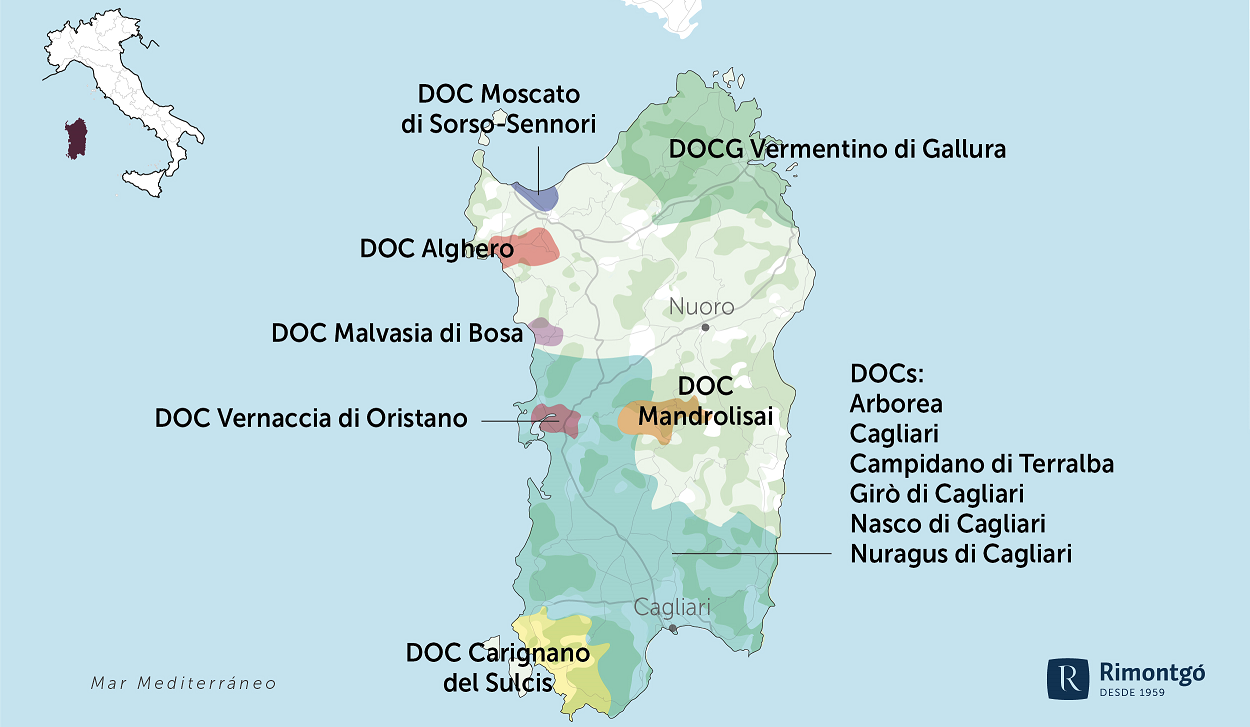 Isola dei Nuraghi is a broad geographical wine designation covering the entire island of Sardinia, named after the ancient stone nuraghe structures that are among the island’s most distinctive archaeological landmarks. Rather than being defined by a single terroir, this IGT encompasses a wide variety of landscapes, from coastal plains and rolling hills to more elevated inland areas, resulting in considerable variation in climate, soils, and wine styles. Its mediterranean climate brings long, sunny summers, mild winters, and persistent maritime winds, while soils range from granite and sandy deposits to limestone, clay, and schist. The designation allows considerable freedom in grape selection and winemaking, accommodating both Sardinia’s indigenous varieties, such as Cannonau, Carignano, Monica, Vermentino, and Nuragus, and international grapes such as Cabernet Sauvignon, Merlot, and Syrah.

color: medium-deep garnet color
clarity: hazy garnet shades at the rim
In the glass, this wine presents a medium-deep garnet color, with hazy shades at the rim that suggest a lively and rich character. The wine’s vibrant hue gives a glimpse of its intensity and depth.

intensity: rich & elegant
fruit character: ripe & dehydrated
The olfactory profile of this wine is both rich and elegant, revealing a complex layering of aromas. The forefront showcases dried fruits such as cranberry, dark cherry, and black plum, intermingled with touches of sweet tobacco and sun-dried oak. The background is enhanced by fragrant spice notes like clove and anise, alongside earthy undertones of pencil lead and marl. This aromatic complexity creates an inviting and multi-dimensional bouquet that keeps revealing new facets with each swirl of the glass.

sweetness: dry | acidity: medium+ | alcohol: high | tannin: high | balance: good
finish: long | aftertaste: seedy-crisp
On the palate, the wine delivers a firm and seedy mouthfeel, reflective of its well-structured tannins. The nuanced flavor continues the theme of dried fruits, with a noticeable richness that is both crisp and dry. A vibrant acidity balances the wine, while a touch of alcoholic warmth envelops the palate, ultimately leading towards a lingering and seedy-astringent finish. It is harmoniously complex and long-lasting, showcasing the quality of the vintage and the potential for further development in the bottle.

maturity: developing | drink now or in the next 3 to 5 years
verdict: great | a must try wine | a wine that has all the traits to become legendary
Overall, this wine is not only a well-structured and complex blend, but it also a wine that retains a distinct varietal typicity. Currently drinking well, it has the potential to evolve further over the next 3 to 5 years, making it an excellent choice for both immediate enjoyment and for cellaring, making it a noteworthy option for those seeking depth and elegance.
AGRICOLA PUNICA | Barrua | Isola dei Nuraghi | 2019
variety: carignan | cabernet sauvignon | merlot
country: Italy
region: Sardinia
rating: 94.0

Pairing this elegant wine with rich dishes such as grilled lamb, hearty stews, or even a platter of aged cheeses will create a delightful harmony that complements the wine’s robust character. The interplay between the wine’s acidity and the richness of the dishes will elevate the overall dining experience.

Agricola Punica is not just about producing outstanding wines, it stands as a symbol of the potential that Sardinia possesses in the world of winemaking, born from a joint venture between the Tenuta San Guido, sardinian winery AgriPunica, Santadi’s President Antonello Pilloni and legendary tuscan winemaker, Giacomo Tachis, who from his first visit to Sardinia, immediately realized the potential of this territory.


 © The WineStatistics ratings are based solely on our own knowledge of the world of wine and on our personal wine tastes, which may, or may not, differ from yours – the reader. Just remember that there are no absolutes of right and wrong in wine appreciation. Cheers!
Make a one-time donation
Make a monthly donation
Make a yearly donation
Choose an amount
Or enter a custom amount
WineStatistics is a non-profit community. We produce independent and highly detailed wine reviews.
By training ourselves to stop, take a breath, and pay attention to the subtle elements that distinguish one wine from any other, we learn an important lesson about life – that it’s worth taking the time to slow down and appreciate things that pleases us, from a glass of wine to a great work of art. It’s a simple way to learn to appreciate the little things in life that may in some small way enhance our enjoyment of every day.
In order to continue our work we need support from people like you. People who appreciate our contribution in spreading wine knowledge and raising wine awareness across the borders.
You may now support us by contributing with a one-time donation so that we can review even more wines.
WineStatistics is a non-profit community. We produce independent and highly detailed wine reviews.
By training ourselves to stop, take a breath, and pay attention to the subtle elements that distinguish one wine from any other, we learn an important lesson about life – that it’s worth taking the time to slow down and appreciate things that pleases us, from a glass of wine to a great work of art. It’s a simple way to learn to appreciate the little things in life that may in some small way enhance our enjoyment of every day.
In order to continue our work we need support from people like you. People who appreciate our contribution in spreading wine knowledge and raising wine awareness across the borders.
You may now support us by contributing with a monthly donation so that we can review even more wines.
WineStatistics is a non-profit community. We produce independent and highly detailed wine reviews.
By training ourselves to stop, take a breath, and pay attention to the subtle elements that distinguish one wine from any other, we learn an important lesson about life – that it’s worth taking the time to slow down and appreciate things that pleases us, from a glass of wine to a great work of art. It’s a simple way to learn to appreciate the little things in life that may in some small way enhance our enjoyment of every day.
In order to continue our work we need support from people like you. People who appreciate our contribution in spreading wine knowledge and raising wine awareness across the borders.
You may now support us by contributing with a yearly donation so that we can review even more wines.
