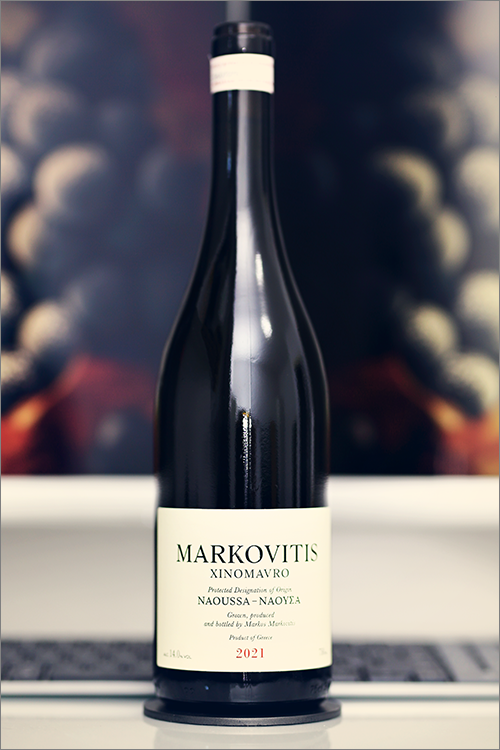
MARKOVITIS | Xinomavro | Naoussa | 2021
xynomavro
 © We will be evaluating wines in no particular order on no particular schedule. Just stay tuned and you will never miss our reviews. If the wine is tasted more than once, the rating table will be updated so as to reflect all the new impressions and observations. We hope you will enjoy it!

Markovitis, formerly known as Chateau Pegasus, is a beacon of greek winemaking, deeply rooted in the historic Naoussa region. This family-run estate represents a multi-generational legacy, tracing its pioneering spirit initiated by Markos Markovitis’ grandfather, making it the first greek winery to fully embrace organic farming. Markos, the visionary third generation winemaker, now carries this torch, blending a profound traditional respect for the land with modern oenological expertise. The transition from Chateau Pegasus to Markovitis Estate marked a new era for the winery, allowing for broader international recognition, while retaining the estate’s unwavering commitment to the unique Naoussa terroir.  Tonight we are going to review a single varietal xinomavro wine from Naoussa, which is one of Greece‘s most promising wine regions – Xinomavro Naoussa 2021 by Markovitis. Xinomavro, the Greece’s most important red grape variety, is often regarded as the ‘Barolo of Greece‘ due to its structure, aromatic complexity, and exceptional aging potential. Xinomavro translates as ‘bitter black and acidic’ – a name that perfectly encapsulates its character: astringent, with a high tannic content and a pronounced bitter-seedy accent, the resulting wines are austere in their youth but are capable to age for at least a decade.
The Markovitis Estate, a pioneer in organic viticulture in Greece, crafts this single-varietal xynomavro from grapes sourced from their historic, biologically farmed vineyards, planted way back in the 1970s. The wine was vinified by applying the region’s best practices: spontaneous fermentation with indigenous yeasts in steel tanks, followed by malolactic fermentation. Then the wine spends 12 months resting in inox tanks and another 12 months maturing in mostly used oak barrels, ensuring the wood gracefully supports rather than dominates the varietal’s expression, with additional bottle ageing time before it was deemed ready for the market release.

Macedonia wine region is one of Greece’s most important and diverse winegrowing areas, combining mountainous and maritime influences. Its climate is predominantly continental, with mediterranean touches: cold winters, warm summers, and significant diurnal shifts that help grapes retain acidity and develop aromatic complexity. Vineyards are planted at various elevations on soils ranging from limestone and clay, to schist and alluvial deposits, each shaping different wine styles. This varied terroir allows both indigenous and international varieties to thrive, producing wines that balance freshness with structure.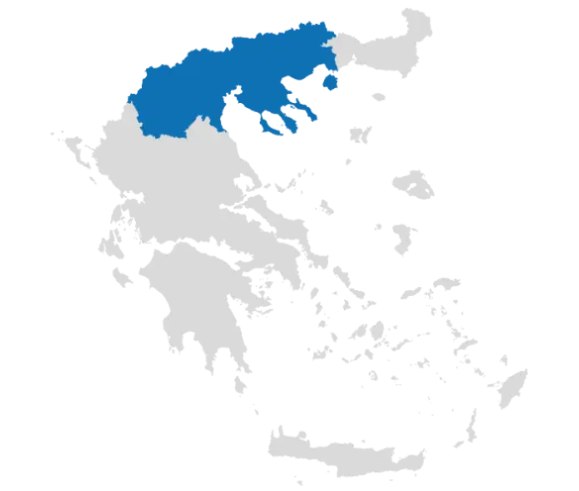 Situated on the eastern foothills of Mount Vermio in Macedonia, Naoussa is the cradle of Greece’s most noble grape variety – the famous Xinomavro. Vineyards here sit at 200–400 m altitude, benefitting from cool breezes off the mountains and a long ripening season that allow the grapes to develop complex aromatics while preserving the signature high natural acidity. The soils are mainly limestone, clay, and marl, offering good drainage and contributing to the grape’s tannic backbone and earthy profile. The wines from Naoussa are renowned for their firm structure, vibrant acidity, and savory-earthy aromas, often compared to italian Barolo for their age-worthiness and elegant evolution over time.

color: medium-deep garnet color
clarity: hazy & noble garnet hues
In the glass, the wine unveils a captivating medium-deep garnet color – a classic hue for a developing Xinomavro. This core gracefully transitions into alluring hazy garnet shades at the rim of the glass, providing a visual preamble to its depth.

intensity: rich & fruity-vibrant
fruit character: overripe & dehydrated
On the nose, this wine delivers a rich and pronounced aromatic profile, immediately captivating with its overripe and dehydrated fruit character, with an expressive, fruity-vibrant nuance. In the foreground, a complex medley of dried red and dark fruits unfolds, dominated by notes of cranberry, bitter cherry, and prune, alongside darker nuances of blackberry, aronia, and cassis. This fruit core is beautifully interwoven with subtle oak influences, with notes of toasted oakwood, cloves, and a whisper of tobacco, further enriched by hints of dried figs and a touch of liquorice. As the aroma unfolds, the background reveals a nuanced earthy tapestry of pencil lead, charcoal, and slate, complemented by a delicate spice rack featuring peppercorn, anise, and nutmeg. Sweet touches of mulberry and new leather add further layers of complexity, creating an aromatic profile that is both profound and inviting, showcasing impressive primary, secondary, and emerging tertiary notes.

sweetness: dry | acidity: high | alcohol: high | tannin: high | balance: good
finish: medium+ | aftertaste: crisp & astringent
On the palate, the wine delivers a crisp, firm, and grippy tasting experience, defined by an astringent and bold mouthfeel that demands attention. The wine feels round and full-bodied, yet it retains a vibrant fruit character that is beautifully complemented by a subtle touch of oak-derived elegance. This is, without question, a classic expression of Xinomavro from Greece. The mouthfeel is dry, underscored by an exuberant acidity that provides freshness and structure. There’s an overwhelming, yet balanced, touch of alcoholic warmth that adds depth, contributing to its ‘heady’ character without disrupting its harmony. The tannins are ripe and astringent, providing that signature grippy texture characteristic of the Xinomavro grape. This leads to a crisp and persistently astringent aftertaste that lingers beautifully.

maturity: developing | needs more time | drink now or within the next 3 to 5 years
verdict: great | a benchmark wine | a wine that has all the traits to become legendary
All in all, this is an exceptional Xinomavro wine, with a fruity-vibrant aromatic profile and a heady mouthfeel that truly captures the essence of the grape. While it presents as slightly opulent on the palate, this is a bold and beautifully rounded wine with a subtle, terroir-driven earthiness. The wine showcases good structure and a well-balanced mouthfeel, easily positioning it among the best Xinomavro wines we have tasted to date. It carries a genuine terroir-driven footprint, beautifully complemented by a delicate, oak-derived elegance. This wine is a pure embodiment of varietal character and terroir, drawing stylistic parallels to an old-world Nebbiolo, thus affirming its great aging potential. While it is astringent, crisp, and vibrantly alive, it currently possesses a raw, untamed power that might be perceived as lacking some ultimate finesse and elegance in its youth. However, it is clearly still developing and needs more time to fully round out its edges and integrate its components. It can certainly be enjoyed today or within the next 3 to 5 years, as this is a wine with significant promise.

Given the wine’s pronounced fruity character and firm tannins, a pairing that can stand up to its intensity and complement its complexity is essential. For a traditional greek experience, pair it with a classic moussaka with its rich béchamel, spiced lamb, and eggplant layers, which will allow the wine’s acidity to cut through the rich flavours of thed ish. For something more rustic experience, pair it with a slow-cooked pheasant stew with root vegetables and fragrant herbs, which would beautifully echo the wine’s savory and earthy undertones, creating a complementary dining experience that would highlight the wine’s complexity and sophistication. Enjoy! MARKOVITIS | Xinomavro | Naoussa | 2021
variety: xynomavro
country: Greece
region: Macedonia | Naoussa
rating: 94.1
The Markovitis Estate, formerly known as Chateau Pegasus, holds the distinction of being the first winery in Greece to practice organic farming. The vineyard, planted in the 1970s, is also celebrated as Greece’s first biological vineyard. The decision to change the winery name from Chateau Pegasus to Markovitis was a pragmatic and strategic one, driven by technical considerations for a better export to the United States. Despite the name change, the wine’s traditionally uncapped bottle design remains unchanged, symbolizing an elegant Naoussa that masterfully bridges the gap between classical tradition and a forward-thinking vision.
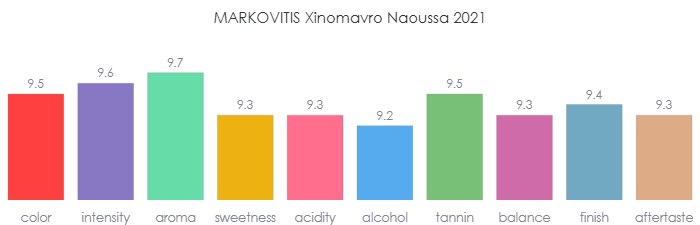

 © The WineStatistics ratings are based solely on our own knowledge of the world of wine and on our personal wine tastes, which may, or may not, differ from yours – the reader. Just remember that there are no absolutes of right and wrong in wine appreciation. Cheers!
Make a one-time donation
Make a monthly donation
Make a yearly donation
Choose an amount
Or enter a custom amount
WineStatistics is a non-profit community. We produce independent and highly detailed wine reviews.
By training ourselves to stop, take a breath, and pay attention to the subtle elements that distinguish one wine from any other, we learn an important lesson about life – that it’s worth taking the time to slow down and appreciate things that pleases us, from a glass of wine to a great work of art. It’s a simple way to learn to appreciate the little things in life that may in some small way enhance our enjoyment of every day.
In order to continue our work we need support from people like you. People who appreciate our contribution in spreading wine knowledge and raising wine awareness across the borders.
You may now support us by contributing with a one-time donation so that we can review even more wines.
WineStatistics is a non-profit community. We produce independent and highly detailed wine reviews.
By training ourselves to stop, take a breath, and pay attention to the subtle elements that distinguish one wine from any other, we learn an important lesson about life – that it’s worth taking the time to slow down and appreciate things that pleases us, from a glass of wine to a great work of art. It’s a simple way to learn to appreciate the little things in life that may in some small way enhance our enjoyment of every day.
In order to continue our work we need support from people like you. People who appreciate our contribution in spreading wine knowledge and raising wine awareness across the borders.
You may now support us by contributing with a monthly donation so that we can review even more wines.
WineStatistics is a non-profit community. We produce independent and highly detailed wine reviews.
By training ourselves to stop, take a breath, and pay attention to the subtle elements that distinguish one wine from any other, we learn an important lesson about life – that it’s worth taking the time to slow down and appreciate things that pleases us, from a glass of wine to a great work of art. It’s a simple way to learn to appreciate the little things in life that may in some small way enhance our enjoyment of every day.
In order to continue our work we need support from people like you. People who appreciate our contribution in spreading wine knowledge and raising wine awareness across the borders.
You may now support us by contributing with a yearly donation so that we can review even more wines.
