TENUTA SAN GUIDO | Guidalberto | Toscana | 2020
cabernet sauvignon | merlot
© We will be evaluating wines in no particular order on no particular schedule. Just stay tuned and you will never miss our reviews. If the wine is tasted more than once, the rating table will be updated so as to reflect all the new impressions and observations. We hope you will enjoy it!

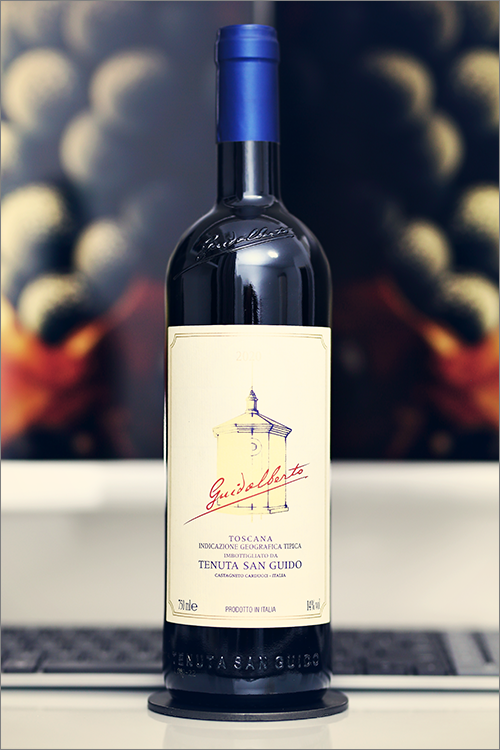
The story of Tenuta San Guido started in 1960’s when Marchese Mario Incisa della Rocchetta, inspired by a remarkable similarity between his Bolgheri estate in Tuscany and the Graves region of Bordeaux, dared to plant Cabernet Sauvignon grapes. This bold move laid the foundation for Sassicaia – a wine initially reserved for family and friends, which would eventually become Italy’s most iconic Super Tuscan wine. The first commercial vintage of Sassicaia was 1968, setting a new benchmark for italian wines. Decades later, in 2000, Mario’s son Nicolò Incisa della Rocchetta debuted Guidalberto, his own iconic creation. Named after his great-great-great grandfather, Guidalberto della Gherardesca, this wine was conceived to be appreciated at a younger age than Sassicaia. Today we are going to review a genuine Super Tuscan wine from Italy‘s most celebrated wine region, the mighty Tuscany – Guidalberto Toscana 2020 by Tenuta San Guido. This is a modern Super Tuscan wine – a bold blend of 60% cabernet sauvignon and 40% merlot, where cabernet sauvignon forms the wine’s main body and structure, whereas merlot rounds up the mid-palate and builds a leaner and a more dynamic finish. The winemaking process is all about precision: grapes are hand-harvested at peak phenolic ripeness to maximize flavour concentration. After a rigorous manual selection, the grapes are vinified separately with gentle pressing and controlled fermentation. In order to soften the tannins and add a layer of extra complexity to the final blend, but at the same time to preserve the varietal character of each grape variety, the final wine is aged in small french oak barriques for 15 months, with additional bottle ageing time before it was deemed ready for the market release.
 Guidalberto hails from the renowned Bolgheri micro area – a small but prestigious appellation along the Tyrrhenian Coast. Guidalberto is the estate’s ‘second vin‘. The 2020 vintage experienced a favorable growing season in Tuscany, providing fruit at full phenolic ripeness, promising wines of deep concentration. This coastal influence, combined with sun-drenched hillsides and varied soil profiles, creates an optimal environment for growing late-ripening grape varietals, such as cabernet sauvignon and merlot, that express intensity and elegance, distinguishing Bolgheri wines from other tuscan, sangiovese-dominated sub-regions.

The Toscana region has long boasted an impressive reputation in the world of great wines, earning its prestige as one of the most promising and creative production areas in the world of wine as a result of a number of forward-thinking producers that experimented with international grape varieties modern winemaking techniques. It is home to some of the world’s most famous wines known as ‘Super Tuscan‘.
 Super Tuscan wines emerged in the late 1960s, when a handful of pioneering winemakers in the region rebelled against the restrictive rules of traditional italian appellations. By blending Sangiovese with international varieties like Cabernet Sauvignon, Merlot, Cabernet Franc and Syrah, and by adopting modern barrel aging techniques, they created bold, innovative wines that quickly gained global acclaim. These ‘rule-breaking’ wines became known as Super Tuscans.
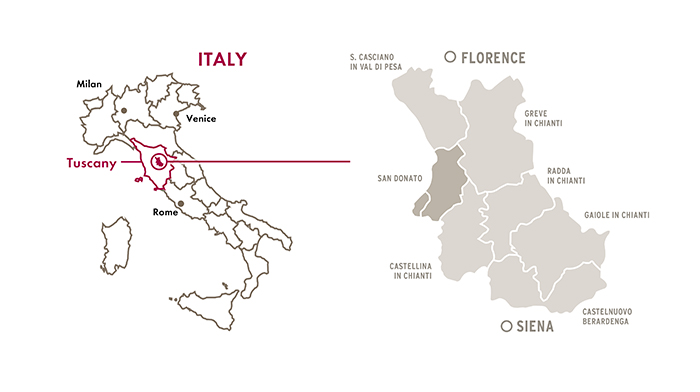 Bolgheri’s terroir is unique, defined by its mediterranean climate, defined by mild winters and warm summers and moderated by its coastal exposure, with sunlit hillsides, and diverse soil profiles, with a mix of clay and sand, which provides excellent drainage and imparts distinct mineral qualities to the wines. Bolgheri’s proximity to the Tyrrhenian Sea benefits from cooling sea breezes that mitigate extreme temperatures, allowing grapes to ripen slowly and steadily. These geological factors, combined with the proximity to the sea, create an optimal microclimate for grape growing, resulting in wines of exquisite elegance and complexity that can rival the other famous wine regions of the world, including Bordeaux.


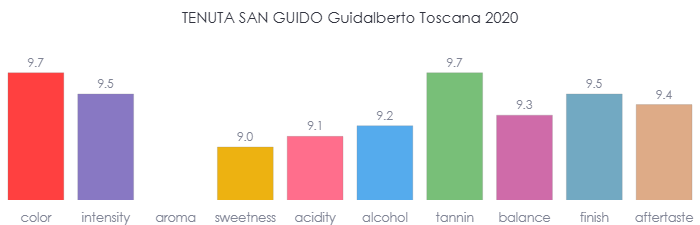
color: deep & opaque garnet color
clarity: hazy copper shades at the rim
In the glass, this wine presents a deep and opaque garnet color, which speaks to the wine’s deep concentration and intensity. Towards the rim of the glass, the color shifts gracefully into hazy copper shades, suggesting a developing maturity and a wine that is beginning to unfold its complexity while still retaining some vibrancy.

intensity: rich & mouldy
fruit character: dehydrated
Regrettably, the olfactory profile of this particular bottle displays a pronounced mouldy-earthy character, strongly suggesting it to be corked (the infamous TCA contamination) – a flaw that unfortunately masks the wine’s true aromatic potential. Despite this taint, an underlying complexity and youthful accent is still perceptible. The underlying aromatic core hints at a rich profile, with a dehydrated fruit character promising dark fruits such as blackberry, dark cherry, prune, , and aronia berry. Beneath the unfortunate overlay of damp soil and wet oakwood, one could discern the estate’s signature terroir, manifesting as subtle earthy hints of pencil lead, granite, slate, and black soil dust. The background attempted to reveal oak-derived richness through tones of tobacco, toasted oakwood, cloves, and vanilla, beautifully intertwined with spicy undertones of peppercorn, nutmeg, and anise, with fleeting nuances of soil dust and beetroot underneath. Had it not been for the cork taint, this would undoubtedly be a multi-layered and complex aromatic profile, balancing the fruit richness with oak-derived richness.

sweetness: dry | acidity: high | alcohol: high | tannin: high | balance: good
finish: long | aftertaste: seedy-crisp
Despite the challenges presented by the nose, the palate offered a glimpse into the wine’s inherent structure and power. It delivered a crisp, firm, and grippy tasting experience, indicative of a muscular Super Tuscan wine blend. The mouthfeel was distinctly seedy, rich, and nuanced, with a dehydrated fruit character attempting to push through the mouldy overlay. It felt dry, supported by an exuberant acidity that brought considerable freshness and length. A well-integrated touch of alcoholic warmth added to the wine’s body without detracting from its balance. The tannins are ripe and very grippy, contributing to a seedy-crisp aftertaste that lingered with remarkable persistence. While slightly astringent in its current state (a trademark characteristic of any young Bolgheri blend), the wine showcases great varietal typicity and a subtle terroir expression, suggesting significant ageing potential.

maturity: developing | drink now or within the next 3 to 5 years
verdict: nice | an enjoyable wine | a well made wine that lacks finesse
Overall, this is unfortunately a corked wine, which significantly impacted its aromatic expression with that characteristic mouldy-earthy accent – a lamentable flaw, as the underlying structure and varietal typicity clearly indicate a wine of exceptional quality. Despite the cork taint, the wine showcased a well-structured and seedy-crisp mouthfeel, with a powerful, terroir-driven earthiness that speaks volumes of its Bolgheri origins. It tastes complex and rich, with a rich, oak-derived nuance and firm tannins. While currently presenting as slightly astringent on the palate (due to its youth and the inherent tannic power), it holds promises to evolve into greater elegance with time (given an untainted bottle of course). The wine is almost there, in its prime form, offering a robust and grippy tasting experience. Our recommendation would be to enjoy it today rather than tomorrow, as it is always better to drink a wine a year too soon that a day too late.

Given the wine’s firm structure, dark fruit profile, and grippy tannins, we would recommend to pair it with a classic bistecca alla fiorentina seasoned with rosemary and sea salt, so that the succulent meat and its savouriness would perfectly complement the wine’s rich intensity. Alternatively, consider a slow-cooked wild boar ragu with pappardelle pasta, allowing the wine’s acidity to cut through the richness of the sauce while its earthy notes echo the game. Cheers! TENUTA SAN GUIDO | Guidalberto | Toscana | 2020
variety: cabernet sauvignon | merlot
country: Italy
region: Toscana
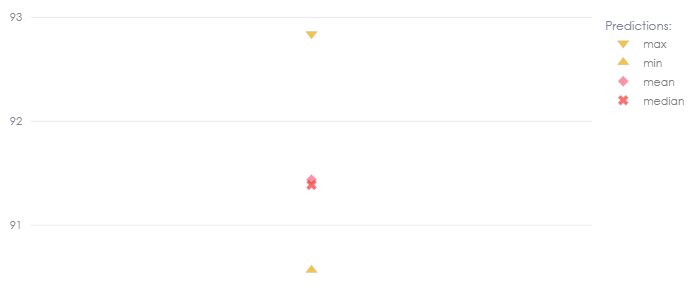
rating: 91.9
Tenuta San Guido’s commitment to excellence extends beyond viticulture, as besides the world-renowned Sassicaia and Guidalberto wines, the estate is also famous for the Razza Dormello Olgiata – a prestigious thoroughbred horse breeding program, and the Rifugio Faunistico Padule di Bolgheri – a vital nature and wildlife preserve. Guidalberto itself pays homage to Guidalberto della Gherardesca – an esteemed ancestor of Nicolò Incisa della Rocchetta, who was a true pioneer of modern agriculture in 19th-century Bolgheri. He was responsible for building some of the region’s first factories and churches, and famously planned the iconic Viale dei Cipressi – the breathtaking avenue of cypress trees that has become a symbol of Bolgheri ever since. These majestic trees were originally planted for the practical purpose of delineating boundaries between different crops.

 © The WineStatistics ratings are based solely on our own knowledge of the world of wine and on our personal wine tastes, which may, or may not, differ from yours – the reader. Just remember that there are no absolutes of right and wrong in wine appreciation. Cheers!
Make a one-time donation
Make a monthly donation
Make a yearly donation
Choose an amount
Or enter a custom amount
WineStatistics is a non-profit community. We produce independent and highly detailed wine reviews.
By training ourselves to stop, take a breath, and pay attention to the subtle elements that distinguish one wine from any other, we learn an important lesson about life – that it’s worth taking the time to slow down and appreciate things that pleases us, from a glass of wine to a great work of art. It’s a simple way to learn to appreciate the little things in life that may in some small way enhance our enjoyment of every day.
In order to continue our work we need support from people like you. People who appreciate our contribution in spreading wine knowledge and raising wine awareness across the borders.
You may now support us by contributing with a one-time donation so that we can review even more wines.
WineStatistics is a non-profit community. We produce independent and highly detailed wine reviews.
By training ourselves to stop, take a breath, and pay attention to the subtle elements that distinguish one wine from any other, we learn an important lesson about life – that it’s worth taking the time to slow down and appreciate things that pleases us, from a glass of wine to a great work of art. It’s a simple way to learn to appreciate the little things in life that may in some small way enhance our enjoyment of every day.
In order to continue our work we need support from people like you. People who appreciate our contribution in spreading wine knowledge and raising wine awareness across the borders.
You may now support us by contributing with a monthly donation so that we can review even more wines.
WineStatistics is a non-profit community. We produce independent and highly detailed wine reviews.
By training ourselves to stop, take a breath, and pay attention to the subtle elements that distinguish one wine from any other, we learn an important lesson about life – that it’s worth taking the time to slow down and appreciate things that pleases us, from a glass of wine to a great work of art. It’s a simple way to learn to appreciate the little things in life that may in some small way enhance our enjoyment of every day.
In order to continue our work we need support from people like you. People who appreciate our contribution in spreading wine knowledge and raising wine awareness across the borders.
You may now support us by contributing with a yearly donation so that we can review even more wines.
