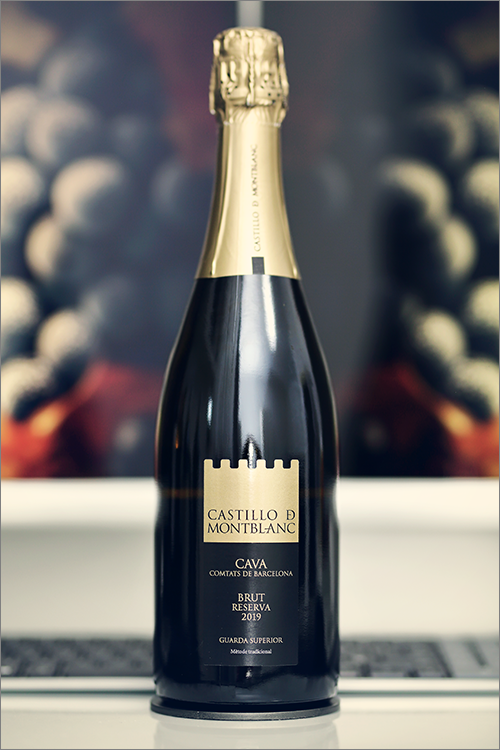
CLOS MONTBLANC | Castillo de Montblanc | Cava | Brut | Reserva | 2019
macabeo | parellada | xarello
 © We will be evaluating wines in no particular order on no particular schedule. Just stay tuned and you will never miss our reviews. If the wine is tasted more than once, the rating table will be updated so as to reflect all the new impressions and observations. We hope you will enjoy it!

The Clos Montblanc winery, founded in 1988 by the Carbonell Figueras family, carries a viticultural legacy spanning over 300 years. Nestled in Barberà de la Conca area, the winery’s vision is focused on creating authentic wines that reflects both their heritage and the region’s unique terroir.  Today we are going to review a remarkable sparkling wine from Spain – a fully mature vintage Cava that challenges all the perceptions – Castillo de Montblanc Cava Brut Reserva 2019 by Clos Montblanc. This wine is a harmonious blend of the three main indigenous grape varieties used for Cava production: macabeo (50%), xarello (30%), and parellada (20%), where macabeo (spelled also as maccabéo or maccabeu and known in Rioja as viura) forms the wine’s main body and structure, xarello (often spelled as ‘xarel·lo’ and known also as pansa blanca) adds up-front richness and a touch of floral character, whereas parellada builds a more refined mid-palate and brings slightly more complexity to the final blend.
Being a genuine Cava, this wine is produced using the authentic méthode traditionelle technique (called méthode tradicional in Spain, also known as the champenoise method), the same way the famous Champagne is made, with second fermentation in the bottle, where the wine then spends 24 months on fine lees (a process known as ‘sur lie ageing’), which allowed it to develop more aromatic sophistication, an extra layer of complexity and the much desired creaminess on the palate. This is also a millésime sparkling wine, which means that it was created from a single harvest, that of 2016.
Cava is the spanish answer to the famous french Champagne, and the more one explores Cava, the more parallels are found with Champagne. Most Cava on the market is the basic-level Cava Brut, but like in Champagne, Cava has a well defined classification system that defines the minimum ageing on lees for its upper levels: Reserva and Gran Reserva. Generally speaking, the longer the wine ages on fine lees, the more toasty and nutty aromas it will develop. Well-aged, vintage Gran Reserva Cava sparkling wines are similar to Vintage Champagne in both, style and complexity.
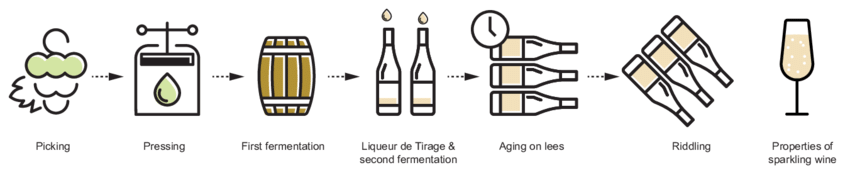
When it comes to sparkling wines, not all of them are created the same way. One of the key differences lies in how the bubbles are formed — specifically, whether the wine undergoes its second fermentation in the bottle (traditional method) or in large pressurized tanks (tank method, also known as charmat method). In the tank method the secondary fermentation happens in stainless steel tanks rather than individual bottles. This process is quicker, more cost-effective, and preserves the wine’s vibrant fruit character and freshness. The result is a more aromatic, easy-drinking sparkling wine with crisp acidity and minimal yeasty complexity (think of Prosecco). On the other hand, the traditional method is a more time-intensive process, as the second fermentation happens in the bottle, where the wine also ages on the fine lees (the dead yeast particles) for extended periods, from several months to several years. This slow aging builds extra layers of complexity on the nose and creates a creamy textures on the palate (think of classic sparkling wines like Champagne, Cava, or Franciacorta).

Cava is not a single wine region, but rather a designation for traditional-method sparkling wines produced throughout Spain, with the greatest concentration in Catalonia around Sant Sadurní d’Anoia (known as Comtats de Barcelona) and Valle del Ebro (which includes Rioja, Navarra and Aragón). Despite this geographic spread, all Cava regions share a mediterranean-influenced climate, often moderated by altitude, which helps preserve natural acidity in the grapes. Soils vary widely depending on the location, but are mostly dominated by limestone, clay, and chalk, providing good drainage and water retention. The traditional Cava varieties, Macabeo, Xarel·lo, and Parellada thrive in these conditions, producing base wines of vibrant freshness, moderate alcohol, and great structural balance – all essential characteristics of high-quality sparkling wines made by the traditional method.

The Comtats de Barcelona area (known locally as Sant Sadurní d’Anoia) is characterized by its mediterranean climate, which is ideally suited for grape growing, with its warm and dry summers that are seamlessly blending into mild and wet winters. This micro-region fosters optimal conditions for cultivating white grape varieties used in most of the Cava wines, with the vineyards situated in a diverse topography of hills and valleys, that aid airflow and water drainage. The soil composition comprises clay, limestone, and chalk, wile the varied elevations allow for moisture retention, which is essential for the development of flavours.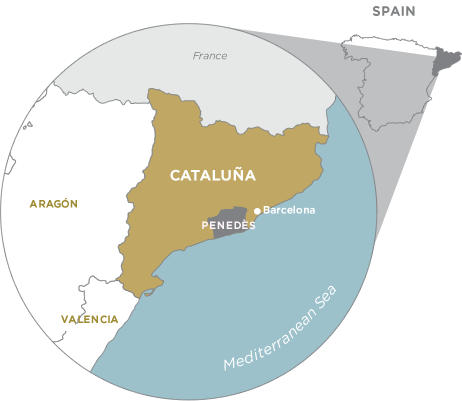

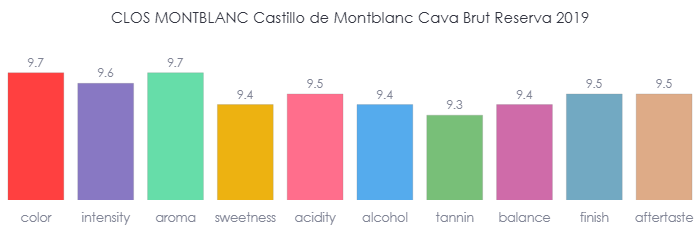
color: medium-pale yellow color
clarity: pastel yellow hues at the rim
In the glass, the wine displays a medium-pale yellow color, complemented by bright, pastel yellow hues towards the rim of the glass. The wine’s appearance showcases remarkable persistence and vitality, indicative of its meticulous traditional method production and careful aging on lees.

intensity: intense & vibrant
fruit character: ripe
The olfactory profile is intense and fruity-vibrant, brimming with a character of ripe fruits. In the foreground, an enticing medley of orchard fruits unfurls, with prominent notes of quince, asian pear, white apple, and white peach, intertwined with a lively burst of fresh citrus, notably lemon, pomelo, and zesty lemon peel. Subtle hints of straw grass and hay add an appealing earthy freshness, while sweet touches of honeycomb introduce a nuanced richness. As the aroma evolves, the background gracefully reveals sophisticated secondary notes derived from the second fermentation, like brioche and panna cotta, lending a desirable autolytic complexity. These are beautifully complemented by delicate floral undertones of acacia and lindenflower, alongside intriguing hints of almonds, cashew, and a distinct chalky minerality, culminating in a wonderfully complex, harmonious, and inviting aromatic landscape.

sweetness: dry | acidity: high | alcohol: medium+ | tannin: low | balance: fine
finish: long | aftertaste: velvety
On the palate, this Cava feels ample and remarkably lean, yet it surprises with a round and rich mouthfeel – the epitome of a genuine Cava sparkling wine. The attack is dry, invigorated by a bright acidity that carries the wine with elegance and verve. A well-integrated touch of alcoholic warmth adds depth and presence without ever overpowering the wine’s delicate balance. The texture is both velvety and crisp, coating the palate with a luxurious smoothness that is harmoniously countered by a lively and persistent effervescence. The intricate interplay of primary fruit, secondary autolytic notes, and subtle minerality translates seamlessly from the nose, leading to a complex and well structured mid-palate and a long finish, culminating in a velvety-crisp aftertaste that lingers, inviting for yet another sip.

maturity: in its prime | drink now or within a year
verdict: great | a benchmark wine | a wine that has all the traits to become legendary
Overall, this is a textbook example of a traditional method sparkling wine that display that delicate, autolytic charm that defines this wine category. It is a wine of amazing complexity – supple-elegant and velvety-voluptuous that manages to capture that unmistakable, vibrant Cava charm. It presents as a complex and well-structured wine, offering a delightful balance of crispness and refreshing acidity. The harmony between its ripe fruit character, subtle autolytic notes, and a touch of chalky-minerality is truly remarkable, showcasing an impressive depth for a Reserva Cava. The wine is in its prime, offering immense enjoyment today, and can certainly be savored within the next year to appreciate its youthful charm. For those who prefer a more pronounced development of autolytic characteristics, a further 1-2 years of careful cellaring would allow it to evolve, enriching its toasty complexity even further.

Given its refreshing acidity and delicate autolytic complexity, this wine would make for a remarkably versatile food companion. For a classic congruent pairing, serve it alongside fresh oysters, where the wine’s crisp minerality would complement the salinity of the seafood. For a more sophisticated, complementary pairing, consider a rich beaufort soufflé, where the wine’s invigorating acidity will cut through the richness of the cheese, while its subtle brioche notes will harmonize with the delicate pastry, creating a delightful interplay. Salud! CLOS MONTBLANC | Castillo de Montblanc | Cava | Brut | Reserva | 2019
variety: macabeo | parellada | xarello
country: Spain
region: Cava
rating: 95.0
Castillo de Montblanc name pays homage to the nearby medieval fortified town of Montblanc – a historical landmark that underscores the deep roots of winemaking tradition in the region. The Carbonell Figueras family’s viticultural heritage stretches back over 300 years – a testament to their enduring dedication to the land and its wines. The winemaker Carla Artiol’s unique background, having grown up in the heart of Priorat and honed her skills across various leading wineries in Spain and the United States, brings a dynamic fusion of tradition and innovative techniques to Clos Montblanc, ensuring each bottle tells a compelling story of passion and expertise.
 © The WineStatistics ratings are based solely on our own knowledge of the world of wine and on our personal wine tastes, which may, or may not, differ from yours – the reader. Just remember that there are no absolutes of right and wrong in wine appreciation. Cheers!
Make a one-time donation
Make a monthly donation
Make a yearly donation
Choose an amount
Or enter a custom amount
WineStatistics is a non-profit community. We produce independent and highly detailed wine reviews.
By training ourselves to stop, take a breath, and pay attention to the subtle elements that distinguish one wine from any other, we learn an important lesson about life – that it’s worth taking the time to slow down and appreciate things that pleases us, from a glass of wine to a great work of art. It’s a simple way to learn to appreciate the little things in life that may in some small way enhance our enjoyment of every day.
In order to continue our work we need support from people like you. People who appreciate our contribution in spreading wine knowledge and raising wine awareness across the borders.
You may now support us by contributing with a one-time donation so that we can review even more wines.
WineStatistics is a non-profit community. We produce independent and highly detailed wine reviews.
By training ourselves to stop, take a breath, and pay attention to the subtle elements that distinguish one wine from any other, we learn an important lesson about life – that it’s worth taking the time to slow down and appreciate things that pleases us, from a glass of wine to a great work of art. It’s a simple way to learn to appreciate the little things in life that may in some small way enhance our enjoyment of every day.
In order to continue our work we need support from people like you. People who appreciate our contribution in spreading wine knowledge and raising wine awareness across the borders.
You may now support us by contributing with a monthly donation so that we can review even more wines.
WineStatistics is a non-profit community. We produce independent and highly detailed wine reviews.
By training ourselves to stop, take a breath, and pay attention to the subtle elements that distinguish one wine from any other, we learn an important lesson about life – that it’s worth taking the time to slow down and appreciate things that pleases us, from a glass of wine to a great work of art. It’s a simple way to learn to appreciate the little things in life that may in some small way enhance our enjoyment of every day.
In order to continue our work we need support from people like you. People who appreciate our contribution in spreading wine knowledge and raising wine awareness across the borders.
You may now support us by contributing with a yearly donation so that we can review even more wines.
