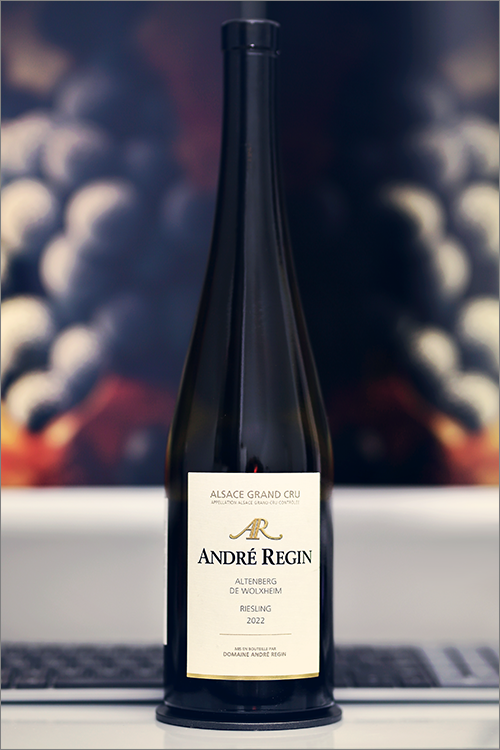
ANDRÉ REGIN | Altenberg de Wolxheim | Alsace Grand Cru | Riesling | 2022
riesling
 © We will be evaluating wines in no particular order on no particular schedule. Just stay tuned and you will never miss our reviews. If the wine is tasted more than once, the rating table will be updated so as to reflect all the new impressions and observations. We hope you will enjoy it!

Domaine André Regin is nestled in the village of Wolxheim, at the heart of Alsace’s wine country. The Regin family’s dedication to viticulture spans for several generations, all of them characterized by an unwavering commitment to crafting wines that express the unique identity of Alsace’s terroir. With over 12 acres divided into more than 50 plots across Wolxheim, Molsheim, and Avolsheim, this fragmentation is a true asset, enabling a remarkable diversity of microclimates that contribute to the complexity of each of their wines. Their vision is centered around the pure expression of each of their esteemed Grand Cru vineyards. Today we are going to review a genuine, single-varietal Grand Cru riesling from the famous Alsace wine region of France – Altenberg de Wolxheim Alsace Grand Cru Riesling 2022 by Domaine André Regin. Riesling must be the world’s most misunderstood grape variety, as the resulting wines are unlike any others – light in alcohol, high in natural acidity, with the ability to transmit the terrior through its extract and minerality and, what makes it stand out from the crowd, riesling wines are capable of ageing for decades. Relative to other internationally grape varieties, riesling ripens quite early, so when planted in a hot climate its juice can be overripe and flabby, while in a cool climate it has the chance to stay on the vine late into the autumn, hence the german obsession with late harvest riesling wines.
The Alsace Grand Cru designation represents the region’s most prestigious and strictly regulated vineyard sites. Rather than classifying the wine according to its sweetness, Alsace Grand Cru is a terroir-based classification: each Grand Cru is a specific, delimited ‘lieu-dit‘ whose name appears on the wine label. There are 51 officially-recognised Grand Cru sites in Alsace. Riesling is one of the four principal grape varieties permitted for Grand Cru wines, alongside Gewurztraminer, Pinot Gris and Muscat, although a few sites have specific exceptions. Unlike, for example, Germany’s ‘GG‘ wines, Alsace Grand Cru does not necessarily mean dry, with Vendanges Tardives and Sélection de Grains Nobles having their own prestigious sweet-wine classifications.
What makes the Grand Cru classification interesting is the belief that the vineyard should define the wine, therefore the regulations impose very strict requirements, including manual harvesting and controlled yields, while the character of the individual terroir (its geology, exposure and microclimate) is expected to express itself through the wine. The grapes for today’s wine were sourced from the famous ‘Altenberg de Wolxheim‘ vineyard, where the Regin family cultivates their vines using traditional methods combined with modern precision winemaking techniques to bring out the truest expression of the Riesling grape in this esteemed terroir.

France is one of the world’s most influential wine-producing countries, with a long history of terroir-driven viticulture, defined by its wide climatic range – from the cool maritime zones of the Atlantic coast to the warm Mediterranean climate of the south. France is the birthplace to many of the world’s most famous grape varieties, such as Cabernet Sauvignon, Merlot, Pinot Noir, Chardonnay, Syrah, and Sauvignon Blanc. Its wines are known for balance, varietal typicity, and a strong link between geography and style (which is called terroir), forming global reference points for quality across all known wine styles.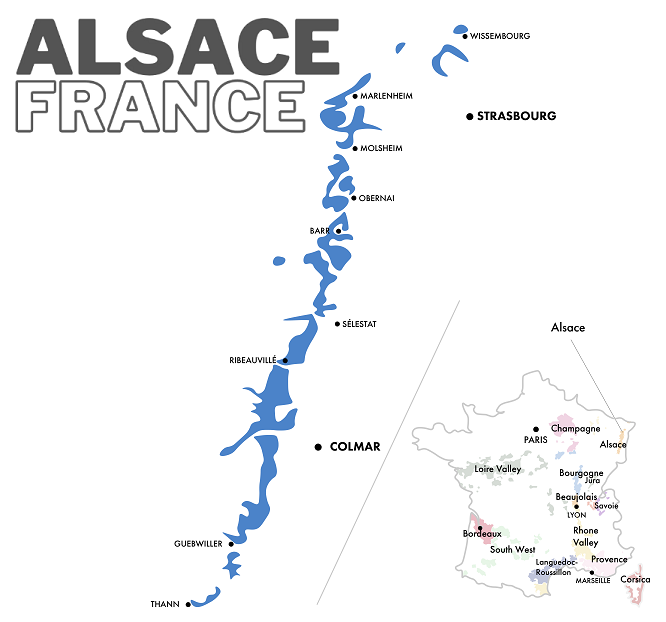 Alsace, situated into northeastern France between the Vosges Mountains and the Rhine River, is one of the most distinctive wine regions, with a strong germanic cultural and winemaking heritage. The mountains and the river provide a powerful rain shadow, making Alsace relatively sunny, dry, and warm for such a northerly region, while the continental climate brings cold winters, warm summers, and a long growing season that allows grapes to ripen slowly while retaining vibrant natural acidity. The region’s geology is exceptionally diverse, with granite, sandstone, limestone, marl, clay, and volcanic soils creating a remarkable mosaic of terroirs, particularly across its many Grand Cru vineyards. Around 90% of production is white wine, with Riesling, Gewürztraminer, Pinot Gris, Pinot Blanc, Muscat, and Sylvaner forming the core of the region’s identity. Alsace is particularly renowned for its aromatic intensity and varietal purity, producing everything from bone-dry, mineral-driven Riesling, to richly-textured Pinot Gris and opulent perfumed Gewürztraminer, as well as some of France’s finest late-harvest and botrytised wines.

color: medium-deep yellow color
clarity: pale pastel-yellow hues
In the glass, the wine presents a medium-deep yellow color, hinting at its concentration, with pale yellow shades at the rim of the glass, promising freshness and vibrancy.

intensity: pronounced & rubbery
fruit character: dried & dehydrated
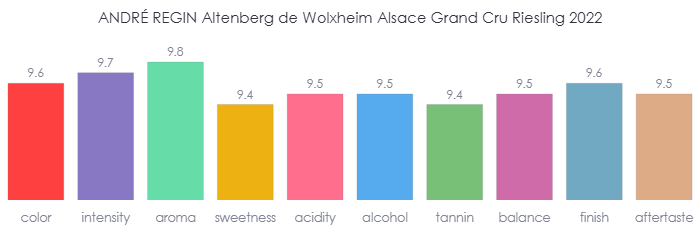
The nose is remarkably open and expressive, announcing a pronounced and intriguing aromatic profile. The initial impression is a classic ‘rubbery’ note – a hallmark of a highly concentrated Riesling, intertwining with a dry and dehydrated fruit character. In the foreground, distinct petroleum nuances mingle with notes of dried apple and quince, further supported by delicate herbal hints of hay and oaktree bark. As the bouquet evolves, the background unveils a fascinating interplay of citrusy-mineral elements reminiscent of sand, lemon, slate, lemon peel, and citrus zest. This citrusy-mineral core is complemented by sweet and rich undertones of raisins, honeycomb, beeswax, and a touch of cotton candy – all elegantly framed by subtle floral whispers of daffodil, acacia, and orange blossom.

sweetness: dry | acidity: high | alcohol: high | tannin: low | balance: fine
finish: long | aftertaste: crisp & creamy
On the palate, the wine delivers a crisp and citrusy-zesty mouthfeel that is both invigorating and impressively structured. The wine feels dry, with a bright acidity that takes center stage, balancing beautifully with a quite noticeable touch of alcoholic warmth that contributes to the wine’s ample body without overpowering its freshness. A pleasantly-seedy phenolic bitterness adds an extra layer of complexity and texture, creating a sophisticated mouthfeel. The aftertaste is crisp and creamy, lingering gracefully and reinforcing the wine’s impeccable balance and remarkable length. This is a textbook Riesling that highlights the varietal character of the Riesling grape with razor-sharp precision and a profound sense of place, showcasing elegance and concentration.

maturity: developing | needs time | drink now or age for 2 to 5 more years
verdict: great | a benchmark wine | a wine that has all the traits to become legendary
All in all, this is a truly exceptional and well-crafted Riesling that presents as a round, ample, complex, and exceptionally well-structured wine – a classical Alsace Grand Cru Riesling boasting that signature petroleum touch and razor-sharp vibrancy. The pleasant phenolic bitterness adds both depth and a unique textural dimension, elevating its sophistication. This is a remarkably well-balanced and harmonious Riesling, focusing acutely on varietal character and terroir expression rather than relying on sheer power or nuance. The wine delivers amazing varietal typicity complemented by a delicate touch of local terroir-driven minerality – a wine with a strong sense of place. Currently in its developing phase, it can be enjoyed today for its vibrant youth, or cellared for another 2 to 5 years to allow its intricate layers to further unfold and reveal even greater complexity. Without a doubt, this is one of the best wines we have tasted so far – the epitome of an Alsace Grand Cru.

Given its crisp palate and intriguing phenolic bitterness, we would recommend pairing it with pan-seared scallops served atop a delicate saffron risotto, finished with a beurre blanc sauce infused with fresh herbs. The wine’s bright acidity will cut beautifully through the richness of the scallops and the creamy sauce, while its mineral undertones will resonate with the delicate sweetness of the seafood. The subtle phenolic bitterness and petroleum notes will add a layer of complexity, complementing the aromatic saffron and herbs, creating a harmonious and truly gastronomic experience that elevates both the wine and the dish. Enjoy!

ANDRÉ REGIN | Altenberg de Wolxheim | Alsace Grand Cru | Riesling | 2022
variety: riesling
country: France
region: Alsace
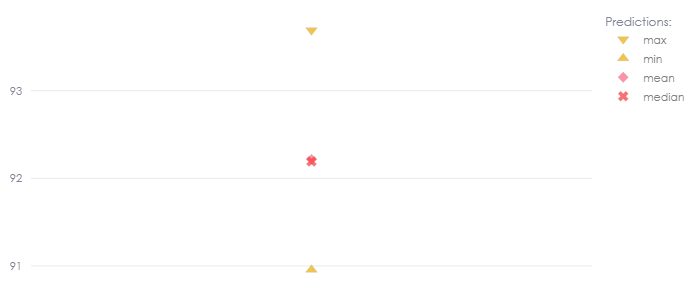
rating: 95.5
Alsace is unique among French wine regions for its strong germanic influences, including its tradition of varietal labeling, making it stand out from the typically appellation-focused wine regions of France. The Grand Cru system in Alsace is highly selective, encompassing only 51 officially recognized vineyards, each with stringent regulations regarding grape varieties, yields, and ripeness to ensure exceptional quality. Altenberg de Wolxheim is particularly notable for its distinct Jurassic marl-limestone soils, which impart a powerful structure and concentrated minerality to its wines. The local landmark, the ‘Horn rock’ (Hornstein), is said to resemble a ‘cornucopia,’ symbolically pouring its riches onto the surrounding slopes – a poetic nod to the fertility and quality of their terroir.
 © The WineStatistics ratings are based solely on our own knowledge of the world of wine and on our personal wine tastes, which may, or may not, differ from yours – the reader. Just remember that there are no absolutes of right and wrong in wine appreciation. Cheers!
Make a one-time donation
Make a monthly donation
Make a yearly donation
Choose an amount
Or enter a custom amount
WineStatistics is a non-profit community. We produce independent and highly detailed wine reviews.
By training ourselves to stop, take a breath, and pay attention to the subtle elements that distinguish one wine from any other, we learn an important lesson about life – that it’s worth taking the time to slow down and appreciate things that pleases us, from a glass of wine to a great work of art. It’s a simple way to learn to appreciate the little things in life that may in some small way enhance our enjoyment of every day.
In order to continue our work we need support from people like you. People who appreciate our contribution in spreading wine knowledge and raising wine awareness across the borders.
You may now support us by contributing with a one-time donation so that we can review even more wines.
WineStatistics is a non-profit community. We produce independent and highly detailed wine reviews.
By training ourselves to stop, take a breath, and pay attention to the subtle elements that distinguish one wine from any other, we learn an important lesson about life – that it’s worth taking the time to slow down and appreciate things that pleases us, from a glass of wine to a great work of art. It’s a simple way to learn to appreciate the little things in life that may in some small way enhance our enjoyment of every day.
In order to continue our work we need support from people like you. People who appreciate our contribution in spreading wine knowledge and raising wine awareness across the borders.
You may now support us by contributing with a monthly donation so that we can review even more wines.
WineStatistics is a non-profit community. We produce independent and highly detailed wine reviews.
By training ourselves to stop, take a breath, and pay attention to the subtle elements that distinguish one wine from any other, we learn an important lesson about life – that it’s worth taking the time to slow down and appreciate things that pleases us, from a glass of wine to a great work of art. It’s a simple way to learn to appreciate the little things in life that may in some small way enhance our enjoyment of every day.
In order to continue our work we need support from people like you. People who appreciate our contribution in spreading wine knowledge and raising wine awareness across the borders.
You may now support us by contributing with a yearly donation so that we can review even more wines.
