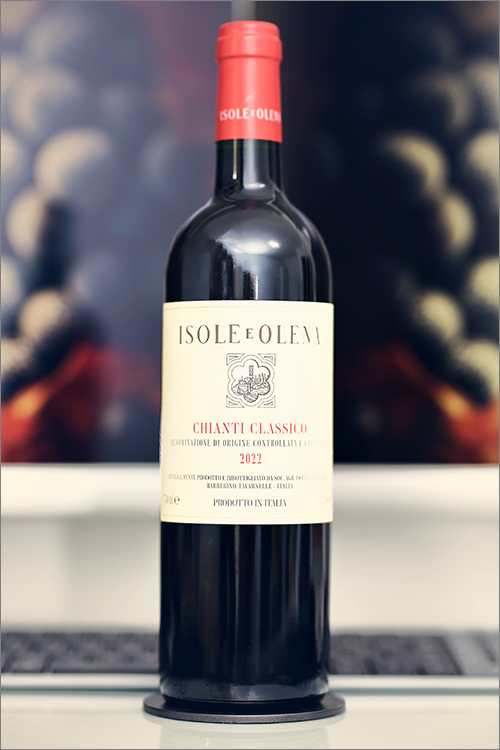
ISOLE E OLENA | Chianti Classico | 2022
sangiovese | canaiolo
 © We will be evaluating wines in no particular order on no particular schedule. Just stay tuned and you will never miss our reviews. If the wine is tasted more than once, the rating table will be updated so as to reflect all the new impressions and observations. We hope you will enjoy it!

The Isole e Olena wine began its journey in 1956 when Francesco De Marchi acquired two distinct properties in the heart of the Chianti Classico wine region, near Castellina. It was then his son, Paolo De Marchi, who in 1975 propelled the winery into a new era of excellence. Armed with a background in agricultural studies and experience gained from working harvests in California and France, Paolo embarked on a visionary mission. He studied and meticulously mapped the galestro-driven soils of the estate, experimented with massal selection to enhance the potential of the local grape varieties, and modernized the winery’s equipment. His pioneering spirit cemented Isole e Olena’s reputation as a leading winery in the Chianti Classico area. Paolo’s relentless pursuit of Sangiovese’s true potential also led to the creation of the famous Cepparello wine in 1980 – an iconic ‘Supertuscan’ that showcased the grape’s genuine rustic character. Today we are going to review an italian classic from one of the Italy‘s most iconic wine regions, the mighty Tuscany – Chianti Classico 2022 by Isole e Olena. Chianti wines can be made with grapes sourced from a vast region within Tuscany – from the foothills of the Apennine Mountains, to the flatter plains towards the Mediterranean Sea, but, in order to taste some of best expressions of sangiovese-based Chianti wines, one needs to look into higher elevations, towards the original boundaries of the Chianti region, called Chianti Classico, where wines are made in smaller quantities, with lower yields and therefore are of higher quality. The best wines from Chianti Classico will be labelled ‘Riserva’ or ‘Gran Selezione’. Wines from the historic Chianti Classico appellation can be identified by the
 Gallo Nero symbol – the Black Rooster – the historic emblem of the Chianti Classico Consorzio and a guarantee that the wine comes from the defined Chianti Classico production zone. The symbol has become one of the most recognizable marks of quality and authenticity for Chianti Classico wines. Today’s wine is a harmonious blend composed of 85% sangiovese, 15% canaiolo (also known as canaiolo nero – the authentic ingredient in the original Chianti recipe), where sangiovese forms the wine’s main body and structure, whereas canaiolo softens the mouthfeel and builds a leaner and a more dynamic finish, thus enhancing the wine’s overall complexity. This is the estate’s most famous wine, first produced in 1969, and has consistently been recognized as a benchmark for quality and a modern reinterpretation of the traditional Chianti Classico recipe. The grapes are sourced from within the prestigious Chianti Classico DOCG area, from the estate-owned vineyards in the San Donato in Poggio micro area, nestled at altitudes ranging from 300 to 480 meters above sea level. The winemaking process is designed to highlight the true varietal characteristics of the grape varieties, with fermentation in stainless steel tanks, followed by 12 months of aging in traditional big slavonian oak casks, with an additional 6 months of bottle aging before it was deemed ready for the market release.

Toscana wine region has long boasted an impressive reputation in the world of great wines, earning its prestige as one of the most promising and creative production areas in the world of wine as a result of a number of forward-thinking producers that experimented with international grape varieties and modern winemaking techniques. Toscana (or Tuscany) is home to some of the world’s most famous wines – the mighty ‘Super Tuscan‘ wines.
 The Chianti wine region is renowned for its diverse terroir, characterized by rolling hills, very warm summers, and mild winters, providing ideal conditions for grape growing. The soils composition differ vastly, from rocky and well-drained soils around the region’s highest hills, to fertile clay-based soils at lower altitudes, supporting various root systems that enhance vibrant fruit expression. Those diverse microregions allow the winemakers to experiment with different plots in order to build a wine that truly reflects their vision or wines that are capable to reflect the footprints of local terroirs.
 The Chianti Classico DOCG is the historic heart of the Chianti wine region, located between Florence and Siena and recognized by its famous Gallo Nero symbol. The region is characterized by steep hills, higher elevations, and a cooler climate than many surrounding sub-regions, with warm summers, mild winters, and significant diurnal temperature variation that helps preserve acidity during ripening. Its soils are ranging from galestro and alberese to limestone, marl, and clay, with the poor rocky sub-soils on the hillsides producing more structured wines. Sangiovese is the region’s champion grape that forms the foundation of Chianti Classico, producing wines with bright acidity and firm tannins, making Chianti Classico one of Tuscany‘s most important regions for terroir-driven red wines.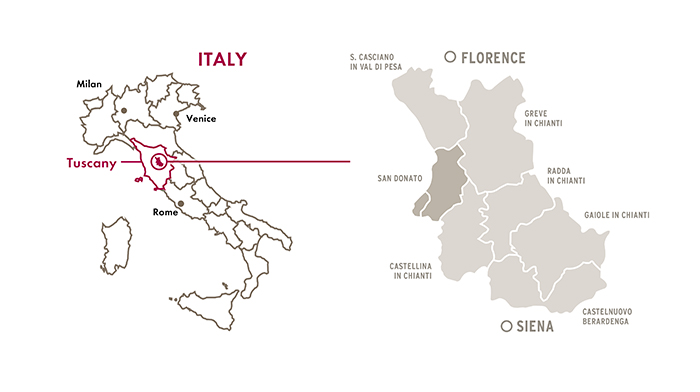

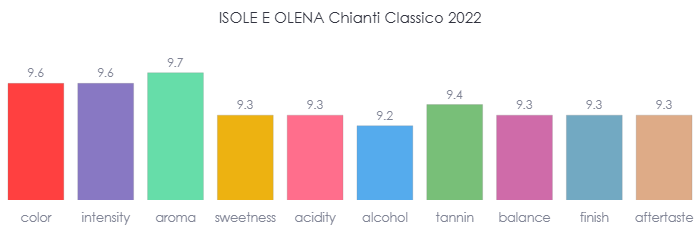
color: medium-pale garnet color
clarity: hazy & noble copper hues
In the glass, the wine presents a medium-pale garnet color, with delicate, hazy copper shades at the rim of the glass.

intensity: rich & savory-elegant
fruit character: ripe & vibrant
The aromatic profile is a symphony of richness and delicacy, unveiling a rich and savory-elegant nose with a pronounced ripe and vibrant fruit character. The foreground bursts with an inviting array of fresh red fruits – think of cranberry, sour cherry, redcurrant, and red plum. These primary fruit notes are beautifully intertwined with a charming bouquet of mediterranean herbs such as thyme, basil, sage, and a hint of juniper. Further complexity is revealed through rich undertones of sun-dried tomatoes and a delicate whisper of balsamic vinegar, adding a distinctive old-world charm. As the wine evolves in the glass, a sophisticated background emerges, layered with earthy nuances of clay, loam, and marl. Savory elements of old leather, a hint of iron, brown olive, and a touch of iodine add intriguing depth, all subtly softened by sweet undertones of tobacco and a gentle whisper of red pepper, showcasing remarkable aromatic evolution.

sweetness: dry | acidity: high | alcohol: high | tannin: high | balance: good
finish: medium+ | aftertaste: seedy & crisp
On the palate, this wine delivers a crisp, warm, and a pleasantly bitter-seedy palate. This wine offers a heady and firm mouthfeel that denotes its authentic Sangiovese character, feeling slightly austere and a bit rough. The wine feels dry, invigorated by an exuberant, mouth-watering acidity that provides lively freshness and structure. A noticeable, albeit overwhelming, touch of alcoholic warmth adds to the wine’s robust character, while the seedy, firm tannins provide a pleasant astringency that builds a sturdy backbone. This culminates in a long, seedy-crisp aftertaste that cleanses the palate and resonates with the wine’s rustic charm and honesty, making it a textbook example of old-world Chianti wine where varietal expression and terroir are paramount.

maturity: developing | almost in its prime | drink now or within the next 2 to 3 years
verdict: great | a benchmark wine | a wine that has all the traits to become legendary
Overall, this is a rustic, albeit slightly sharp, and savory Chianti wine, defined by its heady and bitter-seedy mouthfeel. While it may present as a tad rough and austere on the palate, this is entirely typical of an old-world Chianti, showcasing a nuanced, terroir-driven earthiness rather than overt richness. It feels nicely structured with impressive varietal typicity – a true blueprint of Chianti Classico that prioritizes the intrinsic character of Sangiovese and its place of origin. Its astringent, crisp, and warm nature suggests a wine that, while currently lacking some overt finesse and elegance, possesses the fundamental qualities for graceful development. It is almost in its prime and can be thoroughly enjoyed today or cellared for the next 2 to 3 years, holding promises to evolve and unveil a more refined personality.

Given its exuberant acidity and pronounced savory-earthy undertones, this wine is an incredibly versatile companion at the dinner table. For a classic tuscan experience, pair it with a rich and robust pappardelle al ragù di cinghiale (wild boar ragu), so that the wine’s vibrant acidity will cut through the richness of the gamey sauce, while its notes of dried red fruits, mediterranean herbs, and savory earthiness will beautifully complement the rustic, intense flavors of the dish. Cheers! ISOLE E OLENA | Chianti Classico | 2022
variety: sangiovese | canaiolo
country: Italy
region: Toscana | Chianti Classico
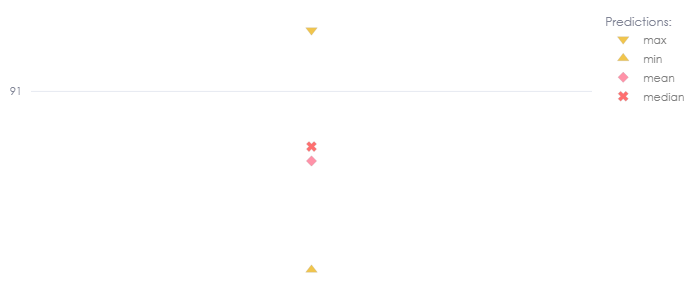
rating: 94.0
The story of Isole e Olena estate is interwoven with fascinating details. The estate’s name, ‘Isole e Olena,’ is a charming combination of two historic properties acquired by the De Marchi family – two adjoining residential hamlets – Isole and Olena – that were united into a single wine estate in 1956. These were two small, independent rural villages located about one kilometer apart in the heart of the Chianti Classico region in Tuscany, between Siena and Florence.
 © The WineStatistics ratings are based solely on our own knowledge of the world of wine and on our personal wine tastes, which may, or may not, differ from yours – the reader. Just remember that there are no absolutes of right and wrong in wine appreciation. Cheers!
Make a one-time donation
Make a monthly donation
Make a yearly donation
Choose an amount
Or enter a custom amount
WineStatistics is a non-profit community. We produce independent and highly detailed wine reviews.
By training ourselves to stop, take a breath, and pay attention to the subtle elements that distinguish one wine from any other, we learn an important lesson about life – that it’s worth taking the time to slow down and appreciate things that pleases us, from a glass of wine to a great work of art. It’s a simple way to learn to appreciate the little things in life that may in some small way enhance our enjoyment of every day.
In order to continue our work we need support from people like you. People who appreciate our contribution in spreading wine knowledge and raising wine awareness across the borders.
You may now support us by contributing with a one-time donation so that we can review even more wines.
WineStatistics is a non-profit community. We produce independent and highly detailed wine reviews.
By training ourselves to stop, take a breath, and pay attention to the subtle elements that distinguish one wine from any other, we learn an important lesson about life – that it’s worth taking the time to slow down and appreciate things that pleases us, from a glass of wine to a great work of art. It’s a simple way to learn to appreciate the little things in life that may in some small way enhance our enjoyment of every day.
In order to continue our work we need support from people like you. People who appreciate our contribution in spreading wine knowledge and raising wine awareness across the borders.
You may now support us by contributing with a monthly donation so that we can review even more wines.
WineStatistics is a non-profit community. We produce independent and highly detailed wine reviews.
By training ourselves to stop, take a breath, and pay attention to the subtle elements that distinguish one wine from any other, we learn an important lesson about life – that it’s worth taking the time to slow down and appreciate things that pleases us, from a glass of wine to a great work of art. It’s a simple way to learn to appreciate the little things in life that may in some small way enhance our enjoyment of every day.
In order to continue our work we need support from people like you. People who appreciate our contribution in spreading wine knowledge and raising wine awareness across the borders.
You may now support us by contributing with a yearly donation so that we can review even more wines.
