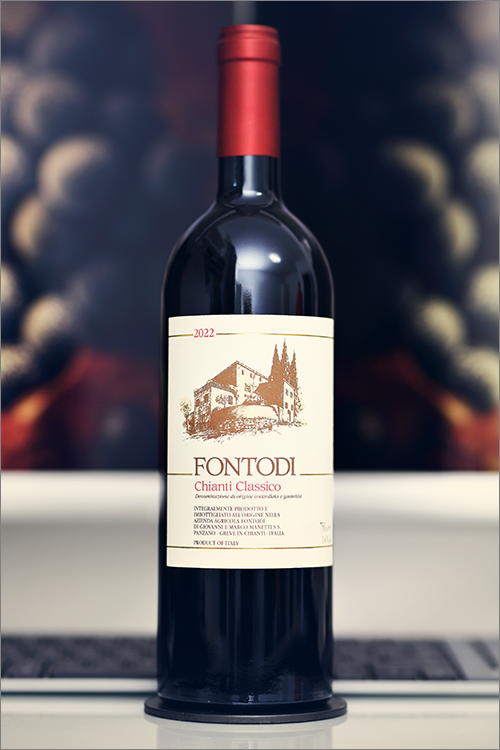
FONTODI | Chianti Classico | 2022
sangiovese
 © We will be evaluating wines in no particular order on no particular schedule. Just stay tuned and you will never miss our reviews. If the wine is tasted more than once, the rating table will be updated so as to reflect all the new impressions and observations. We hope you will enjoy it!

The Fontodi estate has been under the stewardship of the Manetti family since 1968, with Giovanni Manetti taking the helm in 1980. The family has a deep-rooted legacy in Tuscany, extending back centuries through their renowned production of ‘terrecotte’ tiles – a testament to their profound connection with the region’s earth and heritage. This intrinsic link between family, land, and a passionate pursuit of quality has driven Fontodi’s commitment to viticulture and a profound understanding of Sangiovese’s potential within the unique microclimate of Panzano’s ‘conca d’oro’ in Chianti Classico. Tonight we are going to review an intriguing, single-varietal sangiovese wine from one of the Italy‘s most iconic wine regions, the mighty Tuscany – Chianti Classico 2022 by Fontodi. Chianti wines can be made with grapes sourced from a vast region within Tuscany – from the foothills of the Apennine Mountains, to the flatter plains towards the Mediterranean Sea, but, in order to taste some of best expressions of sangiovese-based Chianti wines, one needs to look into higher elevations, towards the original boundaries of the Chianti region, called Chianti Classico, where wines are made in smaller quantities, with lower yields and therefore are of higher quality. The best wines from Chianti Classico will be labelled ‘Riserva’ or ‘Gran Selezione’. Wines from the historic Chianti Classico appellation can be identified by the
 Gallo Nero symbol – the Black Rooster – the historic emblem of the Chianti Classico Consorzio and a guarantee that the wine comes from the defined Chianti Classico production zone. The symbol has become one of the most recognizable marks of quality and authenticity for Chianti Classico wines. 
Today’s wine is crafted with 100% sangiovese grapes, sourced from the vineyards that are located in the famed ‘conca d’oro‘ (golden shell) amphitheater near Panzano, in the historic Chianti Classico appellation. The winemaking philosophy at Fontodi focuses around minimal intervention, allowing the grapes and the terroir to speak for themselves. The grapes have been fermented using only indigenous wild yeasts that are naturally present on the grape skins and in the cellar. The young wine is then aged for 18 months in a combination of medium-sized slavonian oak barrels (a secular tuscan tradition), and in small french oak barrels at second and third-fill – a process that refines the wine’s structure and adds a layer of extra complexity to the wine’s aromatic profile. 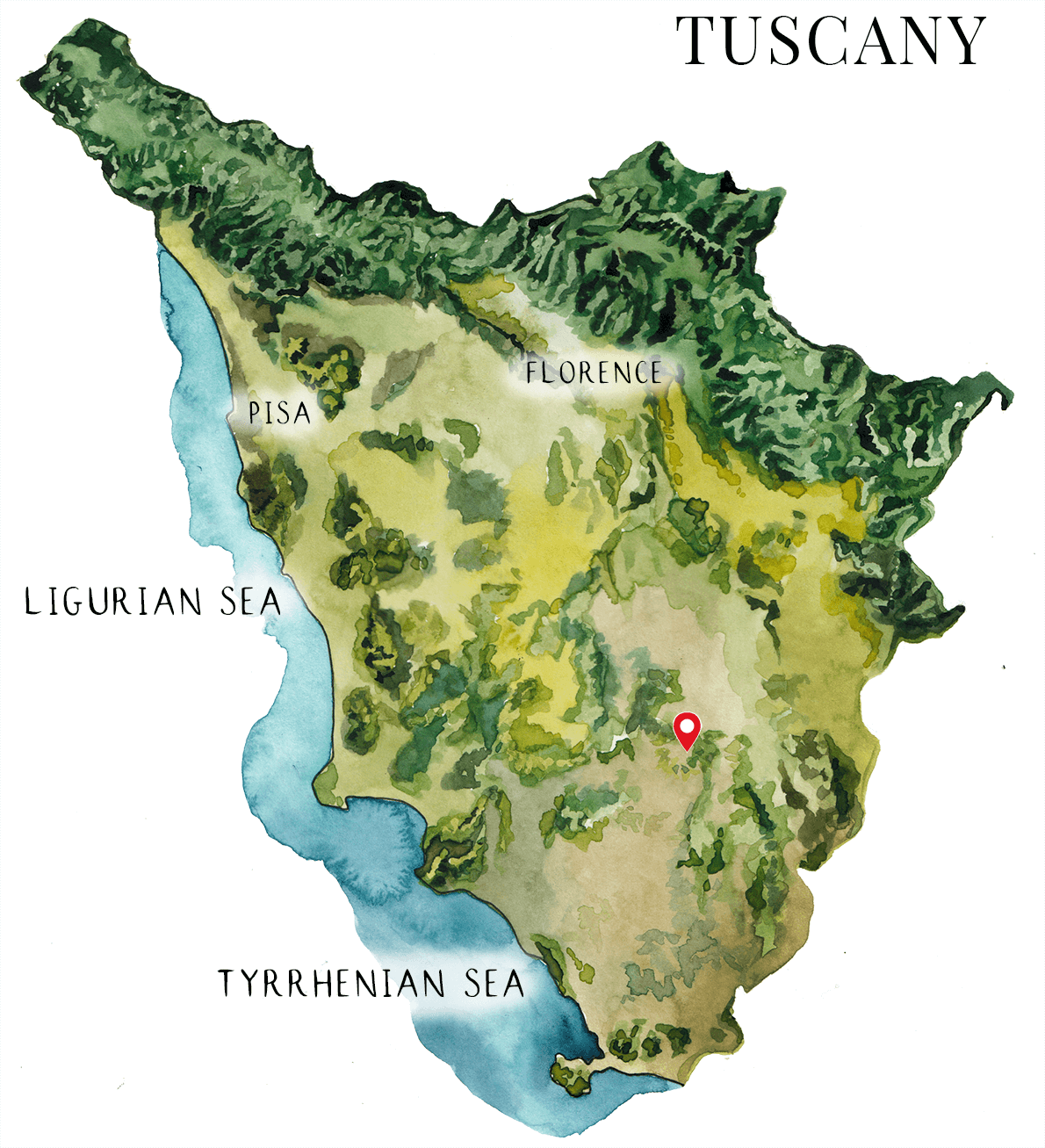 Until relatively recently, Sangiovese was considered to be a grape in the wilderness – rustic, delicate and savory, and whenever the name sangiovese would appear on a label, it was far from a guarantee of quality. But sangiovese is the dominant red grape of Italy, effortlessly adapting to each particular terroir where it is planted. In that sense, it can vary as much as pinot noir in its sensitivity to the place it is grown in, and like pinot noir, it ripens relatively late. This means that if it is planted in a cooler climate, sangiovese can produce wines that are dangerously tart and green, but when ideal growing conditions are met (mainly high diurnal range and a prolonged growing season),sangiovese is capable to produce wines that would lead you into the realm of perfection. With numerous mutations spread all over Italy, this versatile grape variety can create wines with strikingly diverse flavor profiles: from the delicate and floral Montefalco Rosso, to the bold and tannic wines of Brunello di Montalcino. The one thing that the sangiovese grape variety cannot hide is its flavour profile, but now that the right clones have been identified and are increasingly popular, sangiovese is allowed to shine in all of its glory.

Toscana wine region has long boasted an impressive reputation in the world of great wines, earning its prestige as one of the most promising and creative production areas in the world of wine as a result of a number of forward-thinking producers that experimented with international grape varieties and modern winemaking techniques. Toscana (or Tuscany) is home to some of the world’s most famous wines – the mighty ‘Super Tuscan‘ wines.
 The Chianti wine region is renowned for its diverse terroir, characterized by rolling hills, very warm summers, and mild winters, providing ideal conditions for grape growing. The soils composition differ vastly, from rocky and well-drained soils around the region’s highest hills, to fertile clay-based soils at lower altitudes, supporting various root systems that enhance vibrant fruit expression. Those diverse microregions allow the winemakers to experiment with different plots in order to build a wine that truly reflects their vision or wines that are capable to reflect the footprints of local terroirs.
 The Chianti Classico DOCG is the historic heart of the Chianti wine region, located between Florence and Siena and recognized by its famous Gallo Nero symbol. The region is characterized by steep hills, higher elevations, and a cooler climate than many surrounding sub-regions, with warm summers, mild winters, and significant diurnal temperature variation that helps preserve acidity during ripening. Its soils are ranging from galestro and alberese to limestone, marl, and clay, with the poor rocky sub-soils on the hillsides producing more structured wines. Sangiovese is the region’s champion grape that forms the foundation of Chianti Classico, producing wines with bright acidity and firm tannins, making Chianti Classico one of Tuscany‘s most important regions for terroir-driven red wines.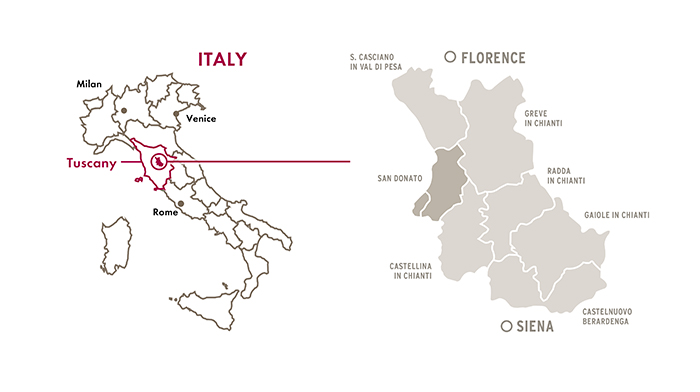

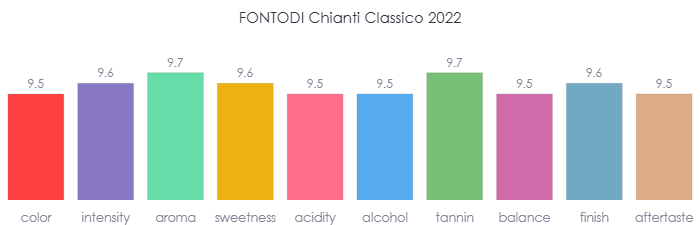
color: medium-deep ruby color
clarity: hazy & noble garnet hues
In the glass, the wine presents a medium-deep ruby color, with delicate and vibrant garnet shades at the rim of the glass.

intensity: rich & savory-delicate
fruit character: ripe & underripe
On the nose, the wine presents a pronounced savory-delicate accent with a ripe to underripe fruit character. The foreground bursts with an array of red fruits, think of sour cherry, bitter cherry, cranberry, and redcurrant, harmoniously mingled with the softer allure of red plum and dark aronia. These fruit notes are complemented by a captivating savory dimension, revealing nuances of barnyard, old leather, musk, and game, complemented by the saline depth of brown olive and delicate touches of iron and iodine. As the wine unfolds, a sophisticated background emerges, grounded in distinct terroir notes of marl, loam, clay, and pencil lead. These earthy undertones are accented by subtle spice and oak influences, including sun-dried oakwood, a whisper of red pepper, juniper, tobacco, and the warm embrace of anise and cloves, all elegantly finished with intriguing hints of wormwood, bay leaf, and sage.

sweetness: dry | acidity: high | alcohol: high | tannin: high | balance: fine
finish: lasting | aftertaste: crisp & pleasantly-seedy
On the palate, the wine delivers a crisp and savory-delicate mouthfeel that immediately impresses with its precision and depth. It presents a pleasantly-seedy palate, marked by a pronounced rustic accent. This is a wine that is masterfully blending old-world delicateness with modern richness and finesse. The wine feels dry, yet it offers a wonderful textural roundness. A bright and vibrant acidity courses through the palate, providing immediate freshness and lift, impeccably balanced by a well-integrated touch of alcoholic warmth that lends body and structure without overwhelming the palate. The tannins are grippy and fine-grained, contributing to a firm yet elegant structure that holds the wine together, promising excellent aging potential. All this culminates in a long, crisp, and pleasantly seedy aftertaste that cleanses the palate, leaving a lasting impression of authenticity and refinement.

maturity: developing | needs time to evolve | drink now or in the next 3 to 5 years
verdict: great | a benchmark wine | a wine that has all the traits to become legendary
Overall, this is the epitome of a single-varietal Sangiovese – a tribute to both the grape variety and its unique terroir. It is a wine that manages to deliver the vibrant intensity of fruit alongside the rustic, savory touch of its origin. This is a very well-structured, complex, and elegant Sangiovese wine, showcasing a rich and firm palate and a nuanced aromatic profile that prioritizes varietal expression and terroir authenticity over sheer opulence or overt depth. It is, without a doubt, one of the finest Chianti Classico wines we have had the pleasure of tasting, offering an ample and voluptuous experience that is both harmonious and vibrantly alive. This is a pure-bred Sangiovese, vinified in a modern style yet retaining a delicate, old-world charm, where the oak influence is restrained and almost untraceable, ensuring that the wine’s identity is preserved and enhanced. While enjoyable today, it is a wine that is still developing and holds significant potential to evolve and gain further aromatic sophistication with an additional 3 to 5 years of bottle aging, making it an excellent candidate for the cellar.

Given its vibrant acidity, firm tannins, and delicate savory nuances, we believe this wine would be an exceptional match for traditional tuscan dishes like pappardelle al ragù di cinghiale (wild boar ragu). The wine’s bright acidity will effortlessly cut through the richness of the game meat sauce, while its savory notes of leather, game, and mediterranean herbs will beautifully complement the rustic, earthy flavors of the dish. For a more robust experience, consider a succulent bistecca alla fiorentina – the wine’s grippy tannins will stand up to the marbled richness of the steak, creating a harmonious and deeply satisfying gastronomic synergy. Enjoy! FONTODI | Chianti Classico | 2022
variety: sangiovese
country: Italy
region: Toscana | Chianti Classico
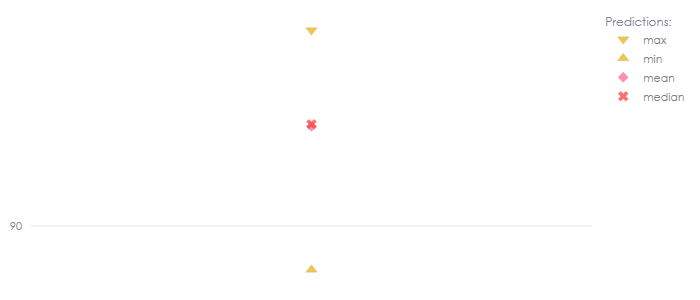
rating: 95.7
The Fontodi wine estate has been owned by the Manetti family since 1968. For centuries, the Manetti family has been synonymous with another iconic activity of the Chianti region – the production of its famous ‘terrecotte’ tiles. This deep-rooted connection to the land and its ancient crafts speaks to a profound respect for tradition, which the family has successfully translated into their winemaking. It is this strong link with the land and a great passion for quality that has propelled the winery towards a meticulous management of their vineyards and a deeper understanding of the immense potential of the Panzano microregion.
 © The WineStatistics ratings are based solely on our own knowledge of the world of wine and on our personal wine tastes, which may, or may not, differ from yours – the reader. Just remember that there are no absolutes of right and wrong in wine appreciation. Cheers!
Make a one-time donation
Make a monthly donation
Make a yearly donation
Choose an amount
Or enter a custom amount
WineStatistics is a non-profit community. We produce independent and highly detailed wine reviews.
By training ourselves to stop, take a breath, and pay attention to the subtle elements that distinguish one wine from any other, we learn an important lesson about life – that it’s worth taking the time to slow down and appreciate things that pleases us, from a glass of wine to a great work of art. It’s a simple way to learn to appreciate the little things in life that may in some small way enhance our enjoyment of every day.
In order to continue our work we need support from people like you. People who appreciate our contribution in spreading wine knowledge and raising wine awareness across the borders.
You may now support us by contributing with a one-time donation so that we can review even more wines.
WineStatistics is a non-profit community. We produce independent and highly detailed wine reviews.
By training ourselves to stop, take a breath, and pay attention to the subtle elements that distinguish one wine from any other, we learn an important lesson about life – that it’s worth taking the time to slow down and appreciate things that pleases us, from a glass of wine to a great work of art. It’s a simple way to learn to appreciate the little things in life that may in some small way enhance our enjoyment of every day.
In order to continue our work we need support from people like you. People who appreciate our contribution in spreading wine knowledge and raising wine awareness across the borders.
You may now support us by contributing with a monthly donation so that we can review even more wines.
WineStatistics is a non-profit community. We produce independent and highly detailed wine reviews.
By training ourselves to stop, take a breath, and pay attention to the subtle elements that distinguish one wine from any other, we learn an important lesson about life – that it’s worth taking the time to slow down and appreciate things that pleases us, from a glass of wine to a great work of art. It’s a simple way to learn to appreciate the little things in life that may in some small way enhance our enjoyment of every day.
In order to continue our work we need support from people like you. People who appreciate our contribution in spreading wine knowledge and raising wine awareness across the borders.
You may now support us by contributing with a yearly donation so that we can review even more wines.
