MURVIEDRO | Sericis | Cepas Viejas | Viognier | 2022
viognier
 © We will be evaluating wines in no particular order on no particular schedule. Just stay tuned and you will never miss our reviews. If the wine is tasted more than once, the rating table will be updated so as to reflect all the new impressions and observations. We hope you will enjoy it!

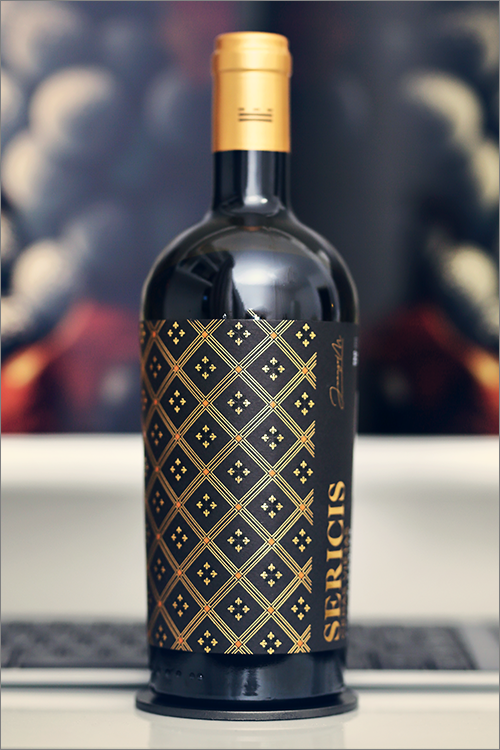
Bodegas Schenk, established in Switzerland in 1893 by Arnold Schenk, expanded into Spain, eventually consolidating its headquarters in Valencia. A significant milestone occurred on its 75th anniversary when Schenk España rebranded to Bodegas Murviedro, paying homage to its emblematic Cavas Murviedro. This transformation marked a renewed commitment to indigenous varieties, old vine vineyards, and wines deeply rooted in the land. The Sericis wine range, meaning ‘silky’ in latin, represents Murviedro’s flagship wine line, crafted specifically for haute cuisine – wines that honor the soul of the land. Today we are are going to review an exceptional, single-varietal viognier wine from the Requena sub-region of Valencia, which is one of Spain‘s most famous wine regions – Sericis Cepas Viejas Viognier 2022 by Bodegas Murviedro. Viognier is a grape of contrasts and one of the world’s most delicate white grape varieties, prized for its intensely aromatic character and ability to produce elegant wines. Originally from the Northern Rhône Valley in France, viognier is best known for the exceptional wines of Condrieu, where it produces some of the world’s finest expressions of this variety. Compared to chardonnay, viognier is more expressive, with an exotic aromatic profile. It typically produces full-bodied wines with relatively low acidity, silky texture and moderate to high alcohol. Although oak ageing and malolactic fermentation can add further creaminess and complexity, many producers are in favour of a more restrained approach to preserve the grape’s delicate floral aromas and vibrant fruit character. It is also occasionally blended with syrah, particularly in the Northern Rhône appellation of Côte-Rôtie, where small quantities of viognier add extra aromatic complexity.

Stylistically, there are two main styles of viognier wines: on one hand we have the classic, creamy and rich, oak-aged style, that is backed up by winemakers in Napa Valley, whereas on the other hand there’s the crisp, zingy and citrusy, unoaked style, that is mainly promoted by the old-world producers and most of the winemakers in Condrieu. Today’s wine is from the first category, sourced from organically grown old vines, the grapes were fermented and aged in new oak barrels, which means that the wine went through the malolactic conversion – a process where the crisp, malic acid in the wine is converted into a more softer, lactic acid, thus the wine becomes less tart and more silky, gaining more structure and complexity, rounding up the palate and enhancing its aromatic allure. During the oak ageing, the wine spent a few months on fine lees (the dead yeast cells that are left over from the fermentation process), with regular bâtonnage – a winemaking technique designed to enrich the wine’s aromatic complexity, gaining in body and developing an unctuous and luxurious texture on the mouthfeel.

The Valencia wine region, located along Spain’s eastern Mediterranean coast, boasts a warm Mediterranean climate with coastal areas benefiting from maritime influences, while inland vineyards experiencing greater temperature variations, warmer summers, and cooler winters. Soils are predominantly calcareous, with variations in clay, sand, and stony deposits depending on the area. Valencia is home to a wide range of grape varieties, with Monastrell, Bobal, Tempranillo, and Garnacha Tinta among the most important red grapes, while Moscatel de Alejandría, Merseguera, Macabeo, and Verdil among the most planted white varieties. The region produces a broad range of styles, from fresh, aromatic whites and traditional sweet Moscatel wines to full-bodied reds with ripe fruit and astringent tanninse.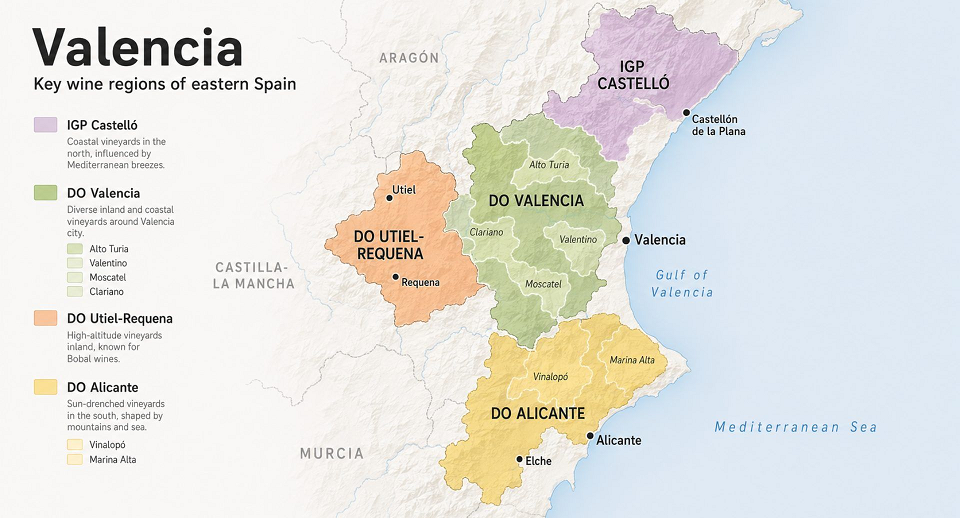
The Requena sub-region, located inland in the Utiel-Requena DO of Valencia, lies on a high plateau at approximately 650–900 m above sea level, where altitude and distance from the Mediterranean Sea create a continental climate with Mediterranean influences. Summers are warm and dry, winters are cold, and significant diurnal range helps grapes develop ripe flavours while retaining natural acidity. The soils are mainly calcareous and poor in organic matter, with a mixture of clay, sandy loam, stones, and gravel that provides good drainages. Bobal is the region’s signature grape variety, well adapted to the arid conditions and capable of producing deeply coloured abd structured red wines with dark fruit, firm tannins, and refreshing acidity. Tempranillo, Garnacha Tinta, and international grape varieties such as Cabernet Sauvignon, Merlot, and Syrah are also widely cultivated, while Macabeo, Tardana, Chardonnay and Viognier contribute to white wine production.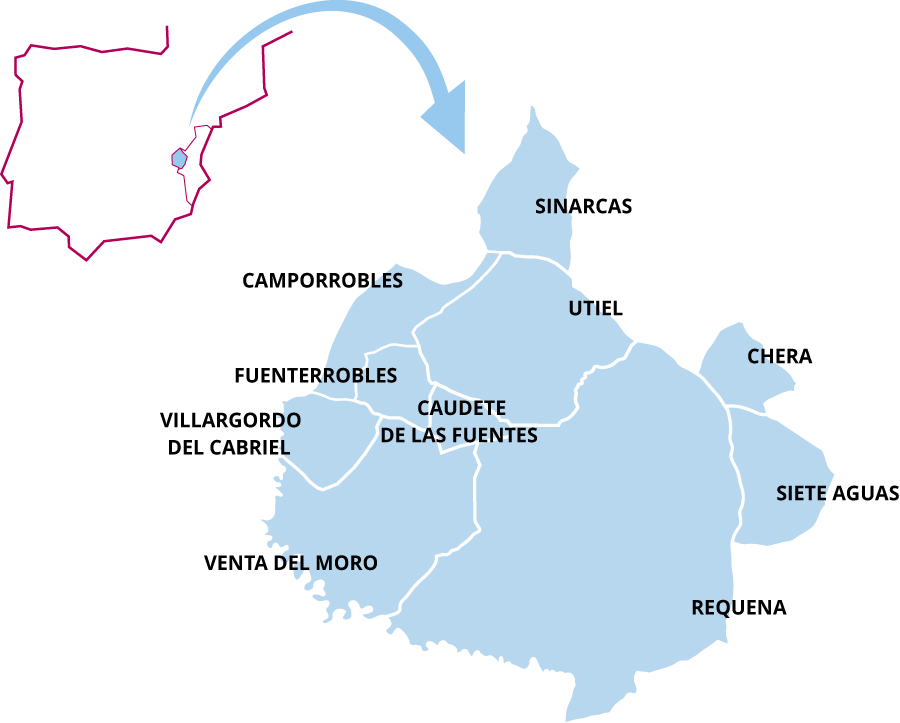

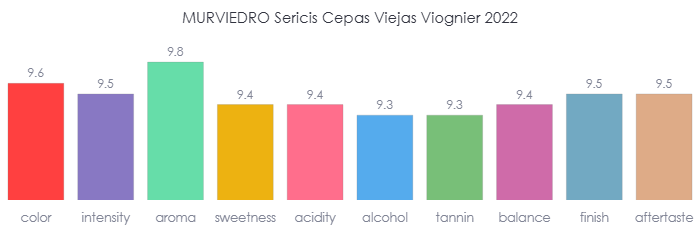
color: pale pastel-yellow color
clarity: straw-yellow hues at the rim
In the glass, the wine displays a pale, pastel-yellow color, elegantly shimmering with straw-yellow shades at the rim of the glass, hinting at its vibrant freshness.

intensity: rich & citrusy-herbal
fruit character: ripe & candied
On the nose, this wine presents a rich, citrusy-herbal aromatic profile, with a ripe and candied fruit character. The foreground is dominated by a vibrant symphony of citrus notes, including lemon, pomelo, kumquat, grapefruit, and sicilian orange. These are beautifully intertwined with sweet candy notes of pear drop, lemon candy, marmalade, and turkish delight, all underscored by subtle herbal hints of hay and dried straw grass. As the aroma develops, the background introduces elegant notes of white fruits such as asian pear, white apple, white peach, and white nectarine. These are complemented by enchanting floral undertones of acacia, orange blossom, honeysuckle, elderflower, and jasmine, gracefully rounded off by sophisticated autolytic touches of cream and vanilla.

sweetness: bone dry | acidity: high | alcohol: high | tannin: medium- | balance: good
finish: long| aftertaste: velvety-elegant
On the palate, the wine unveils a lean and voluptuous texture, delivering a velvety-elegant mouthfeel that is a hallmark of a barrel-aged Viognier. The wine has a bone-dry mouthfeel perfectly balanced by a crisp, mouth-watering acidity that provides verve and freshness. A noticeable, yet well-integrated, touch of alcoholic warmth adds structure and depth without overpowering, while a delicate hint of phenolic bitterness contributes to its complexity, lending a sophisticated edge. The wine culminates in a long, lingering finish, leaving a velvety-elegant aftertaste that resonates with sophistication and refinement, making each sip an experience to cherish. Its body is medium to full, feeling ample and well-structured, a testament to its old vines and careful winemaking.

maturity: in its prime | drink today or within a year
verdict: great | benchmark wine | a wine that has all the traits to become legendary
Overall, this is a round, ample, complex, and well-structured wine – the epitome of a barrel-aged Viognier. It masterfully balances a sweet and rich floral touch with an extremely appealing character, accentuated by crisp acidity that adds remarkable depth and structure. This is a a wonderfully balanced and harmonious Viognier, focused on showcasing its varietal character rather than power or nuance. It feels plush and expressive, with an aromatic sweetness that introduces an extra layer of sophistication, reflecting an amazing varietal typicity. This is one of the best Viognier wines we have tasted to date, exhibiting a perfect harmony and balance, along with undeniable finesse and elegance. Currently in its prime, the wine is ready to be enjoyed today or within the next year, offering both rich character and complexity – a wine of premium quality with a distinct personality.

To complement the wine’s voluptuous palate and its rich aromatic profile, consider pairing it with dishes that harmonize with its character. Mazara red prawn or delicate seafood dishes, such as a rich lobster bisque or pan-seared scallops with a light butter sauce, would provide a delightful contrast, allowing the wine’s crisp acidity to cut through the richness while its creamy texture complements the dish. Alternatively, a creamy risotto, perhaps with asparagus and parmesan cheese, would beautifully echo the wine’s velvety mouthfeel and enhance its subtle autolytic notes, creating a luxurious dining experience. Cheers! MURVIEDRO | Sericis | Cepas Viejas | Viognier | 2022
variety: viognier
country: Spain
region: Valencia | Utiel-Requena
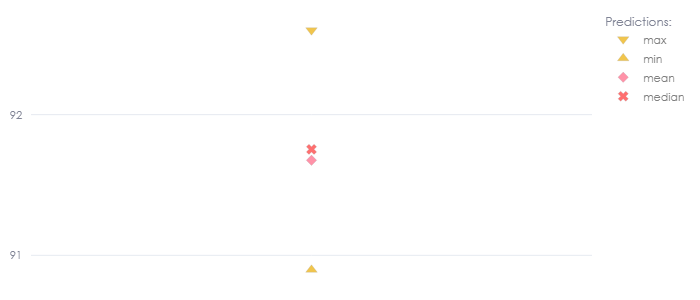
rating: 94.7
The wine’s label finds its inspiration in the historic Silk Road, symbolizing a beautiful fusion of culture and tradition and a journey of flavors and ideas. The name ‘Sericis’ is derived from Latin, meaning ‘silky’, perfectly describing the luxurious texture and mouthfeel that this exceptional wine delivers. This emphasis on ‘silky’ is a direct nod to the high glycerol content specifically sought after in the Viognier grapes. The meticulous organic viticulture on old vines at 850 meters altitude underscores Murviedro’s dedication to sustainability and expressing the voice and footprint of the Requena’s unique terroir.
 © The WineStatistics ratings are based solely on our own knowledge of the world of wine and on our personal wine tastes, which may, or may not, differ from yours – the reader. Just remember that there are no absolutes of right and wrong in wine appreciation. Cheers!
Make a one-time donation
Make a monthly donation
Make a yearly donation
Choose an amount
Or enter a custom amount
WineStatistics is a non-profit community. We produce independent and highly detailed wine reviews.
By training ourselves to stop, take a breath, and pay attention to the subtle elements that distinguish one wine from any other, we learn an important lesson about life – that it’s worth taking the time to slow down and appreciate things that pleases us, from a glass of wine to a great work of art. It’s a simple way to learn to appreciate the little things in life that may in some small way enhance our enjoyment of every day.
In order to continue our work we need support from people like you. People who appreciate our contribution in spreading wine knowledge and raising wine awareness across the borders.
You may now support us by contributing with a one-time donation so that we can review even more wines.
WineStatistics is a non-profit community. We produce independent and highly detailed wine reviews.
By training ourselves to stop, take a breath, and pay attention to the subtle elements that distinguish one wine from any other, we learn an important lesson about life – that it’s worth taking the time to slow down and appreciate things that pleases us, from a glass of wine to a great work of art. It’s a simple way to learn to appreciate the little things in life that may in some small way enhance our enjoyment of every day.
In order to continue our work we need support from people like you. People who appreciate our contribution in spreading wine knowledge and raising wine awareness across the borders.
You may now support us by contributing with a monthly donation so that we can review even more wines.
WineStatistics is a non-profit community. We produce independent and highly detailed wine reviews.
By training ourselves to stop, take a breath, and pay attention to the subtle elements that distinguish one wine from any other, we learn an important lesson about life – that it’s worth taking the time to slow down and appreciate things that pleases us, from a glass of wine to a great work of art. It’s a simple way to learn to appreciate the little things in life that may in some small way enhance our enjoyment of every day.
In order to continue our work we need support from people like you. People who appreciate our contribution in spreading wine knowledge and raising wine awareness across the borders.
You may now support us by contributing with a yearly donation so that we can review even more wines.
