DOMAINE DE LA PÉPIÈRE | Clisson | 2023
melon de bourgogne
 © We will be evaluating wines in no particular order on no particular schedule. Just stay tuned and you will never miss our reviews. If the wine is tasted more than once, the rating table will be updated so as to reflect all the new impressions and observations. We hope you will enjoy it!

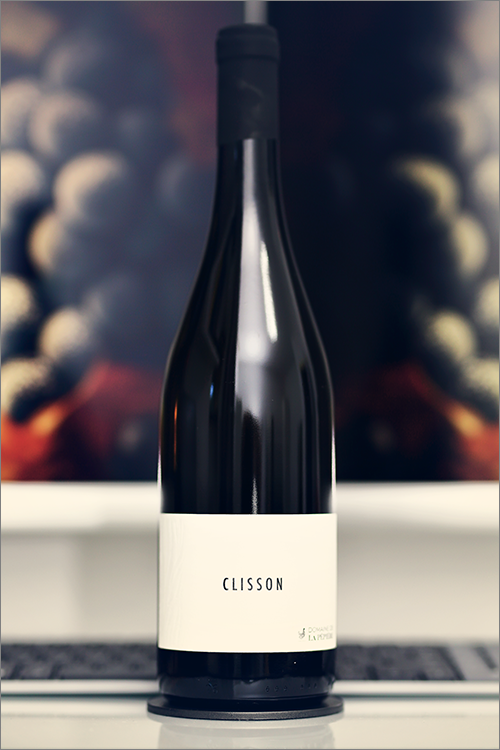
On the doorstep of Brittany, in the quaint village of Maisdon sur Sèvre, lies Domaine de la Pépière – a wine estate whose very name, derived from the old french ‘pépie’ meaning ‘thirst’, hints at its deep connection to the land. Founded in 1984 by the local oenologist Marc Ollivier, the domaine quickly distinguished itself as a pioneer in the Muscadet region. Marc’s profound passion for the local terroir led him to be one of the first to vinify and bottle by ‘lieu-dit’ – an innovative approach that laid the foundation for the later cru classification of Muscadet’s distinct terroirs. Today, Domaine de la Pépière remains anchored to its original purpose: the pure expression of its unique terroirs, ensuring that each bottle reflects a century of tradition, dedication and innovation. Today we are going to review an exceptional, single varietal and single vineyard melon de bourgogne wine that comes from the Clisson Valley, in the heart of the Muscadet Sèvre et Maine appellation of the Loire Valley region of France – Clisson 2023 by Domaine de la Pépière. Melon de Bourgogne, also known as Melon B, is a historic French white grape variety originally from Burgundy, now best known as the sole defining grape of Muscadet wines, produced in the western part of the Loire Valley around Nantes, where the vineyards benefit from a cool, Atlantic-influenced climate. A natural crossing of Pinot Noir and Gouais Blanc, Melon B found its true home in the Pays Nantais after the devastating winter frost of 1709, which destroyed much of the region’s vineyards and encouraged growers to replant with this more frost-resistant variety. Unlike aromatic grapes such as Viognier or Riesling, Melon de Bourgogne is relatively restrained in its aromas, producing crisp, bone-dry wines with high acidity and delicate citrusy flavours, often accompanied by a distinctive saline, mineral character shaped by the region’s diverse granite, gneiss and schist soils. Its greatest strength, however, lies in its ability to develop texture and complexity through sur lie ageing – a traditional technique in which the wine remains in contact with the dead yeast cells left after fermentation, gaining a subtle creaminess, a fuller mouthfeel and delicate notes of bread dough while retaining its refreshing character. The finest Muscadet wines, particularly those from Muscadet Sèvre-et-Maine and its distinguished cru communal vineyards, can develop remarkable depth and ageing potential, revealing greater complexity with time in bottle.
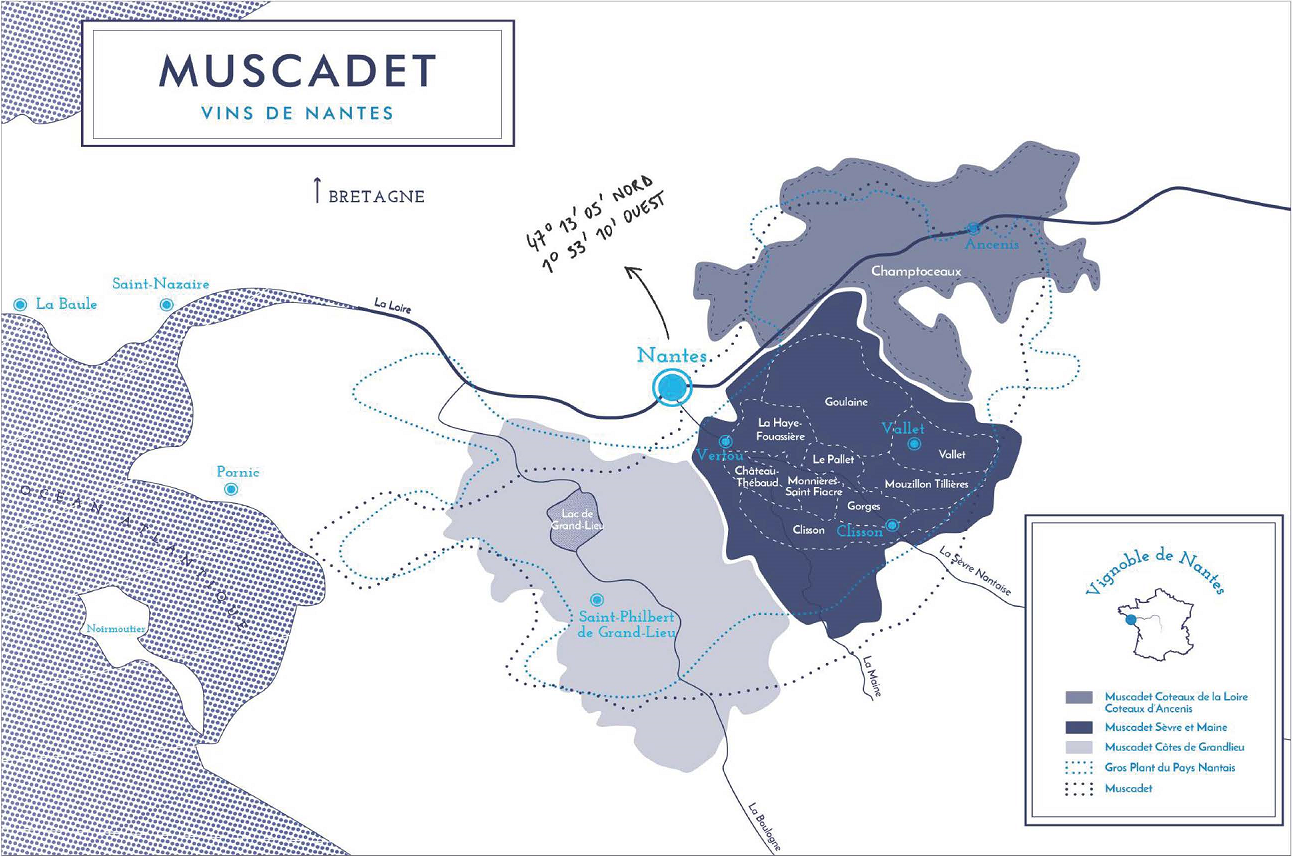
 This single-varietal wine is crafted entirely from melon de bourgogne grapes sourced from the prestigious Clisson appellation, one of the Muscadet Sèvre et Maine‘s Crus Communaux, famous for its unique granitic soils. Conditions in Clisson are ideal for quality winemaking thanks to the limited rainfall in the summer, excellent soils, and moderate sunny days during the ripening season. The winemaking is protective, focused on preserving the grape’s varietal character. Reception of the hand-harvested grapes is done only by conveyor without pumping, with pneumatic pressing of whole bunches and light settling after chilling. Alcoholic fermentation is carried with natural yeasts only. After fermentation, the wine is aged for 24 months on fine lees (the dead yeast cells that are left over from the fermentation process) in underground glass tanks, without racking. During lees ageing, the wine is regularly stirred, this process called bâtonnage – a winemaking technique designed to enrich the wine’s aromatic complexity, gaining in body and developing an unctuous and luxurious texture on the mouthfeel.

The Loire Valley, stretching over 800 km along France’s longest river, is one of the country’s most diverse wine regions, encompassing a wide range of climates, soils, and wine styles. The region benefits from a gradual transition between Atlantic maritime influences in the west and a more continental climate inland, resulting in moderate temperatures and a long growing season that helps preserve acidity and aromatic complexity in the grapes. Loire’s soils are equally varied, ranging from limestone, chalk, and tuffeau to schist, granite, flint, and clay, each contributing distinct characteristics to the wines. This diversity allows a broad range of grape varieties to flourish, including Sauvignon Blanc, Chenin Blanc, Melon de Bourgogne, Cabernet Franc, and Pinot Noir. The Loire Valley is renowned for producing some of the world’s finest expressions of Sauvignon Blanc and Chenin Blanc, as well as elegant reds, refreshing rosés, and acclaimed sparkling wines. Across all styles, Loire wines are celebrated for their freshness, precision, minerality, and strong sense of terroir. The Muscadet Sèvre et Maine sub-region is one of the most important appellations in the western Loire Valley, located southeast of Nantes, between the Sèvre Nantaise and Maine rivers. Its proximity to the Atlantic Ocean creates a cool maritime climate, with mild winters, moderate summers, and regular rainfall, allowing grapes to ripen slowly while preserving high natural acidity and freshness. The region’s soils are largely derived from ancient bedrock, including granite, gneiss, schist, and metamorphic rocks, with variations in their composition contributing to differences in texture and mineral expression. Melon de Bourgogne is the dominant grape variety, producing light-bodied, dry white wines with crisp acidity and subtle saline notes. One of the appellation’s defining traditions is sur lie ageing, in which the wines remain in contact with their fine lees after fermentation, adding texture, complexity, and sometimes a gentle creamy character while preserving their freshness. Muscadet Sèvre et Maine is particularly renowned for its precise, refreshing, and food-friendly white wines, whose restrained fruit profile and saline character make them well suited to seafood and shellfish dishes, especially fresh oysters with a just couple of drops of lemon juice.

color: pale straw-yellow color
clarity: subtle pastel-yellow hues
In the glass, the wine presents a pale straw-yellow color, elegantly shimmering with subtle pastel-yellow shades towards the rim, hinting at its vibrant energy.

intensity: rich & citrusy-leesy
fruit character: ripe
On the nose, the wine reveals a rich and invigorating citrusy-leesy aromatic profile, unfolding with a distinct ripe fruit character complemented by an elegant autolytic touch. The foreground is dominated by a medley of orchard fruits, including green apple, asian pear, mirabelle prune, apricot, and white peach. These are beautifully intertwined with vibrant citrus notes of lemon, pomelo, white grapefruit, and sicilian orange. Delicate herbal hints of sun-dried hay and fresh straw grass add an extra layer of aromatic intrigue. As the wine opens up, the background unveils the sophisticated autolytic notes born from its extended lees aging, reminiscent of butter, yeast, dough, crème brûlée, and panna cotta. These are seamlessly complemented by delicate floral undertones of acacia, orange blossom, honeysuckle, elderflower, and jasmine, all underscored by an elegant touch of salty minerality that speaks of its unique granitic terroir.

sweetness: bone dry | acidity: medium+ | alcohol: high | tannin: medium- | balance: fair
finish: medium | aftertaste: seedy-rough
The palate delivers an austere and heady experience, characterized by a remarkably crisp and slightly rough mouthfeel. The wine feels bone dry, driven by a crisp acidity that provides the backbone and slices through the wine’s ample texture. A well-integrated touch of alcoholic warmth adds structure and presence, while a delicate phenolic bitterness emerges on the mid-palate, imparting depth and enhancing the wine’s intricate character. The mouthfeel is round and plump, with an oily texture that adds a plush, slightly wide dimension, contributing to the wine’s creamy richness. This is a wine that focuses on the varietal character rather than sheer power or nuance, showcasing amazing varietal typicity complemented by an earthy touch of salty minerality. The finale is a crispy-heady aftertaste, offering a lasting sensation that echoes the wine’s profound depth and distinctive local charm, despite lacking the ethereal finesse and complexity found in some other traditionally aged white wines.

maturity: in its prime | drink now or within the next 12 months
verdict: fine | an excellent wine | a wine of premium quality
All in all, this is an exceptional and complex Muscadet wine that stands as a textbook sur-lie-aged Melon de Bourgogne. It is delicate, creamy, and well-structured, showcasing a pronounced autolytic touch that beautifully complements its ripe fruit and citrus core. While it may initially feel focused on varietal character rather than an expansive range of nuances, its round and plump profile, coupled with an oily texture, adds significant depth and presence. It delivers amazing varietal typicity, prominently featuring that signature earthy touch of salty minerality that are a result of the Clisson’s granitic terroir. Currently in its prime, this wine offers immediate enjoyment and is best savored today or within the next year to fully appreciate its vibrant freshness and developing complexity.

Given its bright acidity and creamy texture, this wine offers a multitude of exciting pairing possibilities. For a classic complementary pairing, consider pan-seared scallops or grilled sea bass with a delicate beurre blanc sauce. The wine’s crispness will cut through the richness of the butter, while its inherent salinity will enhance the seafood’s flavors. It is also an exquisite companion to smoked salmon or other fish in sauce. For a truly indulgent experience and a “wow-effect”, try it with pan-fried foie gras, where the wine’s subtle sweetness from ripe fruit and creamy texture will beautifully contrast with the richness of the foie gras. Cheers!
 DOMAINE DE LA PÉPIÈRE | Clisson | 2023
variety: melon de bourgogne
country: France
region: Loire Valley | Muscadet Sèvre et Maine
rating: 92.7
The name ‘La Pépière’ is a delightful nod to the old french word ‘pépie’, meaning ‘thirst’. A stroll through the vineyards overlooking the hamlet quickly reveals the origin of this name: the soil is exceptionally dry and rocky, with granite protruding in many places, making water a rare and precious commodity. Indeed, the family’s well at the domaine historically provided a mere ten liters of water per day in the summer months, a stark reminder of the arid conditions. This scarcity of water might just be the reason why, according to local lore, the inhabitants of the village earned a reputation for drinking too much wine and too little water.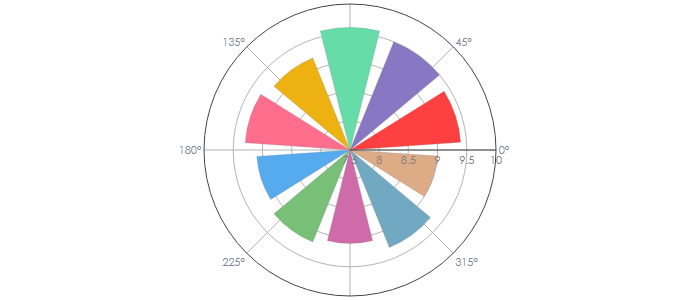
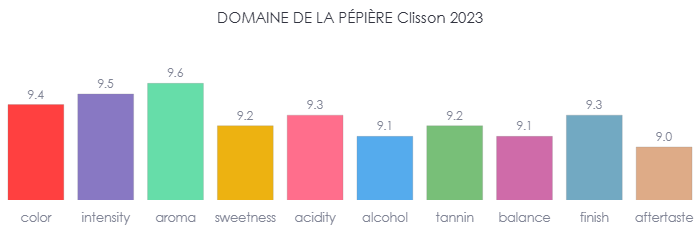
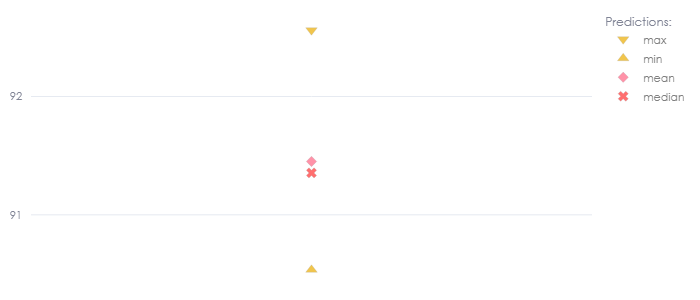
 © The WineStatistics ratings are based solely on our own knowledge of the world of wine and on our personal wine tastes, which may, or may not, differ from yours – the reader. Just remember that there are no absolutes of right and wrong in wine appreciation. Cheers!
Make a one-time donation
Make a monthly donation
Make a yearly donation
Choose an amount
Or enter a custom amount
WineStatistics is a non-profit community. We produce independent and highly detailed wine reviews.
By training ourselves to stop, take a breath, and pay attention to the subtle elements that distinguish one wine from any other, we learn an important lesson about life – that it’s worth taking the time to slow down and appreciate things that pleases us, from a glass of wine to a great work of art. It’s a simple way to learn to appreciate the little things in life that may in some small way enhance our enjoyment of every day.
In order to continue our work we need support from people like you. People who appreciate our contribution in spreading wine knowledge and raising wine awareness across the borders.
You may now support us by contributing with a one-time donation so that we can review even more wines.
WineStatistics is a non-profit community. We produce independent and highly detailed wine reviews.
By training ourselves to stop, take a breath, and pay attention to the subtle elements that distinguish one wine from any other, we learn an important lesson about life – that it’s worth taking the time to slow down and appreciate things that pleases us, from a glass of wine to a great work of art. It’s a simple way to learn to appreciate the little things in life that may in some small way enhance our enjoyment of every day.
In order to continue our work we need support from people like you. People who appreciate our contribution in spreading wine knowledge and raising wine awareness across the borders.
You may now support us by contributing with a monthly donation so that we can review even more wines.
WineStatistics is a non-profit community. We produce independent and highly detailed wine reviews.
By training ourselves to stop, take a breath, and pay attention to the subtle elements that distinguish one wine from any other, we learn an important lesson about life – that it’s worth taking the time to slow down and appreciate things that pleases us, from a glass of wine to a great work of art. It’s a simple way to learn to appreciate the little things in life that may in some small way enhance our enjoyment of every day.
In order to continue our work we need support from people like you. People who appreciate our contribution in spreading wine knowledge and raising wine awareness across the borders.
You may now support us by contributing with a yearly donation so that we can review even more wines.
